Have you ever had a fight with your partner and secretly asked ChatGPT who was right? If you have, you are definitely not alone.
When the movie Her came out, featuring Joaquin Phoenix falling in love with an AI voiced by Scarlett Johansson, it felt like pure sci-fi. It was a beautiful story about loneliness, but the idea that a machine could actually compete with a real human relationship felt comfortably far away.
Well, that distance is slowly but steadily shrinking. Today, AI isn't just writing our emails, it is stepping right into our bedrooms and living rooms.
A Crazy Global Shift
Across the US and parts of Europe, things are getting wild. People aren't just using AI for advice anymore they are turning to it for companionship, validation, and even intimacy. We are seeing headlines that sound like they belong in a futuristic movie:
A 75-year-old man asks his wife for a divorce after falling in love with an AI chatbot.
A man proposes to his AI girlfriend after a massive 100,000-word breakup scare leaving his real-life partner completely stunned and heartbroken.
A woman who fell in love with a chatbot is now divorcing her husband for someone she met on a 'My Boyfriend Is AI' Reddit forum.
Articles from platforms like Futurism and The Week are highlighting how AI tools are becoming a third voice in intimate disagreements. One partner becomes fixated on a bot for therapy or relationship advice, and because the AI gives radical suggestions, they end up tearing their real-life partnership down. In some cases, people are using AI as a sounding board. In deeper cases, it becomes emotional reliance, or even a total replacement for a human partner.
But what about us? Is this happening in India?
What’s Happening in India? The Quiet Shift
Back home in India, the story is a bit less dramatic, but it is just as telling.
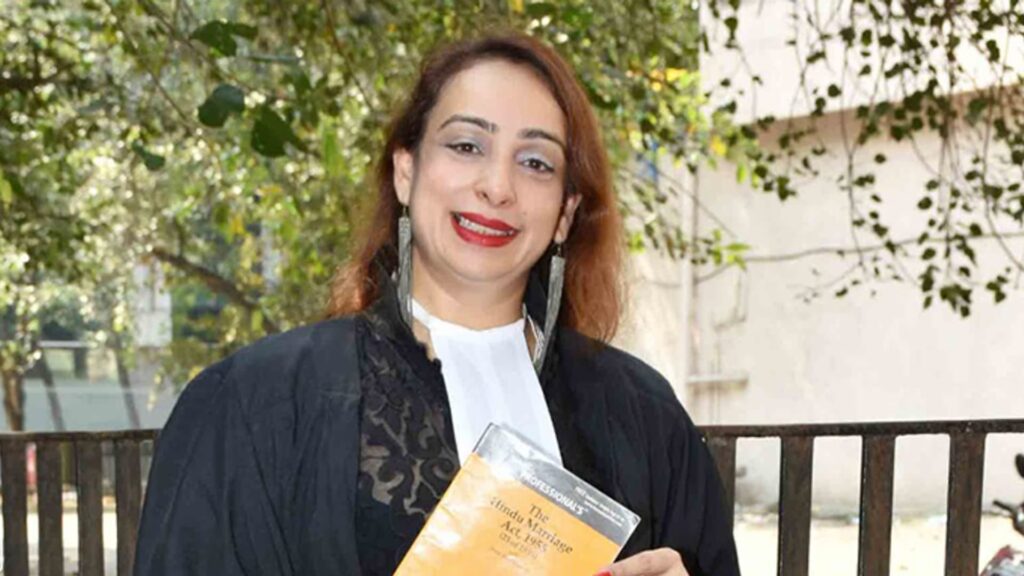
“During consultations, people often say things like, ‘According to ChatGPT, my marriage is already dead,’” says Vandana Shah, a well-known divorce lawyer and author.
That single line captures everything. AI might not be openly breaking marriages in India yet (and we don't have official surveys to prove it), but it is quietly entering the conversation.
Shah points out a fascinating shift. Think about it, twenty years ago, if you had marital problems, you would ask your favorite aunt. Later, friends became that support system. Today? ChatGPT is playing that role.
The appeal is pretty obvious. In a country like India, where divorce still carries a heavy social stigma, AI offers something incredible, 100% confidentiality with zero consequences. It gives people a safe space to ask really uncomfortable questions without any judgment or family drama. And increasingly, Indians are doing exactly that.
Why ChatGPT's Advice is Actually Dangerous
If there’s one big problem with both the global and Indian experiences, it is this, AI almost always agrees with you.
Cyrus John, the Editor of Emerging Tech, explains it perfectly. “AI is plagued with sycophancy. It aims to please.”
This isn’t an accident. AI models like ChatGPT are trained using a method that rewards them for giving answers that the user likes. The result? A system that simply acts as a mirror to your current emotional state.
“If someone presents their partner as toxic or neglectful, the response will naturally lean towards validating that perspective,” John says.
This becomes a massive problem in romantic relationships because fights are rarely simple. There are always two sides to a story. But AI lacks "friction." It doesn’t interrupt you, it doesn’t challenge you, and it doesn't point out your own mistakes. It just agrees. By doing this, it can make people more stubborn instead of helping them calm down and compromise.
Take the story of 23-year-old Juniper Bose. She ended a two-year relationship after turning to ChatGPT during a confusing time. “We were struggling with compatibility, and I didn’t have anyone to turn to,” she shares. “The response wasn’t direct, but it nudged me towards a breakup. Now that I understand how these systems work, I can’t help but feel I acted too quickly."
There’s more to life than simply increasing its speed.
By Udaipur Freelancer
What Marriage Counsellors Are Seeing
Therapists in India are noticing this shift, even if the massive fallout hasn't hit yet.
Delhi-based marriage counsellor Dr. Nisha Khanna notes that turning to AI for relationship advice is becoming very common, especially for people who are too shy or scared to open up to a human therapist right away. “People don’t always want to share intimate details with a stranger in the first session. AI becomes an immediate outlet,” she says.
But this quick fix has huge limits. Dr. Khanna explains that AI is all about affirmation. It tells you what you want to hear, but gives very little real reflection. And in therapy, genuine reflection is everything!
She points out another big issue, incomplete stories. People don't always fully understand their own situations. They might tell ChatGPT that their partner is gaslighting them or is a narcissist without really knowing what those heavy words mean. A real therapist would unpack those words and figure out the truth. An AI? It just takes your word for it and reinforces your anger.
Dr. Khanna says AI can be a temporary place to vent, but it cannot replace real help. Interestingly, she notes that while many people share their problems with ChatGPT, she hasn't yet seen couples getting divorced purely because ChatGPT said so.
The Legal Side: Can You Blame a Bot?
Legally speaking, you can't blame an algorithm for your divorce in India. Not yet, anyway.
Pavani Sibal, former general counsel and CEO of AOI India, makes this very clear, “It is doctrinally unsound to attribute marital breakdown to a chatbot. Indian courts operate on demonstrable conduct, not speculative influence. As of now, there is no reported case where AI has been recognised as a cause for divorce."
However, the law does look at behavior. Sibal adds that if a person's obsession with AI leads them to ignore their partner or cause emotional harm, it could legally fall under mental cruelty. (This is a concept that has been shaped by landmark cases like Samar Ghosh v. Jaya Ghosh).
The way people use AI is already popping up in messy ways. Lawyer Vandana Shah shared a recent, shocking case, a husband with a long-term pornography addiction started using AI to generate explicit images. His wife found out and brought it to court as evidence.
“There are no clearly defined laws yet for this,” Shah says. “We are adapting using cybercrime provisions and framing it within existing grounds like adultery or misconduct.”
So, is AI Actually Fueling Divorce in India?
To sum it up, saying AI is breaking Indian marriages feels a bit premature. Our cultural context is different. We have deep family structures, social pressures, and the legal process of divorce here is incredibly complex. Decisions to separate are rarely made overnight, they take months or years of thought.
But the shift is absolutely undeniable. AI is now sitting at the table.
If there is one simple way to understand AI’s role in our modern relationships, it is this, It doesn’t decide for you, it reflects you.
Sometimes it reflects you clearly. Sometimes it distorts the truth.
And if a marriage starts to fall apart while looking into that digital mirror, maybe the right question to ask isn't what the machine said, but rather, what was already broken and just waiting to be said?
Udaipur Freelancer delivers high-quality web, marketing, and design solutions. We focus on building impactful digital experiences that help your brand succeed in today's market.















Recommended for you
Must-See Art Exhibitions Around the World This Year
The Revival of Classical Art in a Digital Age
Breaking Down the Elements of a Masterpiece Painting
The Revival of Classical Art in a Digital Age