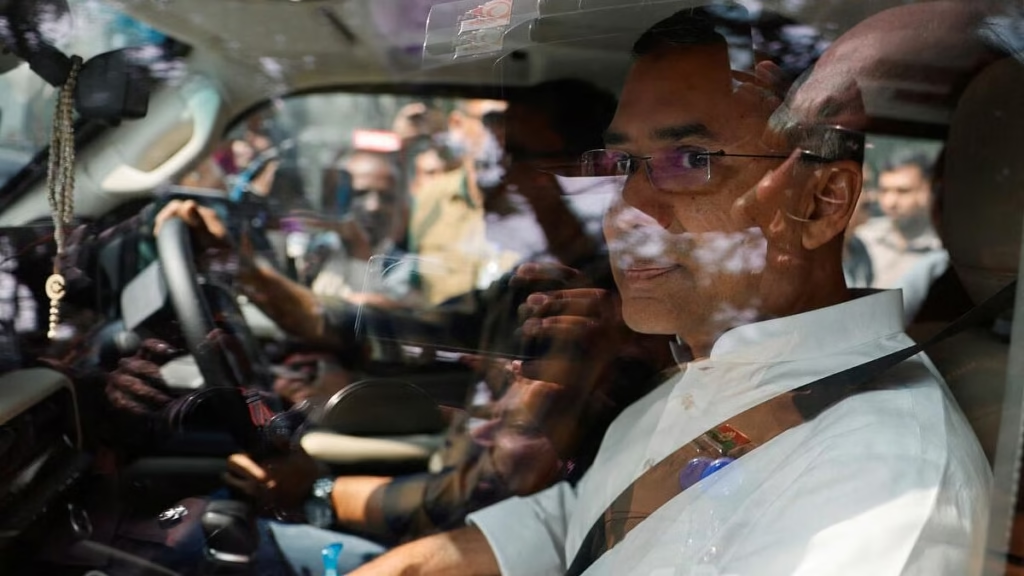
The political landscape of Bangladesh has undergone a seismic shift that few could have predicted with such magnitude. After seventeen long years in exile, living thousands of miles away in London, Tarique Rahman has not only returned to the political forefront but has secured a historic landslide victory that redefines the nation’s future. The atmosphere across Dhaka and the rest of the country is electric, charged with the energy of a populace that has waited nearly two decades for this specific moment of vindication and change.
For years, critics and political adversaries argued that a leader could not command the loyalty of a nation from foreign soil. Yet, the results of this election have shattered that conventional wisdom. The victory is not merely a statistical triumph. it is a profound statement on resilience, strategy, and the enduring connection between the Bangladesh Nationalist Party (BNP) and the grassroots citizenry. As the final ballots were counted, it became evident that this was not just a win for a party, but a personal triumph for a leader who transformed his exile into a period of strategic preparation.
A Mandate for Change and the End of Waiting
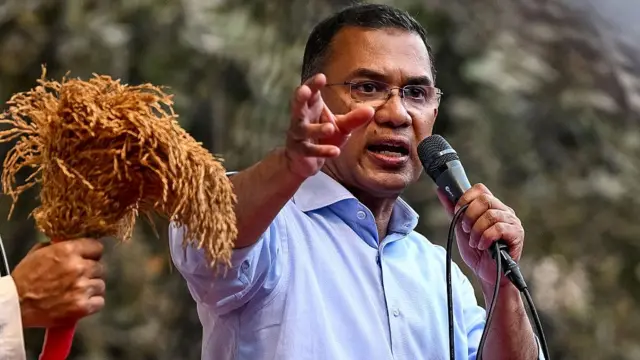
The scale of this landslide victory suggests that the electorate was driven by a deep-seated desire for a new direction. For seventeen years, Tarique Rahman operated as the Acting Chairman from abroad, navigating the complexities of Bangladeshi politics through digital communication and trusted delegates. His physical absence, rather than diminishing his influence, seemingly created a mythical aura around his leadership. The voters have expressed a definitive rejection of the status quo, turning out in record-breaking numbers to cast their ballots for the Sheaf of Paddy.
This mandate goes beyond simple partisan loyalty. It reflects a national consensus on the need for state reform, economic rejuvenation, and the restoration of democratic institutions. During his time in London, Rahman formulated the ambitious State Reform agenda, promising to overhaul the constitutional framework to prevent authoritarianism. The overwhelming support at the polls indicates that the people of Bangladesh have bought into this vision, seeing it as the only viable path forward after years of political turbulence.
The Strategy Behind the Landslide
Analyzing the anatomy of this victory reveals a masterclass in modern political strategy. While his opponents focused on his physical absence, Tarique Rahman utilized technology to bridge the geographic gap. He conducted thousands of virtual meetings with grassroots leaders, student wings, and rural organizers, ensuring the party machinery remained oiled and active despite immense pressure. This remote leadership style allowed him to listen to the grievances of the common people without the filter of surrounding sycophants, leading to a manifesto that resonated deeply with the struggles of the average Bangladeshi.
Furthermore, the campaign managed to unite a diverse coalition of voters. By focusing on national unity, economic sovereignty, and rule of law, the BNP under Rahman’s guidance managed to pull in not just their traditional voter base, but also the youth who were previously disillusioned with politics. The younger generation, many of whom were children when Rahman first left for exile, rallied behind his call for a modern, meritocratic Bangladesh. This demographic shift was the engine that turned a predicted victory into a historic landslide.
The Emotional Return and Public Sentiment
The imagery of this victory is inextricably linked to the emotional resonance of Tarique Rahman’s return. For the party faithful, the narrative is almost cinematic the exiled leader returning to reclaim his mantle. The streets of Dhaka, Chittagong, Bogra, and Sylhet have transformed into seas of people, waving flags and chanting slogans that have been suppressed for years. This outpouring of emotion is a release of pent-up political expression. The celebration is not just about power. it is about the restoration of pride for millions who felt marginalized during the years of his exile.
Political analysts are noting that the emotional connection Tarique Rahman maintained with the masses is a rare phenomenon. Usually, out of sight means out of mind in the fast-paced world of politics. However, the narrative of his suffering, the allegations against him which his supporters view as politically motivated, and his steadfast refusal to bow down created a martyr-like figure that the public rallied to protect. The ballot box became the ultimate tool for the public to deliver their verdict on his 17-year ordeal.
Economic Challenges and the Road Ahead
With the euphoria of victory comes the sobering reality of governance. The landslide win provides Tarique Rahman with immense political capital, but he inherits an economy that requires immediate and surgical intervention. Inflation, dwindling foreign reserves, and a fragile banking sector are the immediate dragons that the new administration must slay. The electorate has trusted him to fix these issues, and the honeymoon period will likely be short. The people expect the same efficiency in governance that was displayed in the election campaign.
There’s more to life than simply increasing its speed.
By Udaipur Freelancer
The business community, both local and international, is watching closely. Stability is the primary currency for investment, and a landslide victory offers the promise of a stable government capable of making hard decisions without being held hostage by coalition politics. Rahman has previously outlined plans for an open-market economy that encourages foreign direct investment while protecting local industries. Translating these plans into policy within the first hundred days will be crucial to maintaining the momentum of this historic win.
Geopolitical Implications of the New Leadership
Tarique Rahman’s victory also sends ripples through the geopolitical fabric of South Asia. For years, regional powers have calculated their strategies based on the previous status quo. A strong government in Dhaka led by the BNP changes the equation. Rahman has historically advocated for a balanced foreign policy, prioritizing Bangladesh’s national interests above all. Diplomatic observers predict a recalibration of ties with major powers, moving toward a more diversified portfolio of international alliances.
The Western world, particularly those nations that have harbored him during his exile, will likely view this democratic transition with keen interest. The sheer scale of the victory makes it impossible for the international community to ignore the mandate. It validates the democratic process and compels global leaders to engage with the new administration as the legitimate voice of the Bangladeshi people. The London connection may prove to be a diplomatic asset, as Rahman understands the nuances of Western democracy and international relations better than many of his predecessors.
A New Social Contract
Perhaps the most significant aspect of this victory is the promise of a new social contract. The Rainbow Nation concept that Rahman has often spoken of aims to bridge the deep political divides that have polarized Bangladesh for decades. This landslide victory gives him the authority to implement a politics of reconciliation rather than retribution. If the new government can successfully pivot from electioneering to nation-building, avoiding the cycle of revenge that has plagued Bangladesh’s history, this victory will indeed be transformative.
The proposed bicameral parliament and the balance of power between the Prime Minister and the President are key tenets of his reform agenda. These structural changes are designed to ensure that no future leader can monopolize power. By voting for him so overwhelmingly, the people have essentially voted for a system that limits power, paradoxically giving him absolute power to enact those limits. It is a unique political experiment that the world is watching with bated breath.
Conclusion: The Dawn of a New Era
As the dust settles on this historic election, one thing is undeniably clear. the era of uncertainty has ended, and a new chapter has begun. Tarique Rahman’s return from 17 years of exile to secure a landslide victory is a testament to the unpredictable and dynamic nature of democracy. It serves as a reminder that political legitimacy ultimately rests with the people, not with institutions or foreign backers.
The road ahead is paved with challenges, but the mandate is absolute. The people of Bangladesh have spoken with a roaring voice, entrusting their future to a leader who has walked a long, lonely road to get back to them. This is not just a change of government. it is a renewal of hope. As the nation looks toward the future, the weight of history rests on Tarique Rahman’s shoulders, and for the first time in nearly two decades, the direction of that history is firmly in his hands.
Udaipur Freelancer delivers high-quality web, marketing, and design solutions. We focus on building impactful digital experiences that help your brand succeed in today's market.
















Recommended for you
Must-See Art Exhibitions Around the World This Year
The Revival of Classical Art in a Digital Age
Breaking Down the Elements of a Masterpiece Painting
The Revival of Classical Art in a Digital Age