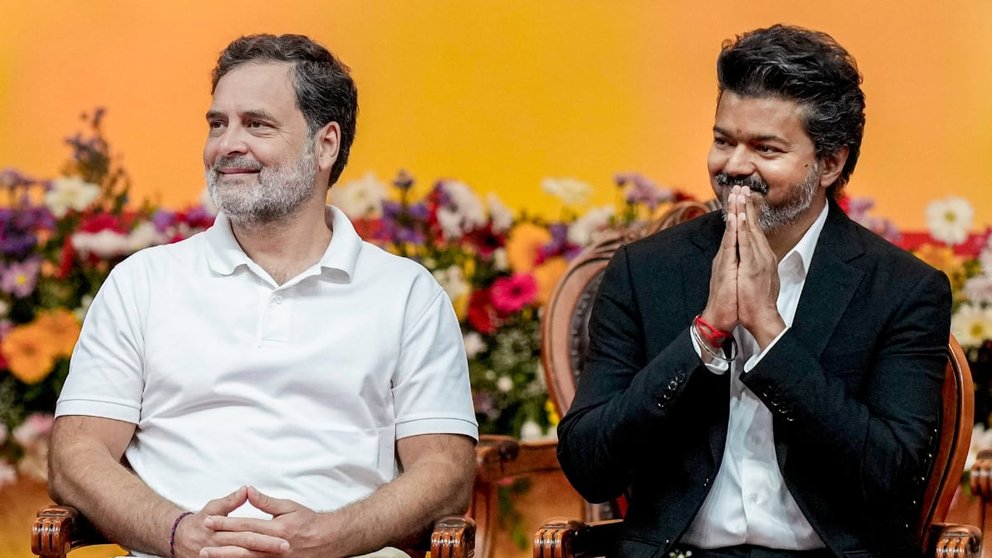
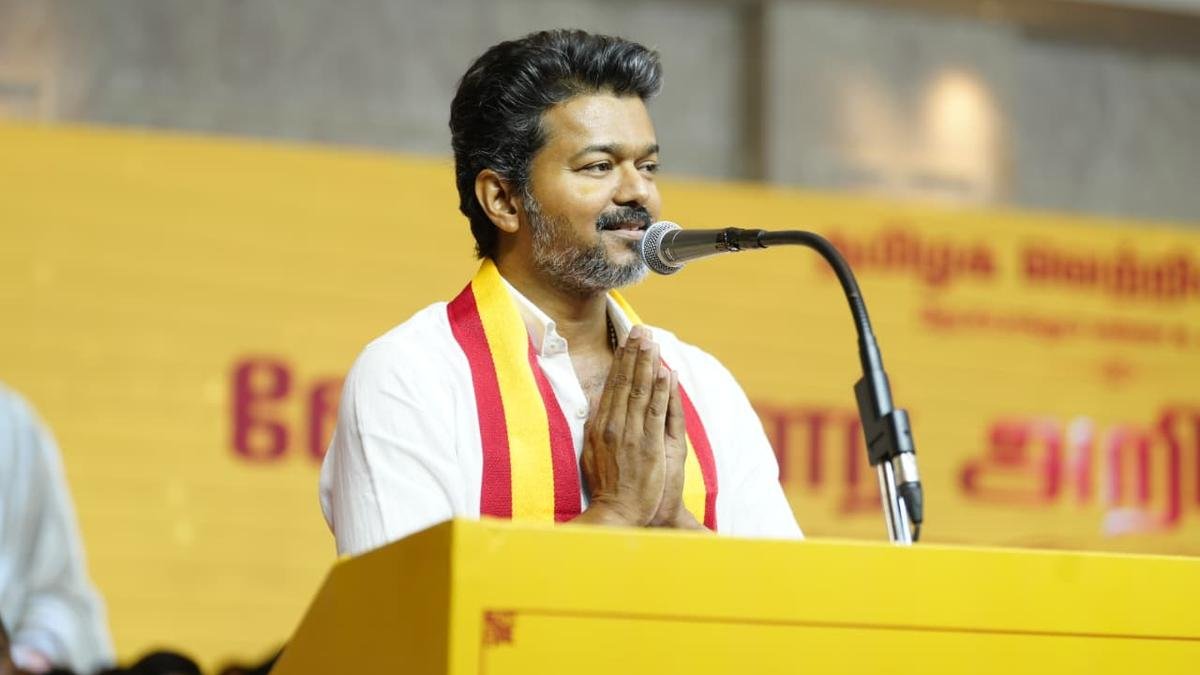
The political chessboard of Tamil Nadu has seen a dramatic turn of events, culminating in Chief Minister Vijay successfully winning the crucial trust vote. This victory has not only solidified his government's standing but has also sent shockwaves through the opposition AIADMK, exposing a deep and significant internal split. The recent days have been a whirlwind of legal battles, political defiance, and sharp retorts, setting the stage for a fascinating new chapter in the state's vibrant political narrative.
Vijay Secures Confidence Amidst High Drama
Chief Minister Vijay's government breathed a collective sigh of relief after sailing through the floor test in the Tamil Nadu Legislative Assembly. The confidence motion passed successfully, though 5 MLAs chose to abstain, highlighting the underlying tensions. This victory, however, was preceded by high-stakes courtroom drama. Crucially, the Supreme Court on Wednesday swiftly paused a Madras High Court order that had barred TVK MLA R Sreenivasa Sethupathi from participating in the vote. Sethupathi's presence was vital, especially considering he had secured his Tiruppattur Assembly constituency by an incredibly narrow margin of just a single vote against a seasoned DMK leader.
The apex court did not mince words, sharply observing that the High Court's decision was 'atrocious'. The bench, comprising Justices Vikram Nath, Sandeep Mehta, and Vijay Bishnoi, questioned the High Court's move to entertain an Article 226 petition while simultaneously suggesting that the appropriate remedy lay in an election petition. Article 226 grants High Courts powers to issue certain writs, but in election-related disputes, specific legal processes are usually followed. The Supreme Court's intervention was a clear assertion of judicial oversight and ensured that every eligible vote could be cast, paving the way for Vijay's trust vote success.
The AIADMK Cracks Wide Open: A Political Earthquake
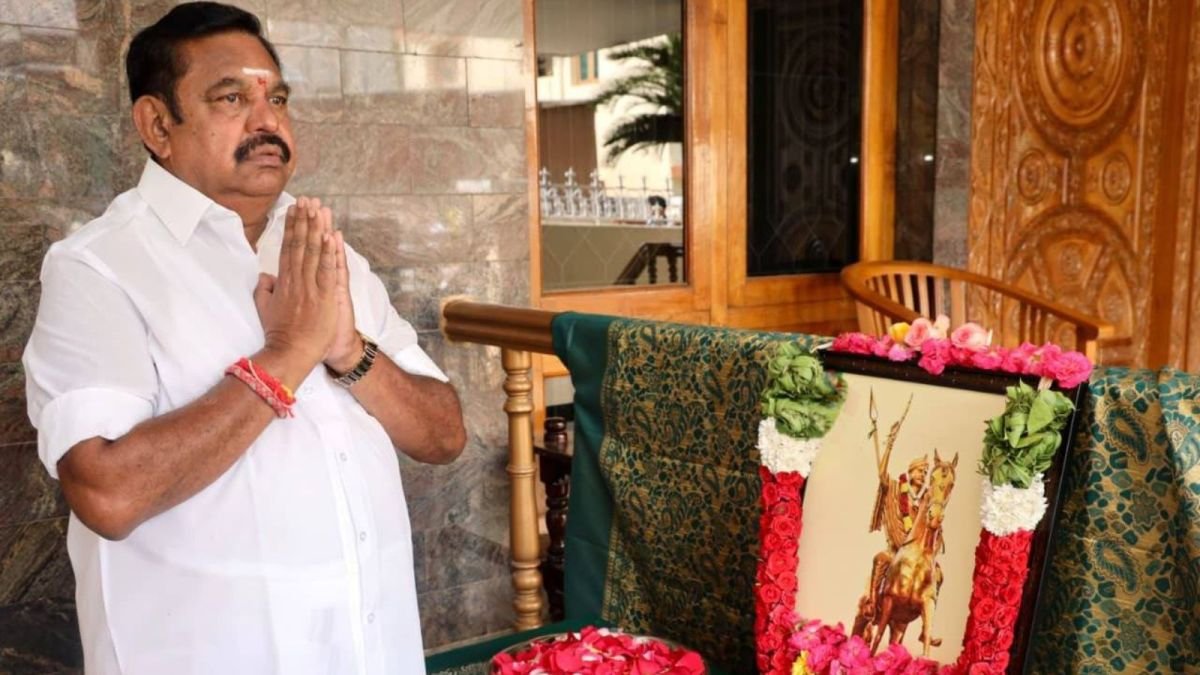
While Vijay's trust vote was the immediate headline, the real political earthquake unfolded within the AIADMK. A stunning 25 MLAs from the opposition party openly rebelled against their chief, Edappadi K. Palaniswami (EPS), by choosing to support Chief Minister Vijay's government during the floor test. This unprecedented defiance has dramatically reshaped the balance of power, leaving EPS with a significantly reduced faction of just 22 MLAs in his camp. For a party that has traditionally been a formidable political force in Tamil Nadu, this internal revolt signals a deep-seated crisis and a major shift in loyalties.
This mass defection is a pivotal moment, but the road ahead for the rebel legislators is complex. They currently fall short of the numbers needed to bypass the stringent anti-defection law. Under these rules, a group requires the support of at least two-thirds of its original legislature party to merge with another party or form a new one without facing disqualification. With 47 AIADMK MLAs in total, this means 31 legislators would need to break ranks. The current 25, while a huge number, still leaves the rebel faction in a precarious legal position, potentially vulnerable to actions from the EPS camp, which might seek their disqualification.
Horse Speed, Not Horse Trading: CM Vijay's Rebuttal
Inevitably, allegations of 'horse-trading' – the controversial practice of influencing or securing votes through inducements – quickly emanated from the beleaguered EPS camp. However, Chief Minister Vijay wasted no time in delivering a sharp and confident rebuttal. During his reply to the debate on the confidence motion in the Assembly, Vijay firmly stated that his government operates at 'horse speed,' emphasizing efficiency, swift decision-making, and proactive governance, rather than engaging in any form of 'horse-trading.'
There’s more to life than simply increasing its speed.
By Udaipur Freelancer
Beyond countering the accusations, CM Vijay also made crucial pledges to the state. He asserted that his government would uphold secular principles and continue to implement the numerous welfare schemes that had been introduced by previous administrations. This commitment to continuity and secularism aims to reassure the public and project an image of stability and inclusive governance, even as the political landscape around him continues to churn with internal party conflicts.
What's Next for Tamil Nadu Politics?
With the dust over the trust vote now settling, the focus intensely shifts to the unfolding drama within the AIADMK and the implications for Tamil Nadu's political future. Vijay's government has secured its immediate stability, but the deep fault lines exposed in the opposition party will have long-lasting effects. The 25 rebel MLAs face a strategic dilemma: how to solidify their position and avoid the anti-defection axe. Their move signals a clear alignment with Vijay, but the legal pathway for a formal merger or new political formation remains fraught with challenges. Such political realignments often require careful planning, not unlike the strategic considerations that go into major policy decisions like budget and customs duty reform, which can significantly impact a nation's economy.
For Edappadi K. Palaniswami, this is arguably the gravest crisis of his leadership. With his faction severely depleted, he faces the daunting task of preventing further defections and attempting to reclaim the party's unity, or at least consolidate his remaining base. The coming months will be a severe test of his political resilience and strategic acumen. The AIADMK, once a bastion of power, now appears deeply fractured, raising questions about its future role as a cohesive opposition force. The dynamics of such internal power struggles can often benefit from insights into leadership and organizational strategy, similar to what one might explore in a program like the IIM Kozhikode General Management Programme.
Tamil Nadu, a state renowned for its passionate and dynamic political theatre, is entering a period of significant flux. The recent events have not only secured Vijay's government but have also fundamentally altered the power dynamics and internal structures of its main opposition. Expect continued political maneuvering, shifting alliances, and perhaps even more dramatic revelations in the days and weeks ahead. The political journey in Tamil Nadu is never dull, and this chapter promises to be one of its most compelling yet.
Udaipur Freelancer delivers high-quality web, marketing, and design solutions. We focus on building impactful digital experiences that help your brand succeed in today's market.











Recommended for you
Must-See Art Exhibitions Around the World This Year
The Revival of Classical Art in a Digital Age
Breaking Down the Elements of a Masterpiece Painting
The Revival of Classical Art in a Digital Age