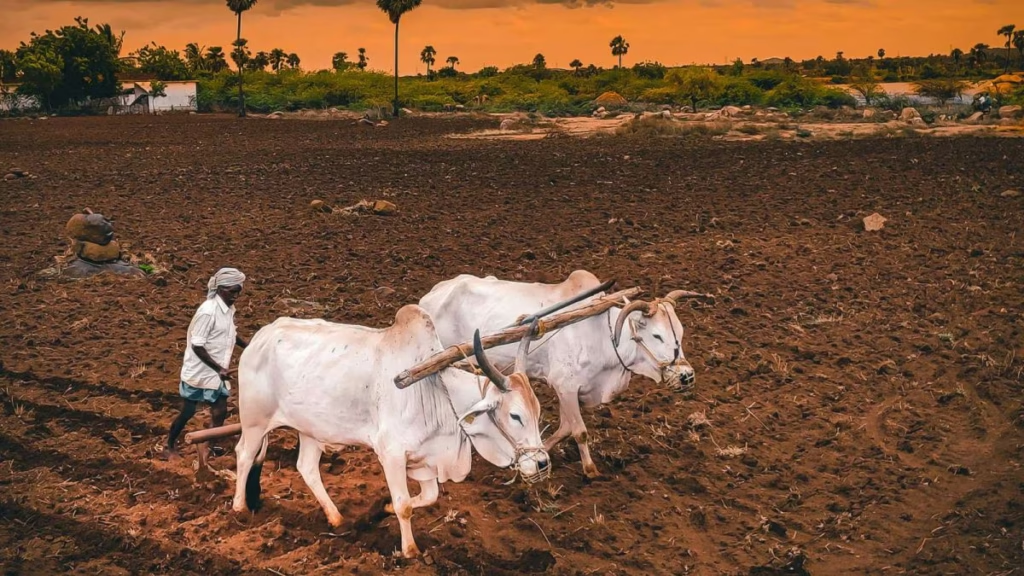
If you’ve been following the news lately, you might have heard some whispers and worries about India’s trade deals with the United States. Specifically, there have been a lot of questions floating around. Is India opening up its sensitive farming and dairy sectors to big US companies? Will our local farmers be affected?
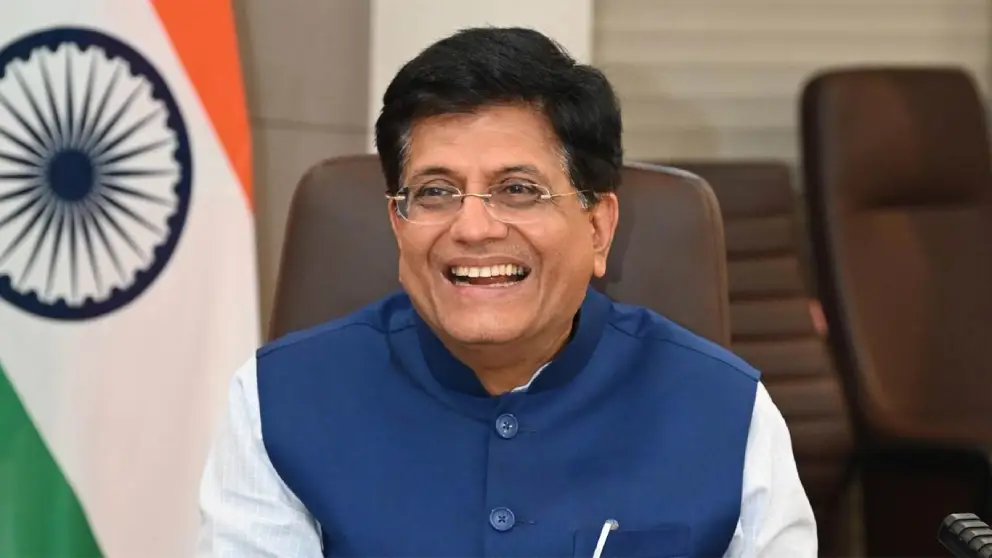
These are big questions because agriculture and dairy are the backbone of the Indian economy. Millions of families depend on them. Recently, the Union Minister of Commerce and Industry, Piyush Goyal, cleared the air in a very direct way.
If you are wondering what’s really happening behind the scenes of the India-US trade talks, you’re in the right place. Let’s break down what was said and what it means for all of us.
The Big Question: Did India Compromise?
Whenever a trade deal is discussed with a superpower like the US, there is always a fear that India might have to give up something important to get something else. The biggest fear factor usually revolves around agriculture and dairy.
Minister Piyush Goyal was very clear about this. In a recent conversation, he pushed back against claims that India has opened up these sensitive areas. His answer was a firm No.
He categorically denied making any concessions that would hurt Indian interests. He specifically mentioned that there is absolutely no compromise when it comes to:
- Dairy products: Our local milk producers are safe.
- UPI products: Our digital payment systems remain protected.
- Cereals like rice and wheat: The staples of our diet and the primary crops of our farmers.
Essentially, the government is saying that while they want to trade more with the world, they aren’t going to do it by putting our farmers at risk.
So, What IS Being Traded?
You might be thinking, "If we aren't opening dairy or wheat, then what are we talking about?"
Trade is all about balance. While the sensitive sectors are locked, there are areas where India is opening doors to benefit consumers. For example:
- Soybean Oil: India has allowed a limited quota for soybean oil imports. It’s important to note that soybean oil is already a major import for us, but the meal (the solid part used for feed) remains barred.
- Fruits: You might have noticed more variety in the fruit section of your local supermarket. Goyal noted that fruit imports are happening, and this actually helps consumers by providing better quality and more choices.
The logic here is simple, if it doesn't hurt our farmers but helps our citizens get better products at better prices, it’s a win. But as the Minister said, "Wherever there are sensitivities, there is no opening up."
Moving from Shadows to Strength
One of the most interesting things Piyush Goyal pointed out was how India’s approach to the world has changed. He said that for a long time, India stayed in the shadows, perhaps a bit worried about competing on the global stage.
But things are different now. Following the Covid-19 pandemic and Prime Minister Narendra Modi’s call for Atmanirbhar Bharat (Self-reliant India), the country has found its seat at the high table.
India is no longer negotiating out of a sense of need or weakness. Instead, we are negotiating from a position of strength. We are currently the fastest-growing large economy in the world, and that gives us a lot of leverage.
Why Competition is Actually Good for Us
Minister Goyal made a great point about competition. He argued that instead of being afraid of global firms, we should realize that competition makes us better.
There’s more to life than simply increasing its speed.
By Udaipur Freelancer
When global companies see how big and competitive the Indian market is, they don't just want to sell here they want to Make in India. This is the core of the government’s plan, turn India into a global manufacturing hub.
He mentioned several high-tech sectors where India is looking for more engagement:
- Semiconductors: The brains inside our phones and cars.
- Green Energy: Moving towards a cleaner planet.
- Aircraft and Engines: Building a stronger aviation sector.
- Critical Minerals: Essential for the batteries of the future.
These aren't products that compete with our farmers. these are products that bring technology and high-paying jobs into the country.
The H-1B Visa Issue: A Blessing in Disguise?
There’s always talk about US visa restrictions (like the H-1B) making it harder for Indians to work in America. Interestingly, Goyal suggested that these restrictions might actually help India.
How? Well, if it’s harder for US companies to fly Indian talent to America, those companies will simply set up Global Capability Centres (GCCs) right here in India. In fact, there are already over 1,600 of these centers operating in India. This creates local jobs, brings in investment, and keeps our talented youth within the country.
Looking Ahead: Viksit Bharat 2047
Everything being done today every trade deal signed and every sector protected is part of a bigger goal called Viksit Bharat 2047. The dream is to make India a fully developed nation by the 100th year of its independence.
Minister Goyal emphasized that this goal is non-negotiable. By signing trade deals with partners like the US, UAE, Australia, and the UK, India is trying to reach a massive goods and services trade target over the next five years.
The Bottom Line
For the common man and the person reading this blog, the takeaway is simple. India is opening up, but not at the cost of its people.
The government is playing a smart game. They are protecting the sensitive sectors like dairy and agriculture to keep our rural economy stable. At the same time, they are opening the doors for technology, textiles, pharma, and electronics to ensure our urban economy and youth have plenty of opportunities.
India is no longer just a market for the world, it is a partner, a manufacturer, and a leader. As Goyal put it, we are leveraging our journey from a $3.5 trillion economy toward a $30 trillion economy.
It’s an exciting time to be part of the Indian growth story!
What do you think about these trade deals? Do you think competition will help Indian industries grow faster? Let me know your thoughts in the comments below!













Recommended for you
Must-See Art Exhibitions Around the World This Year
The Revival of Classical Art in a Digital Age
Breaking Down the Elements of a Masterpiece Painting
The Revival of Classical Art in a Digital Age