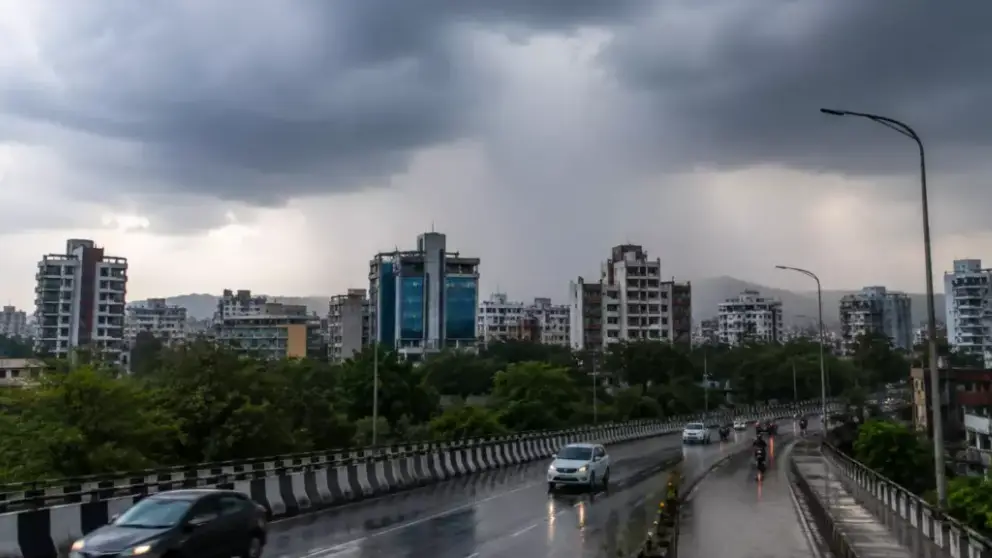
Pune has been getting a lot of heavy rain lately. For many days, the roads were full of water, and people had a hard time going to work. But now, there is some good news for everyone in the city. The heavy rains are finally taking a break. The India Meteorological Department, which we also call the IMD, has said that Pune will get only light to moderate rain from Wednesday. This is a big relief for the people who live here.
The past few days have been very tough. The skies were dark, and it did not stop pouring. Now, with the weather changing, people can look forward to a normal routine. Shops can open without fear, and traffic can move smoothly again.
A Week of Record-Breaking Rain
The rain we saw this week was not normal. It was actually historical. In Shivajinagar, which is a major area in Pune, the weather station recorded 97.5 mm of rain in just 24 hours ending Tuesday morning. Just the day before that, Shivajinagar received a massive 108.4 mm of rain. To give you an idea of how big this is, that was the fourth-highest amount of rain recorded in July since people started keeping records way back in the year 1896!
If we look at the numbers, Pune has received more rain in just one week than it usually gets in the entire month of July. Between July 1 and July 7 this year, Shivajinagar recorded 301.1 mm of rain. If we compare this to last year, the total rain for the whole month of July was only 130.3 mm. In 2023, it was 154.5 mm. Even in other years like 2021 and 2020, it was just 193 mm. In fact, over the last ten years, only three years (2024, 2022, and 2019) had more total July rain than what we received in just the first seven days of this month. This shows how heavy the rainfall has been this time.
Why is the Rain Decreasing?
Many people are wondering why the rain is suddenly slowing down. The scientists at the IMD have a simple explanation for this. There was a low-pressure weather system over East Madhya Pradesh. This system is now moving away toward the west-northwest side, across Madhya Pradesh and Uttar Pradesh. As it moves, it is also getting weaker.
Because of this movement, the Arabian Sea branch of the monsoon is losing its strength. The heavy rain clouds are shifting towards the north of the country. S D Sanap, who is a scientist at the IMD, said that the rainfall over Maharashtra will go down. The heavy intensity of the rain will reduce, giving the state a much-needed break from the constant downpour.
How Different Areas in Pune Reacted
The drop in rain can already be seen in many parts of Pune. Let us look at some numbers from different neighborhoods. Pashan is an area that got flooded recently. It had received 113 mm of rain between Sunday and Monday. By Tuesday morning, it got another 115.6 mm. But after that, the rain stopped being so heavy. Between Tuesday morning and evening, Pashan only got 23 mm of rain. This is much lower than the 69 mm it got during the same hours on Monday.
Other areas also showed a similar drop. The National Defence Academy (NDA) area got only 14 mm of rain on Tuesday evening. Lohegaon, where the airport is, recorded only 9 mm. These numbers are very small compared to what they were seeing earlier. Chinchwad was one of the hardest-hit places. It was lashed with 132 mm of rain by Monday evening, making it a total of 474 mm over two days. On Tuesday, Chinchwad recorded just 13.5 mm. This huge drop has brought a sigh of relief to the local people.
There’s more to life than simply increasing its speed.
By Udaipur Freelancer
However, there were a few exceptions. Hadapsar received 8.5 mm of rain on Tuesday, which was almost the same as Monday. Lavale got 3 mm of rain on Tuesday, after getting no rain on Monday. But overall, almost every part of the city saw the rain go down.
Impact on Daily Life and Markets
When it rains this heavily, it is not just about water on the roads. It affects how we live and buy things. For example, heavy rains often stop trucks from bringing fresh vegetables to the city markets. This leads to shortages and higher prices. You can read more about how this happened in our previous post on Pune Gultekdi market rain supply disruption and prices. Now that the rain is slowing down, we can hope that the supply of fresh food will get back to normal soon.
This pause in the monsoon is also important for city maintenance. In nearby cities like Mumbai, a pause in the rain allows workers to fix the roads. You can check out how a similar pause helps with Mumbai monsoon pause and road concretisation progress. When the heavy rain stops, municipal corporations can quickly repair potholes and make the roads safe for drivers again.
What to Expect Next
So, what should the people of Pune do now? First, enjoy the cool weather without the fear of heavy floods. It is a great time to clean up any water that has collected around your house to prevent mosquitoes. Since the forecast says "light to moderate rain," you should still carry an umbrella or a raincoat when you go out. But you do not have to worry about school closures or massive traffic jams like before.
The ghat areas near Pune might still see some rain, but the city itself is moving towards normalcy. This monsoon break is the perfect time for the city to dry up and get ready for the rest of the rainy season. Stay safe, stay dry, and enjoy the pleasant Pune weather!












Recommended for you
Must-See Art Exhibitions Around the World This Year
The Revival of Classical Art in a Digital Age
Breaking Down the Elements of a Masterpiece Painting
The Revival of Classical Art in a Digital Age