In a move that has stunned political analysts and stirred controversy in Oslo, Venezuelan opposition leader and Nobel Peace Prize winner María Corina Machado has done the unthinkable. During a high-stakes visit to the White House this Thursday, she presented her Nobel Peace Prize medal to President Donald Trump.
The gesture marks a pivotal moment in the chaotic post-Maduro era of Venezuela a moment where symbolism, diplomacy, and hard-nosed "America First" politics are colliding in real-time.
A Big Move Or a Desperate Request?
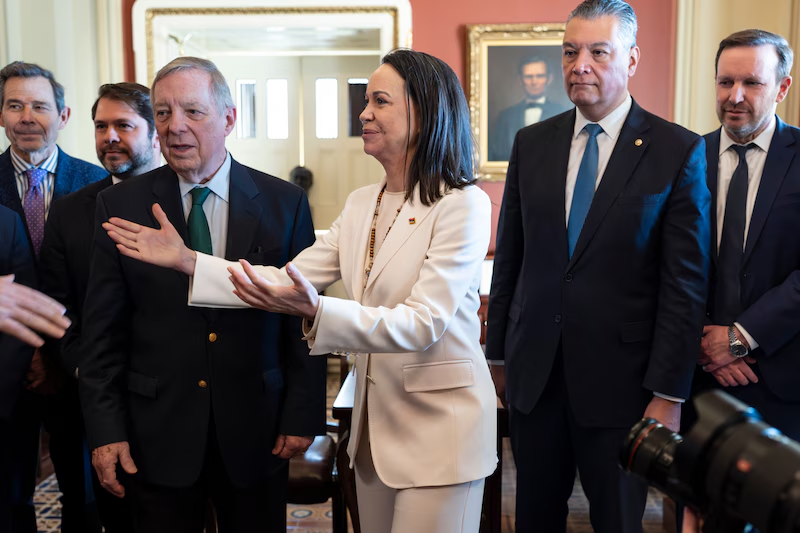
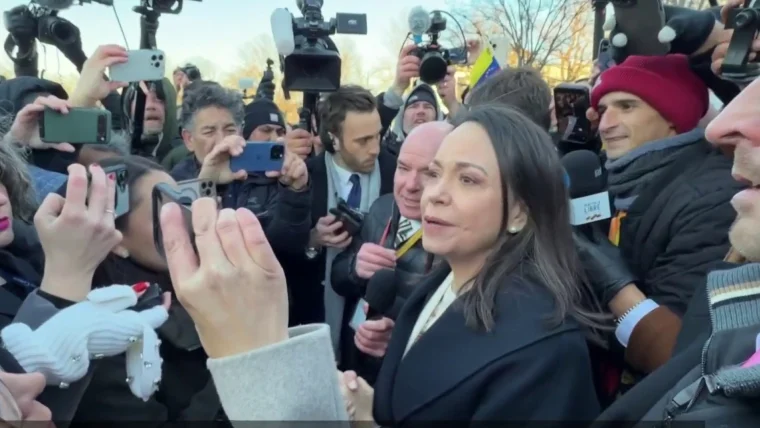
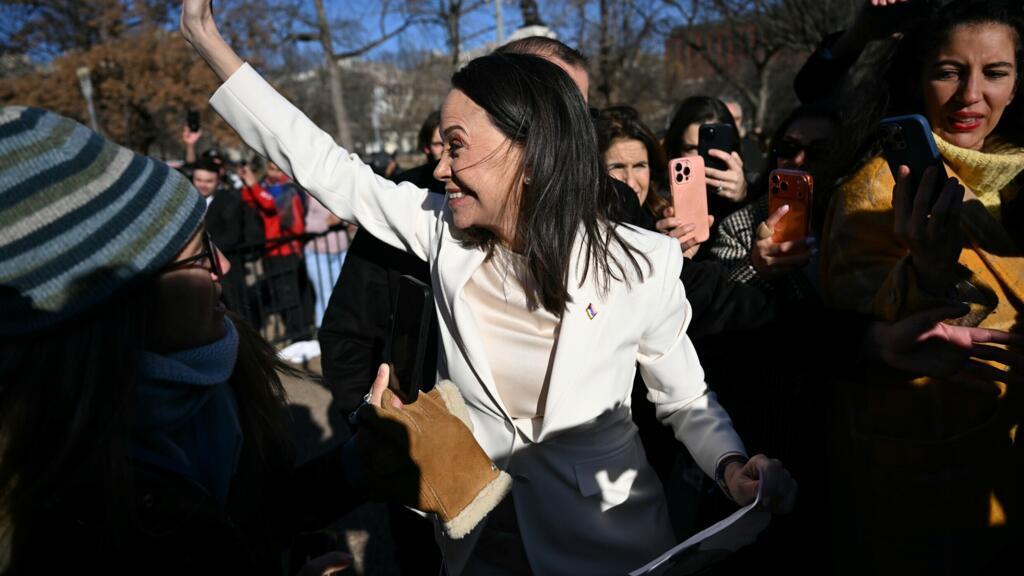
Emerging from the shadows after a year in hiding, Machado arrived at the White House to the cheers of dozens of supporters. Her mission? To solidify her standing as the legitimate leader of a free Venezuela.
Upon exiting her meeting with President Trump, Machado revealed to reporters that she had physically presented her Nobel medal to him. She described the gift as "recognition for his unique commitment with our freedom."
For Machado, a figure who has spent two decades fighting the socialist regime of Hugo Chávez and Nicolás Maduro, the medal represents the pinnacle of her struggle. To hand it over to a foreign leader is unprecedented.
"We can count on President Trump," she told the press, beaming. However, the reality inside the Oval Office appears far more complex than the celebratory atmosphere outside suggested.
The Trump Administration’s Pivot
While Machado was offering medals and gratitude, the Trump administration was signaling a colder, more pragmatic reality. Despite the U.S. military’s role in the recent ousting of Nicolás Maduro who is now facing drug trafficking charges in New York Trump has stopped short of endorsing Machado as Venezuela's next President.
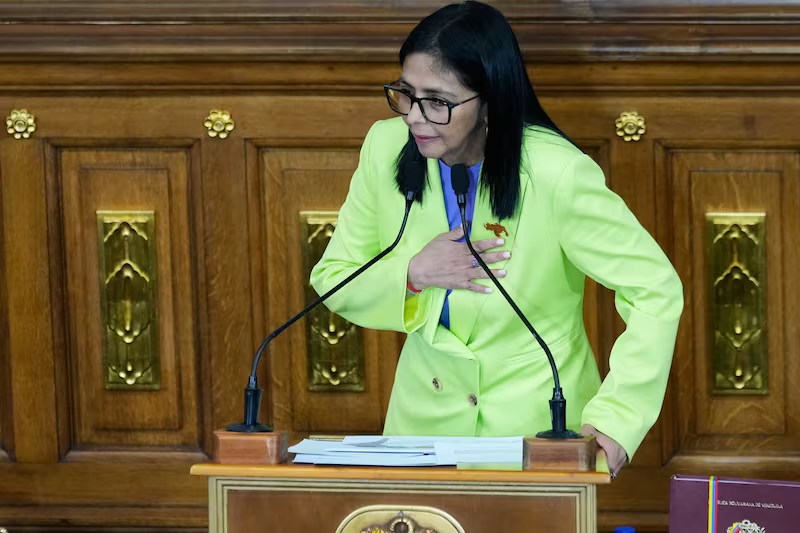
Reports indicate that President Trump and his top advisors have expressed a surprising willingness to work with Delcy Rodríguez, the current acting President and a former key figure in the Maduro regime.
Following the meeting, Trump noted he had a "great conversation" with Rodríguez, stating, "I think we’re getting along very well with Venezuela."
This pivot has left many shocked. While Machado is the "Iron Lady" of the opposition and the darling of the international human rights community, Trump seems skeptical of her political viability. He reportedly remarked that it would be "tough for her to be the leader" and questioned whether she commands enough respect within the fractured country.
The "America First" Calculation
Why would the U.S. side with a remnant of the old regime over a Nobel Laureate? The answer likely lies in transactional politics.
White House Press Secretary Karoline Leavitt described the meeting with Machado as "extraordinary" but clarified that it did not signal a change in policy. The administration appears prioritized on stability and cooperation regarding U.S. interests specifically, the release of American prisoners and halting migration over ideological purity.
There’s more to life than simply increasing its speed.
By Udaipur Freelancer
Acting President Rodríguez has adopted a less strident posture than her predecessor, suggesting she can make Trump’s "America First" policies work for Venezuela. For Washington, a cooperative acting government might be preferable to the uncertainty of a new political revolution led by Machado.
The Nobel Controversy
As if the geopolitical drama wasn't enough, Machado’s gesture has sparked a row with the Nobel Committee.
Prior to the meeting, the Committee explicitly warned against the idea of "sharing" the prize. They issued a statement reminding Machado that the will of Alfred Nobel cannot be overruled and that the prize is an individual honor.
By presenting the medal to Trump regardless, Machado has defied the custodians of the world's most prestigious award. It highlights just how high the stakes are for her: she is willing to risk her international standing to secure the one alliance she believes can save her country.
What Comes Next?
The situation in Venezuela remains fluid. Nicolás Maduro is in U.S. custody, the "acting" government is trying to rebrand itself to appease Washington, and the opposition leader is making grand symbolic gestures to remain relevant.
Machado’s visit to Washington was intended to be a coronation of sorts. Instead, it served as a reality check. She has the people's cheers and a Nobel Prize, but she does not yet have the full endorsement of the White House.
As Venezuela moves toward potential elections, the question remains: Will the U.S. eventually back the "Freedom Fighter" Machado, or will they stick with the pragmatic stability of the Rodríguez interim government?
For now, Donald Trump holds both the cards and, apparently, the Nobel medal.
What do you think of Machado’s decision to give away her Nobel medal? Was it a brilliant diplomatic move or a step too far? Let me know in the comments below!












Recommended for you
Must-See Art Exhibitions Around the World This Year
The Revival of Classical Art in a Digital Age
Breaking Down the Elements of a Masterpiece Painting
The Revival of Classical Art in a Digital Age