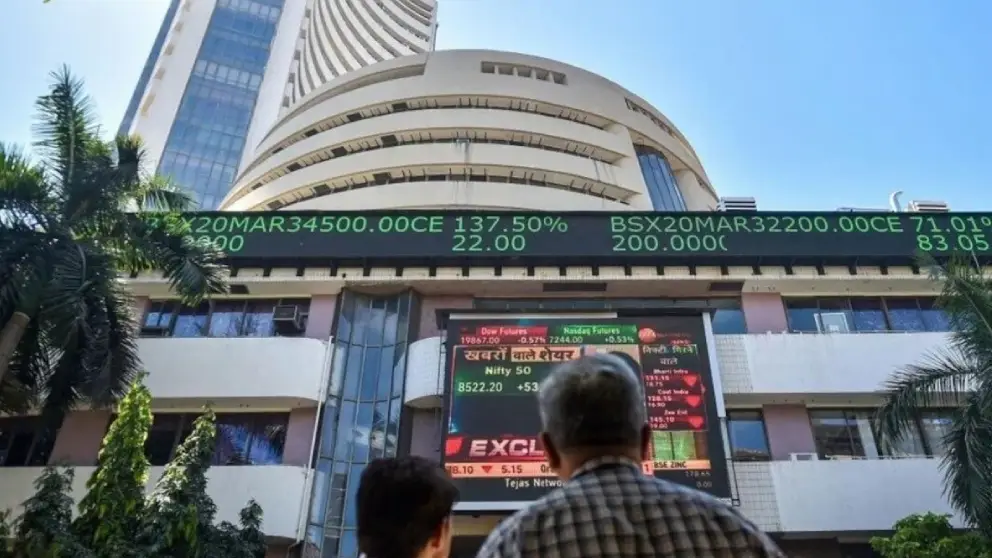
Have you ever felt that nagging feeling when you're driving, and you realize you're slowly losing speed, even though you're still moving forward? That’s a bit like what’s happening with the Indian stock market right now.
The Sensex, which is our trusty barometer for the top 30 companies in India, is still near its all-time highs. But under the surface, the engine that powers it company profits is starting to sputter.
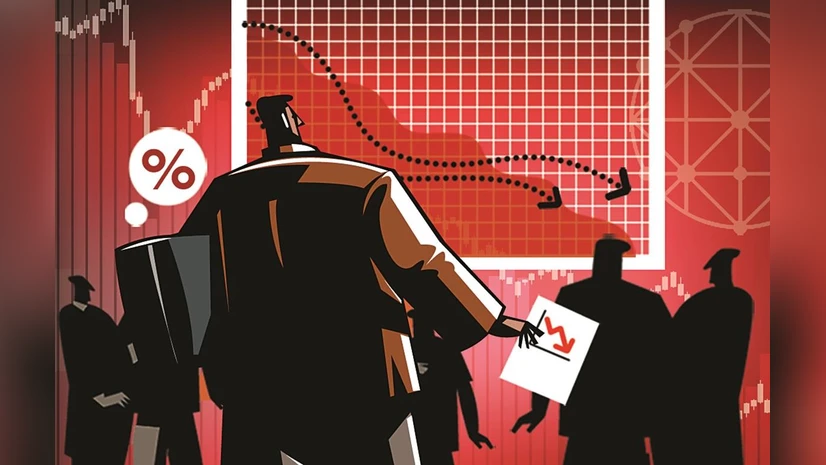
The earnings growth for these top companies has hit a major speed bump, falling to its lowest point in almost five years. Let’s break down what this means in simple terms and why it matters to you.
The Big Slowdown: What the Numbers Are Telling Us
The key metric we're talking about here is EPS, which stands for Earnings Per Share.
Think of it this way. If a company is a pizza, and the shares are the slices, the EPS is how much profit is in each slice. A higher EPS means more profit per slice, which is great for investors.
Right now, the year-on-year growth of this EPS for Sensex companies has dropped to a mere 1.3%.
To put that in perspective, this is the weakest performance we’ve seen since the tough days of the COVID-19 lockdowns in April 2021. For a long time, we were used to seeing healthy, double-digit growth. Imagine getting a 15% salary hike one year and just a 1% hike the next. It’s that kind of a slowdown.
A Look Under the Hood: Not Everyone is on the Same Page
When we look at the individual companies within the Sensex, the picture gets even clearer. Out of the first 10 major companies that have shared their recent results, eight have shown a decline in their profit growth.
It’s important to note that a giant like Reliance Industries has a huge impact on the overall average. If we were to set Reliance aside for a moment, the combined profit of the other companies in that early group actually went up by 2.6%. This tells us that while some companies are struggling more than others, the overall trend is one of caution. The high-speed growth train has definitely slowed to a crawl.
The Big Puzzle: If Growth is Slow, Why is the Market So Expensive?
Here’s where things get really interesting and a bit confusing. Even though profit growth is slowing down, the stock market's valuation is going up.
We measure this using something called the P/E ratio (Price-to-Earnings ratio).
In simple terms, the P/E ratio is like the 'price tag' of the market. It tells you how much you are paying for every one rupee of a company's earnings.
There’s more to life than simply increasing its speed.
By Udaipur Freelancer
- A low P/E ratio is like finding a great deal at a sale.
- A high P/E ratio is like paying full premium price for a designer item.
Right now, the Sensex’s P/E ratio is around 23.5, up from about 21 just a year ago. This means that even though companies are earning less (or their earnings growth is slowing), investors are paying a higher price for their shares. We are essentially paying more for less growth, which is a classic sign that the market might be getting a bit overheated.
Follow the Money: Why Foreign Investors Are Taking a Step Back
Big international investors, known as Foreign Portfolio Investors (FPIs), are watching this very closely. For them, it’s all about getting the best return for their money.
Recently, these FPIs have been selling their Indian stocks. In January alone, they pulled out over $2.8 billion. This is a major reversal from 2023 when they were buying enthusiastically.
Why the change of heart?
It’s a simple calculation. If they can get a safe and guaranteed 4-5% return by investing in US or European government bonds, why would they risk their money in an Indian stock market where the earnings growth is just 1.3%? The reward just doesn’t seem to justify the risk for them at this moment.
What This Means for You
So, what should a regular investor make of all this?
This isn't a signal to panic, but it is a clear signal to be cautious. The market might look shiny and high from the outside, but the foundation the earnings growth is a bit shaky.
- Don't Chase the Hype: It’s probably not the best time to jump into the market just because it’s at a high.
- Review Your Investments: Take a look at your portfolio. Are you invested in solid companies with strong fundamentals, or are you just riding a wave?
- Think Long-Term: Market cycles come and go. Slowdowns are normal. The key is to invest in quality businesses that can weather these storms.
The party on Dalal Street might not be over, but the music has certainly quieted down. It’s a time for smart, careful dancing rather than wild moves.
What are your thoughts on the current market situation? Are you feeling cautious or optimistic? Let me know in the comments below

















Recommended for you
Must-See Art Exhibitions Around the World This Year
The Revival of Classical Art in a Digital Age
Breaking Down the Elements of a Masterpiece Painting
The Revival of Classical Art in a Digital Age