Have you ever wondered what the actual future of warfare looks like? We always see crazy technology in science fiction movies, but lately, the lines between movies and real life are getting really blurry. Recently, a major news story broke that completely changes how we think about modern combat.
We are talking about the recent strikes on Iran, where the United States military managed to hit a staggering 1,000 targets in just 24 hours. Yes, you read that right. One thousand targets in a single day.
How is that kind of extreme accuracy and speed even humanly possible? Well, the short answer is: it isn't. The military didn't just use human brainpower to figure this out, they achieved this massive level of precision with the help of Artificial Intelligence.
Let’s break down exactly how this happened, the tech companies involved, the massive drama happening behind the scenes, and what it means for the world right now. Grab a cup of coffee, because this story is a wild ride.
The Tech Behind the Strikes: Meet Claude and Maven
To understand how the US military pulled this off, we have to look at the tools they are using. The core of this operation is an AI model named 'Claude'. Claude was created by a well-known AI company called Anthropic.
But Anthropic didn't just hand the military a basic chatbot. The US military uses Claude through a special partnership with a major war-tech company called Palantir.
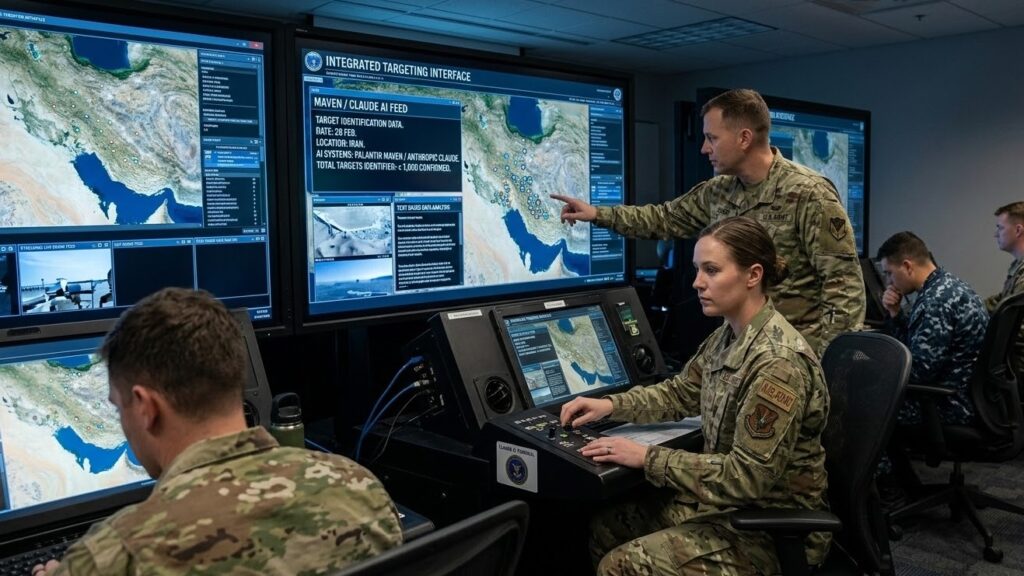
Palantir took Anthropic’s AI model and embedded it deeply into their own military software, which is known as the 'Maven Smart System.'
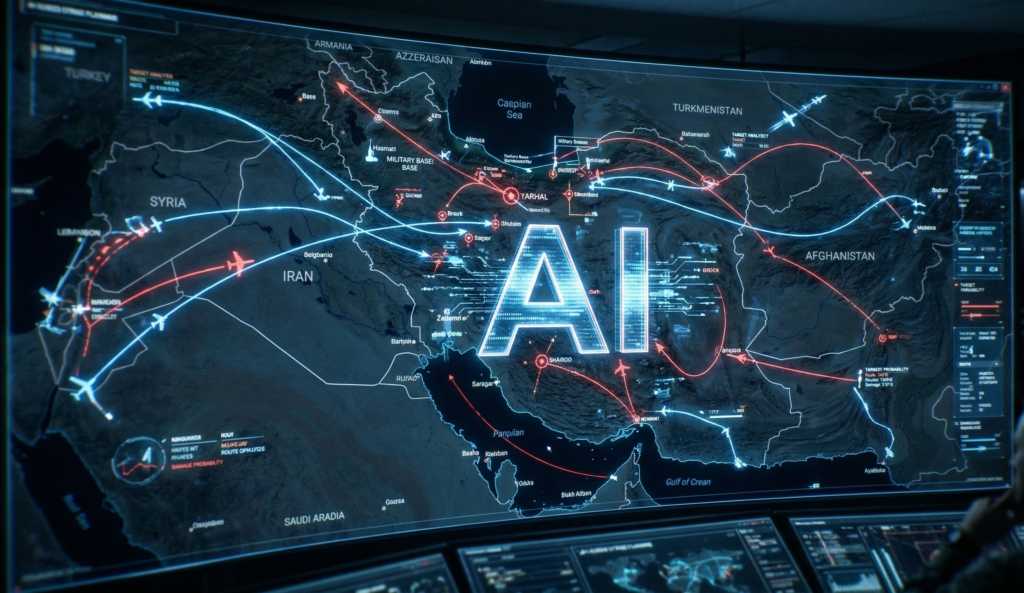
So, what does this Maven Smart System actually do? In simple words, it gives the military real-time targeting locations. It does this by instantly processing massive amounts of highly classified data. We are talking about live feeds from spy satellites and endless streams of surveillance data. The AI looks at all of this in real-time and makes sense of it instantly.
For the military, the main goal of this technology is to reduce something called the 'kill chain.' The kill chain is just a military term for the whole process of finding a target, getting the official approval to attack it, and finally launching the strike. By having AI sort through all the data, this process becomes terrifyingly fast.
The First 12 Hours and the Fall of a Leader
The sheer speed of this AI system was put on full display during the strikes on Iran. In just the first 12 hours alone, America and its allies were able to launch roughly 900 missiles at Iranian targets.
This rapid-fire assault had major consequences. It was during this specific wave of AI-assisted strikes that the compound of Supreme Leader Ayatollah Ali Khamenei was hit, ultimately leading to his death.
Leading up to these first strikes, the AI was putting in a lot of work. According to reports from The Washington Post and The Guardian, the Palantir Maven system (powered by Claude) suggested hundreds of targets for the US military to hit.
But it didn't just hand over a random list. The AI actually prioritized these targets based on their level of significance and provided the exact location coordinates for every single one.
Furthermore, the system does something that sounds straight out of a video game. It actually suggests the specific weapon that the military should use for each specific location! The AI calculates this by looking at the current stockpile levels of weapons and analyzing how those specific weapons performed against similar targets in historical data. It does all of this math in seconds.
Moving Faster Than the Speed of Thought
To really grasp how crazy this is, we have to look at what the experts are saying. Craig Jones, a senior lecturer in Political Geography at Newcastle University and an expert in kill chains, shared some fascinating insights with The Guardian.
He explained that the AI machine is making these military suggestions in ways that are actually much quicker in some ways than the speed of thought.
Jones pointed out that the AI gives the military two huge advantages: scale and speed. Because of the AI, the military is carrying out pinpoint, assassination-style strikes all at the exact same time. It allows them to completely decapitate a regime's ability to respond with their own aerial ballistic missiles.
As Jones perfectly summarized it: things that might have taken days or even weeks to plan out in historic wars, you are now doing everything all at once.
The Backstory: Venezuela, Drama, and Donald Trump
Now, here is where the story gets super dramatic. The Iran strikes were not the first time the US military used this specific AI.
There’s more to life than simply increasing its speed.
By Udaipur Freelancer
Back in January, the US military used Claude during a raid that led to the capture of Venezuelan President Nicolas Maduro. However, the creators of the AI, Anthropic, were not happy about this at all.
Anthropic vehemently opposed the military using their tech this way. They pointed to their company's terms of use, which specifically stated that Claude was disallowed from being applied for violent consequences or to develop weapons and surveillance.
This pushback from the AI company did not sit well with US President Donald Trump. He was the one who directed allies with the tech firm to be completely severed. Trump angrily fired back at the company, publicly calling Anthropic a 'radical Left AI company.'
The Breakup: Trying to Unplug the AI
So, the President ordered the military to stop working with Anthropic. Sounds simple, right? Just unplug it. Well, not quite.
Pentagon chief and US Secretary of War, Pete Hegseth, echoed the views of the 78-year-old Republican President. But even Hegseth had to step back and acknowledge a massive problem: it is incredibly difficult to just switch to a completely different AI model right away. The military is too wired into it.
Because of this, Hegseth released a statement explaining that Anthropic will actually continue to provide the Department of War with its services for a limited time. They agreed to a period of no more than six months. This timeframe is strictly to allow for a seamless transition over to what Hegseth called a 'better and more patriotic service.'
Total Addiction: Will the Government Take Over the Tech?
The reality is that the military is heavily reliant on this AI. Up until May 2025, more than 20,000 US military personnel were actively using the Maven system.
The Washington Post reported that US military commanders have become so completely dependent on the AI system that it has created a messy legal situation. If Anthropic’s CEO, Dario Amodei, tries to direct the military to stop using the system right now, the Trump administration has a backup plan. The government might actually use special government powers to forcefully retain the technology and keep it running until a proper replacement is finally ready.
Is Iran Striking Back at the AI?
All of this brings up a huge question: What about Iran? Are they using AI in this ongoing war?
Right now, it is not actually known if Iran has used AI themselves. However, there are some major clues that they know exactly how the US is fighting.
Earlier this week, there were Iranian drone strikes on American data centers located in the Gulf nations. This specific targeting underscores that Tehran might be very aware of the usage of this AI technology.
Experts believe that Iran could have possibly struck these data centers as a form of direct revenge against America for using AI in the ongoing war. Besides just revenge, there is a tactical reason. Data centers are the places that process all this localized information.
Therefore, bombing the data centers could have been a desperate attempt by Tehran to put a hard stop to US and Israeli forces in the Gulf regions from gathering local information and feeding it into the Maven AI system.
Final Thoughts
We are living in a totally new era of technology and conflict. The idea that a computer program can process satellite feeds, pick hundreds of targets, suggest the exact bombs to use, and help launch 900 missiles in 12 hours is both amazing and terrifying.
With tech companies fighting with the government over how their AI is used, and enemies literally blowing up data centers to stop computer processing, warfare has officially changed forever.
What do you guys think about the military using AI to make decisions this fast? Let me know your thoughts in the comments below!
Udaipur Freelancer delivers high-quality web, marketing, and design solutions. We focus on building impactful digital experiences that help your brand succeed in today's market.

















Recommended for you
Must-See Art Exhibitions Around the World This Year
The Revival of Classical Art in a Digital Age
Breaking Down the Elements of a Masterpiece Painting
The Revival of Classical Art in a Digital Age