Politics in India can get really heated, but recently, things hit a new level of intensity in the Parliament. If you have been following the news, you probably heard about the chaos in the Rajya Sabha and Lok Sabha.
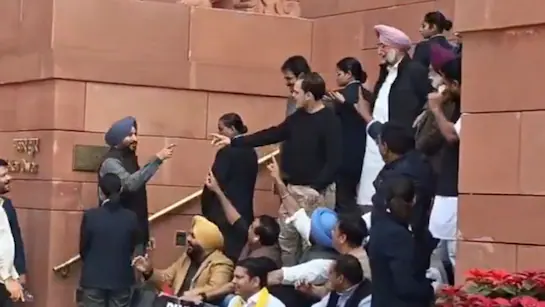
The headlines are everywhere. The Congress party and their supporters raised a very controversial slogan, "Modi teri kabr khudegi" (Modi, your grave will be dug). It’s a harsh thing to say to anyone, let alone the Prime Minister of the country.
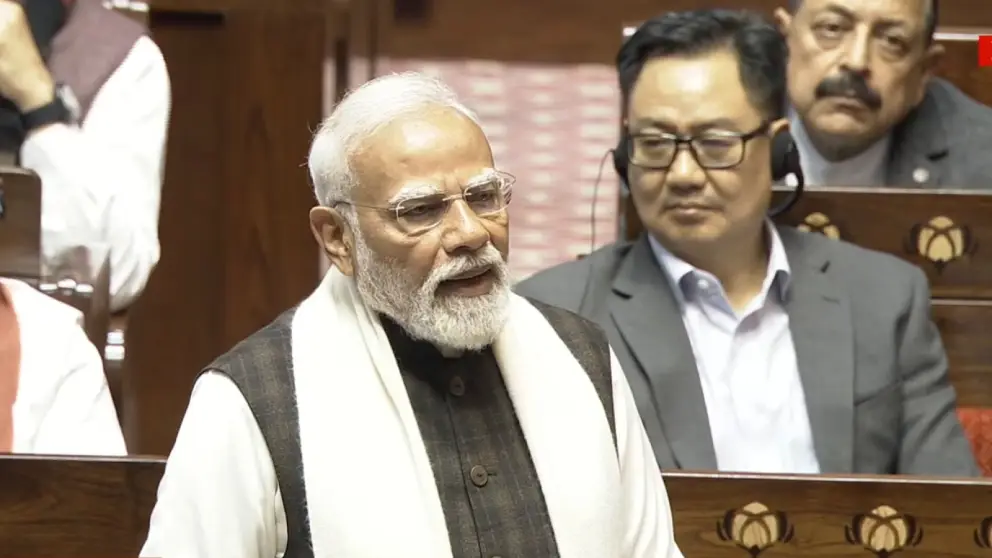
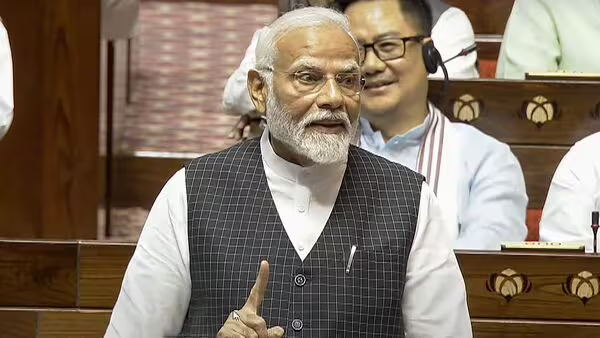
But if you know PM Narendra Modi, you know he doesn't just sit back and take it. During the Motion of Thanks on the President’s Address, he stood up in the Rajya Sabha and delivered a speech that people are going to be talking about for a long time. He didn’t just reply. he dismantled the opposition’s narrative piece by piece.
Let’s dive into what happened, what was said, and how the PM turned a hateful slogan into a moment of strength.
The Slogan That Started It All
First, let’s talk about the slogan. During protests, members of the opposition were heard shouting, "Modi teri kabr khudegi."
Instead of getting angry or losing his cool, PM Modi used this slogan to highlight the mindset of his political rivals. In his speech, he mentioned this slogan multiple times not to complain, but to show the country what he is up against.
He said that while these people are busy dreaming about digging his grave, he is busy working for the country. He pointed out a stark contrast. The opposition is focused on death and negativity, while he is focused on the lives of the 140 crore people of India.
He delivered a powerful line that silenced the noise. He said that for their family-run politics, the grave might be the focus, but for him, the focus is service (Seva) to the nation.
The 'Suraksha Kavach' (Protective Shield)
One of the most touching moments of the speech was when Modi explained why these slogans don’t hurt him. You might wonder, how does someone handle so much hate? PM Modi gave the answer.
He said, "The country’s mothers and sisters, and the common people have become my 'Suraksha Kavach' (protective shield)."
He explained that the blessings of millions of Indians are protecting him. He challenged the opposition, saying that no matter how hard they try to dig his grave, they cannot penetrate this shield of blessings. He essentially told them, You aren’t fighting Modi, you are fighting the trust of millions of Indians.
This was a clever and emotional way to connect directly with the voters, reminding them that he credits his survival and success to them, not to any political maneuvering.
The Lotus Blooms in the Mud
If you follow Indian politics, you know the symbol of the BJP is the Lotus (Kamal). PM Modi used a beautiful metaphor to describe the chaotic behavior of the opposition.
The opposition MPs were shouting, rushing into the well of the house, and disrupting the speech. Addressing this chaos, Modi smiled and thanked them. Yes, he thanked them!
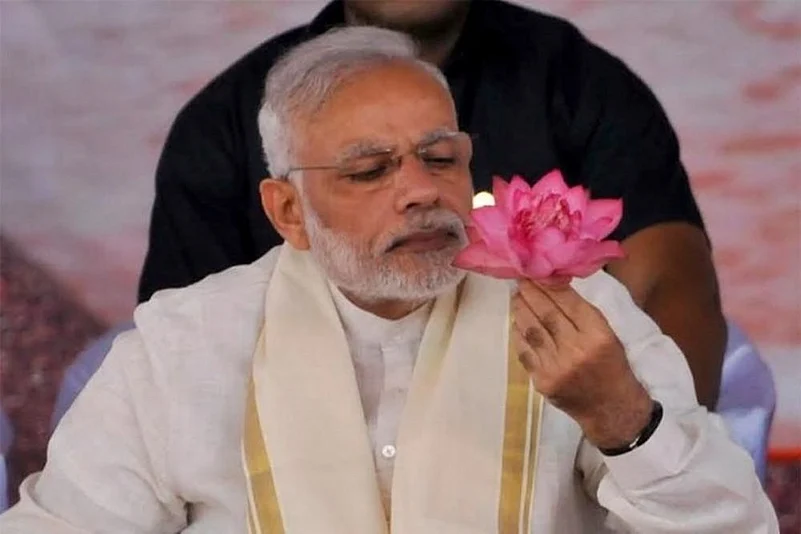
He said, "The more mud (keechad) you throw, the more the Lotus will bloom."
It was a simple but hard-hitting point. A lotus needs mud to grow. By creating a messy, muddy atmosphere with their protests and abuses, the opposition was unintentionally creating the perfect environment for the BJP to succeed. He framed their negativity as the fuel for his party’s rise.
Why Are They So Angry?
PM Modi didn't just defend himself. he went on the offensive to explain why the Congress party is so upset with him. According to him, it’s because he closed their shops of corruption.
He listed out several achievements that have rattled the opposition:
Direct Benefits: In the past, money sent for the poor would disappear in the middle. Now, thanks to technology and Jan Dhan accounts, the money goes directly to the people.
Infrastructure: He spoke about bringing electricity to 18,000 villages that were left in the dark for decades.
Social Changes: He mentioned the Abrogation of Article 370 in Jammu & Kashmir and the peace efforts in the North East.
He argued that because his government has stopped the scams and the leakage of public money, the people who used to benefit from that corruption are now desperate. Their desperation is coming out in the form of slogans about digging graves.
The Remote Control Jibe
Modi took a trip down memory lane to criticize the way the Congress government functioned in the past. He used the term "Remote Control Government."
He was referring to the UPA era, implying that the Prime Minister at the time didn’t have the real power, and the decisions were being made by a specific family from behind the scenes. He contrasted that with his current government, saying that the only remote control he listens to is the people of India.
He said, "For decades, the family was supreme. Now, the nation is supreme."
A Message to the Youth: 'Vishwabandhu'
Shifting gears from politics to the future, PM Modi had a special message for the youth of India. He spoke about how the world views India differently now.
He said the world now sees India as a Vishwabandhu a friend to the world.
There’s more to life than simply increasing its speed.
By Udaipur Freelancer
He mentioned the trade deals India has signed with major global economies and the success of the G20 presidency. He told the youth that the world is opening its markets to India. Whether it is the middle class, the youth in cities, or those in villages, opportunities are knocking on the door.
His message was clear: Don’t get distracted by the negativity of the opposition. The world is waiting for you, and I am standing with you to ensure you succeed.
Defending the President and Tribal Pride
Things got serious when Modi addressed the disrespect shown towards the President of India, Droupadi Murmu.
President Murmu is a tribal woman, representing a community that has often been marginalized. Modi accused the opposition of insulting her and, by extension, insulting all the tribal communities and the North East.
He pointed out that the opposition didn't even allow a proper discussion on the Motion of Thanks to the President’s address. He framed this behavior not just as anti-Modi, but as anti-tribal and anti-woman. He reminded the House that when a tribal daughter became President, it should have been a moment of pride for everyone, but the Congress party chose to play politics instead.
The 'Gaddar' (Traitor) Controversy
During the speech, PM Modi also brought up a specific incident involving Rahul Gandhi and Ravneet Singh Bittu, a Congress leader whose family has a history of sacrifice.
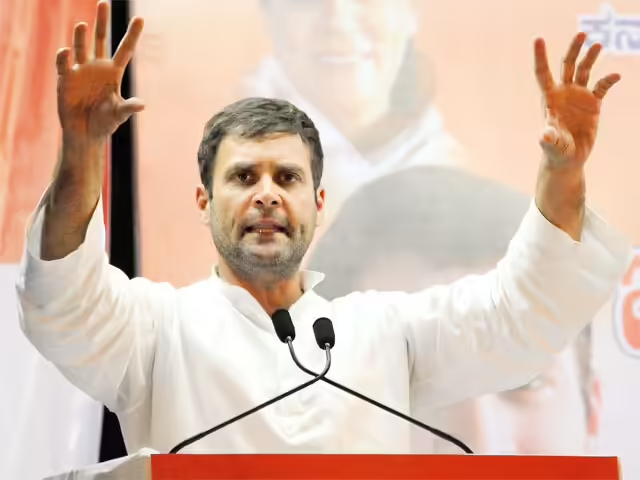
Apparently, Rahul Gandhi had referred to Bittu as a traitor (Gaddar). PM Modi was visibly upset by this. He reminded the House that Bittu is a Sikh and his grandfather (former Punjab CM Beant Singh) was assassinated by terrorists while fighting for the country.
Modi asked, "How can anyone call a patriot a traitor?"
He accused the Congress of hating the Sikh community and failing to respect those who have bled for the nation. This was a direct attack on the leadership style of Rahul Gandhi, painting him as insensitive to the sacrifices made by families in Punjab.
Nutrition from Abuse?
In one of the most sarcastic and memorable lines of the speech, PM Modi revealed the secret to his energy.
He joked that people often ask him where he gets the stamina to work so hard. He said, "I consume 2-3 kgs of abuse (gaali) every day. That is my nutrition."
By turning the abuse into a joke, he took away the power of the insults. He showed that the bad words don’t weigh him down, they actually fuel him to work harder. It was a classic move to make the aggressors look petty while he looked like the bigger man.
140 Crore Solutions vs. 36 Crore Problems
Finally, Modi drew a historical comparison between his governance style and that of Indira Gandhi.
He recalled that Indira Gandhi once said India faces 36 crore problems (referring to the population at the time). Her mindset, according to Modi, was that the people were the problem.
Modi flipped this narrative. He said that today, he doesn’t see 140 crore problems. He sees "140 crore solutions."
This highlights a major shift in attitude. Instead of blaming the population for the country's struggles, he views the citizens as the solution-makers who will drive the country forward.
Conclusion: A Speech of Defiance
The shouting in the Parliament was loud, but PM Modi’s message was louder.
The "Modi teri kabr khudegi" slogan backfired spectacularly. Instead of intimidating the PM, it gave him the perfect opening to list his achievements, expose the opposition's desperation, and connect emotionally with the public.
From the "Lotus blooming in the mud" to the "Suraksha Kavach" of the people's blessings, Modi turned a day of protests into a show of strength.
As we head closer to the next elections, this speech sets the tone. The opposition is banking on anger and slogans, while Modi is banking on his track record and the sentiment that the more you attack him, the stronger he gets.
What do you think about the PM's speech? Did the opposition go too far with the grave-digging slogan? Let me know in the comments below!
Udaipur Freelancer delivers high-quality web, marketing, and design solutions. We focus on building impactful digital experiences that help your brand succeed in today's market.















Recommended for you
Must-See Art Exhibitions Around the World This Year
The Revival of Classical Art in a Digital Age
Breaking Down the Elements of a Masterpiece Painting
The Revival of Classical Art in a Digital Age