If you have been keeping an eye on the news lately, you might have noticed a massive shift happening in the Middle East. Over the last thirty years, countries like Bahrain, Qatar, Kuwait, Oman, the UAE, and Saudi Arabia have worked incredibly hard to build a reputation for stability. They transformed their nations into safe, wealthy, and glamorous hubs in a region that is often known for conflict.
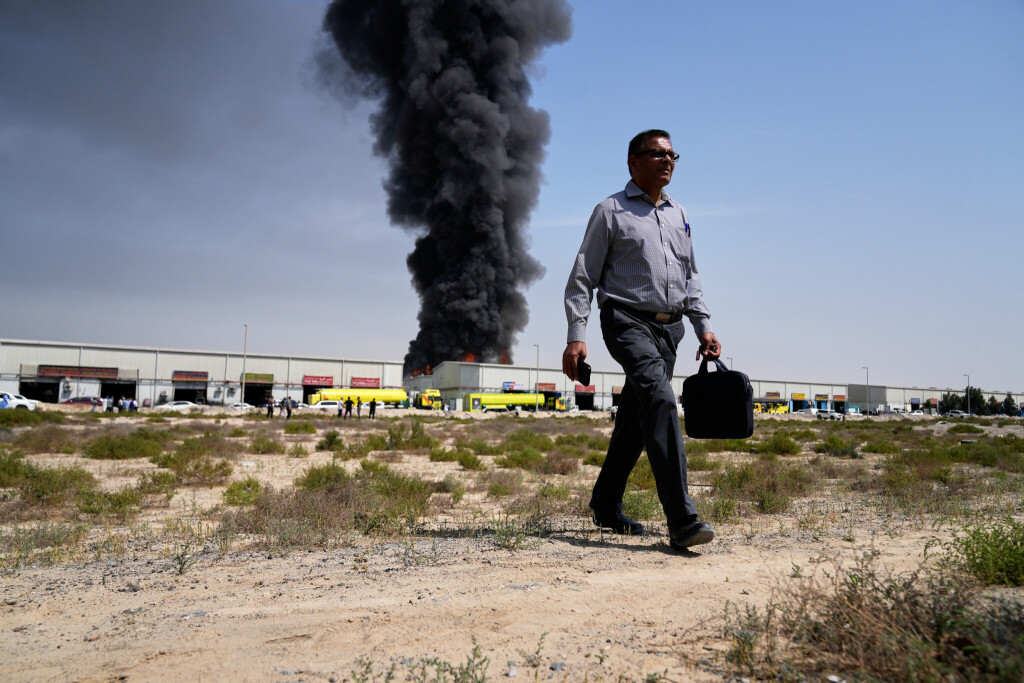
But recently, that peaceful image took a huge hit. Iranian missiles and drones have been fired into Gulf countries. We aren't just talking about strikes on US military bases, either luxury hotels and residential areas in places like Dubai and Abu Dhabi have been caught in the crossfire.
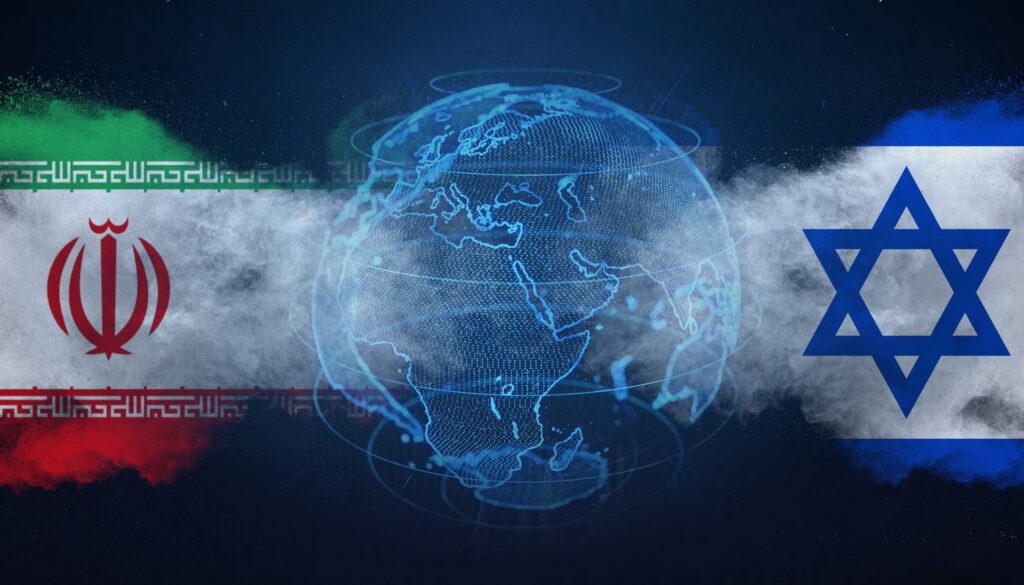
This chaos kicked off following the killing of Iran’s Supreme Leader, Ayatollah Ali Khamenei, in coordinated US-Israel airstrikes. Now, you might be wondering. with all their wealth and advanced military weapons, why haven’t the Arab countries fired back? Why are they choosing restraint instead of revenge?
Let’s dive into why these powerful nations are playing it safe and prioritizing containment over a direct, messy war with Iran.
Caught Between a Rock and a Hard Place
Right now, Arab nations are facing an incredibly tough choice. Khamenei wasn't just the political head of Iran, he was a massive figure for Shia Muslims all over the world.
If Arab countries decide to launch military strikes back at Iran, they risk stepping into a massive PR nightmare. Striking a fellow Islamic country right now wouldn't just look like self-defense. In the eyes of many, it would look like they are actively going against the larger Islamic community and standing side-by-side with Israel and the US especially right after the assassination of a major Islamic leader.
The Power of the Muslim Ummah
To really understand this hesitation, we have to talk about the Muslim Ummah. The Ummah is the collective community of Muslim nations worldwide, a deep-rooted concept from the Quran. Throughout history, the idea of the Ummah has been used to rally Muslims together against common outside threats.
Now, you might be thinking, "Wait, isn't there a big divide between Sunni and Shia Muslims?" You are absolutely right. Most Arab countries have a majority Sunni population, while Iran is the heavyweight of the Shia world (along with large Shia populations in Iraq, Lebanon, and Pakistan).
However, history shows us that this Sunni-Shia split can easily be pushed aside during major events. For example, back in 1989, when the founder of the Islamic Republic of Iran, Ayatollah Ruhollah Khomeini, died, even Iraqi President Saddam Hussein a Sunni who had just fought an eight-year war with Iran expressed official condolences. Syria’s President Hafez al-Assad praised Khomeini and declared seven days of mourning. Even Lebanon announced three days of mourning.
During the 1979 Iranian Revolution, many Sunni groups initially supported it because they saw it as a stand against Western influence. Fast forward to today, and the shared anger over Israel’s actions in places like Gaza frequently brings Sunnis and Shias together. The decades of tension between Muslims and Jews, which peaked after the creation of Israel in 1948, has often overshadowed the Sunni-Shia rivalry.
A great example of how delicate this balance is can be seen with the Abraham Accords. The UAE and Bahrain signed this US-led agreement to normalize ties with Israel. Saudi Arabia was actually all set to join them. But after Iran’s proxy, Hamas, carried out the October 7, 2023 attacks and Israel responded by bombing Gaza, Saudi Arabia quickly paused its plans to sign the agreement.
How the Arab World is Actually Responding
So, what have the Arab countries done while missiles fly? Mostly, they have focused on diplomacy.
There’s more to life than simply increasing its speed.
By Udaipur Freelancer
In the current crisis, Iran mainly targeted Gulf countries that host US military bases. For instance, Iran fired over 140 ballistic missiles at the UAE alone because it is home to the Al Dhafra Air Base, a major hub for the US Air Force holding thousands of personnel. (Though it's worth noting they also attacked Oman, which doesn't have a US base, but Oman was quick to offer a diplomatic explanation rather than escalate).
After these strikes, the US, Bahrain, Jordan, Kuwait, Qatar, Saudi Arabia, and the UAE released a joint statement. They strongly condemned Iran's indiscriminate and reckless attacks, calling them a dangerous violation of sovereignty. The Gulf Cooperation Council (GCC) also held an emergency meeting, denouncing the attacks and affirming their right to self-defense.
But talk is cheap, and military action has been practically non-existent. Even though Iran claimed it was only targeting US bases, these Sunni-majority Arab states made sure to stay completely out of the US-Israel operations against Iran. Many of them, including Jordan and Saudi Arabia, flat-out denied giving overflying rights for the strikes on Iran, loudly assuring Tehran that their airspace wasn't used.
Protecting the Economy and Avoiding the Crossfire
At the end of the day, Arab countries have strict national interests. They want to keep friendly ties with the US for security support, but they desperately need to protect their own economies. They have multi-billion dollar oil facilities and crucial sea routes, like the Strait of Hormuz, to worry about. A full-blown war would ruin decades of economic progress.
Take Saudi Arabia, for example. They have viewed Iran as a regional rival for decades, competing for influence in Yemen, Syria, and beyond. Recently, drones have literally landed in the Saudi kingdom, setting parts of their massive Aramco oil refineries on fire.
Yet, Saudi Arabia exercises extreme caution. Behind closed doors, it was reported that the Saudi Crown Prince, along with Israel's PM Benjamin Netanyahu and US President Donald Trump, urged strikes on Iran. But in public? Saudi Arabia has strictly called for a diplomatic approach. While Crown Prince Mohammed bin Salman has authorized his military to strike back if the attacks persist, their primary goal is to avoid the fight.
The Ultimate Fear: Looking Pro-West
There is no official, stated reason why the Arab nations haven't hit back, but the fear of targeted escalation is obvious. Iran has made its threats crystal clear. An Iranian military source recently posted on X (formerly Twitter) saying, "In the event of an attack by Arab regimes on Iran, the palaces of the kings of those countries will be directly targeted."
Beyond the physical threat, there is the massive fear of how an attack would be perceived by everyday Muslims around the world. Iran has spent years painting itself as the ultimate Islamic champion fighting against the West. If Arab countries attack Iran now, Tehran would easily spin the narrative, calling the Arab leaders slaves to the West and crying out about injustice. This would win Iran massive sympathy across the Middle East an advantage the Arab nations refuse to give them.
The Iranian regime is already treating the death of Khamenei as a holy sacrifice. A sacred red flag which represents the blood of martyrs has been flown above the Jamkaran Mosque in the holy city of Qom. This is a powerful symbol usually saved for intense religious mourning.
Ultimately, no matter what happens in backroom meetings, the Arab states know how this looks to the global Muslim community. Between Iran's direct threats to their royal palaces, the risk to their booming economies, and the danger of looking like they are betraying their religion to side with the West, the Gulf nations have decided that patience and containment are their smartest weapons right now.














Recommended for you
Must-See Art Exhibitions Around the World This Year
The Revival of Classical Art in a Digital Age
Breaking Down the Elements of a Masterpiece Painting
The Revival of Classical Art in a Digital Age