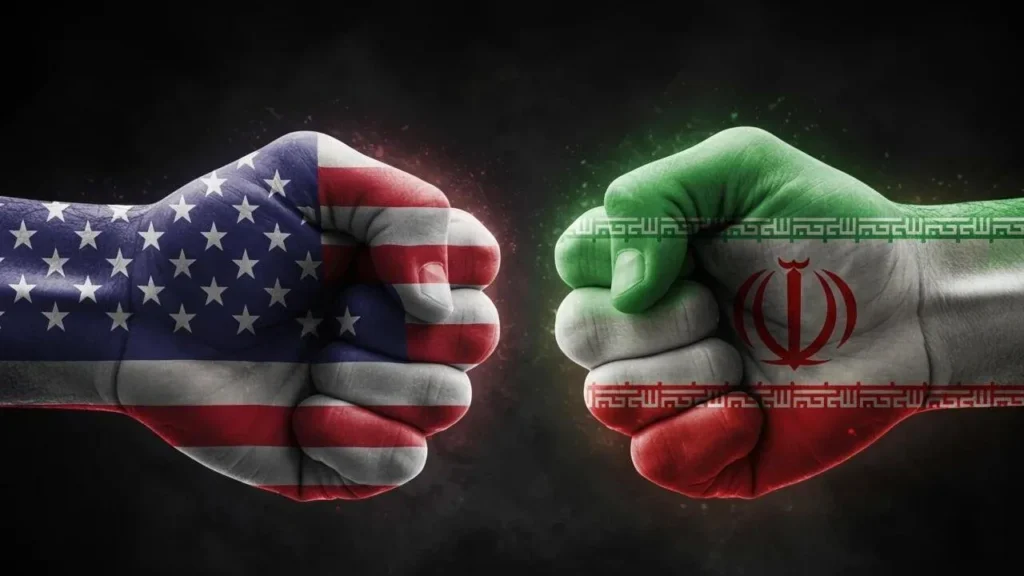
As the ongoing conflict between the United States and Iran stretches into its grueling fourth week, the narrative surrounding how it all began is taking a sudden and dramatic turn. As questions mount from both the public and political analysts regarding the origins of the military action, President Donald Trump has offered a new, rather unexpected explanation.
In a surprising shift of responsibility, Trump is now pointing directly at his Defense Secretary, Pete Hegseth, claiming he was the primary catalyst for the offensive.
Between shifting rationales, denied peace negotiations, and internal administration friction, the story behind the US involvement in Iran appears to be far messier than initially presented. Here is a deep dive into the latest developments, what the administration is saying, and why the official story keeps changing.
“You Said, ‘Let’s Do It’”: The Tennessee Roundtable Revelations
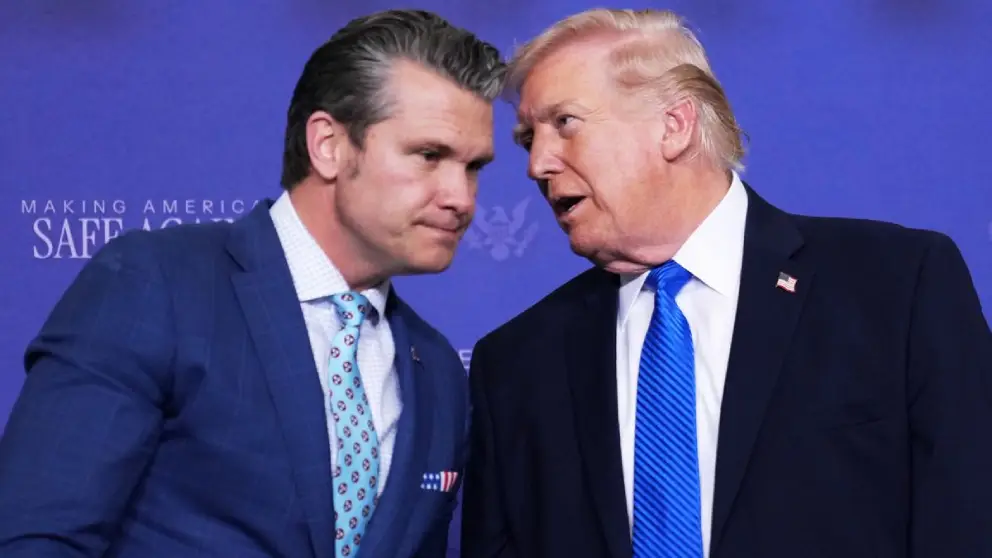
The most significant pivot in the administration’s narrative occurred during a recent Monday roundtable discussion in Tennessee. It was here that President Trump publicly suggested that Defense Secretary Pete Hegseth was the very first person in his inner circle to advocate for aggressive military action against Iran.
Addressing Hegseth directly before the crowd, Trump stated:
"Pete, I think you were the first one to speak up, and you said, 'Let's do it because you can't let them have a nuclear weapon.'"
This public declaration effectively shifts the immense weight of initiating a major international conflict onto the shoulders of the Defense Secretary. Furthermore, Trump offered a highly casual retelling of how the monumental decision took shape, telling attendees: "I called Pete. I called General Kane. I called a lot of our great people. We got a problem in the Middle East... Or we can take a step and make a little journey into the Middle East and eliminate a big problem."
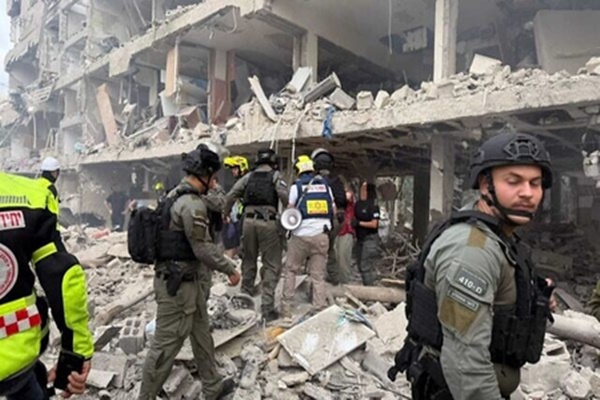
While the phrasing may have been shockingly casual for a matter of global security, the consequences unfolding in the Gulf have been anything but.
A Shifting Script: Why Are We Actually at War?
One of the most glaring issues plaguing the current administration is the lack of a unified message regarding the casus belli the reason for going to war. If you were to ask two different officials within the Trump administration why the US launched strikes against Iran, you are unlikely to receive the same answer.
The justifications have bounced between two main talking points:
The Inevitability Argument: Some insiders claim that Israel was preparing to strike Iran regardless of US input, making American military involvement unavoidable to protect an ally.
The Nuclear Threat: Others, echoing the quote attributed to Hegseth, insist that intelligence showed Iran was on the absolute brink of deploying a nuclear weapon.
This lack of cohesion in messaging has led to widespread skepticism and confusion among the American public regarding the true necessity of the conflict.
The Element of Surprise vs. Intelligence Warnings
The confusion deepens when looking at the administration's account of the events that immediately followed the initial US actions.
Just hours before publicly singling out Hegseth, Trump claimed that Iran's retaliatory strikes across the Gulf caught the US completely off guard. "Look at the way they attacked, unexpectedly... all of those countries," Trump stated. "Nobody was even thinking about it."
However, this assertion that the retaliation was a complete surprise sits very uneasily alongside independent reporting. A recent Reuters report indicated that internal intelligence warnings regarding possible, imminent Iranian retaliation were delivered to the administration in advance but were seemingly not acted upon. This discrepancy raises serious questions about communication and preparedness at the highest levels of the Pentagon.
Pete Hegseth: The Face of the War Effort
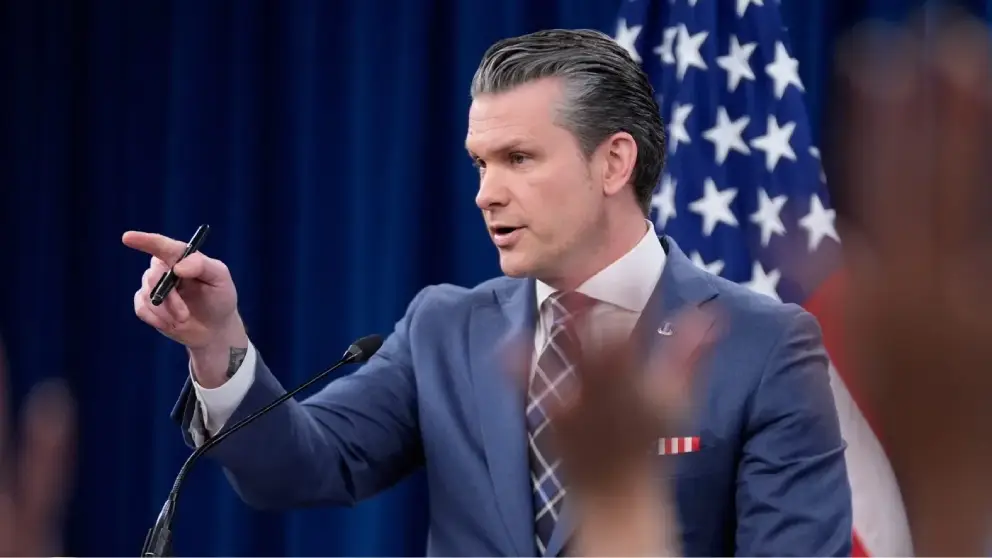
If there is one constant amid the murky origins of this conflict, it is the highly visible role of Defense Secretary Pete Hegseth. While Trump may be shifting the initial blame toward him, Hegseth has undeniably taken center stage at the Pentagon to manage the ongoing fallout.
There’s more to life than simply increasing its speed.
By Udaipur Freelancer
Hegseth has been tasked with laying out the administration's aggressive military goals, which include:
Dismantling Iran’s missile programs.
Crippling their drone production capabilities.
Neutralizing Iranian naval power in the region.
However, Hegseth has also used his prominent platform to wage a secondary battle against the media. He has consistently challenged press coverage of the conflict, urging for more favorable reporting on a military campaign that has already claimed the lives of 14 American service members and threatens to widen into a massive regional crisis.
When pressed by reporters on when this military operation might realistically end, Hegseth offered very little clarity. Stating that they "wouldn't want to set a definitive timeframe," he merely added that the war effort remains 'very much on track.'
Internal Divisions: Not Everyone Was on Board
Despite the outward projection of military strength, behind-the-scenes reports paint a picture of an administration deeply divided over the decision to strike Iran.
Trump himself conceded that Vice President JD Vance was noticeably less enthusiastic about entering the war, although Vance has been careful to avoid airing any of his criticisms in the public sphere.
The push for war seemingly came from a mix of internal hawks and powerful outside voices. Reports suggest that figures like Israeli Prime Minister Benjamin Netanyahu and conservative media mogul Rupert Murdoch were among those heavily encouraging military action.
Conversely, others within the administration strongly urged caution. The internal tension reached a boiling point last week when Joe Kent, the former head of the National Counterterrorism Center, abruptly resigned, becoming the first senior official to step down in direct protest of the conflict.
Phantom Peace Talks and Moving Deadlines
As bombs continue to drop, the diplomatic situation remains just as chaotic as the military one. Even as the war rages, Trump has spoken openly about potential negotiations with Iran to end the hostilities and reopen the vital Strait of Hormuz.
In classic Trump rhetorical style, he outlined the diplomatic strategy, "We'd like to make a deal... If it goes well, we're going to end up settling this. Otherwise, we'll just keep bombing our little hearts out."
The President claimed that discussions are currently underway, alleging that his son-in-law Jared Kushner and envoy Steve Witkoff are speaking directly with a top person in Iran. There is only one major problem with this claim: Iran categorically denies that any such talks are taking place.
To further complicate matters, a strict Monday deadline set by Trump for Iran to meet US demands or face even harsher strikes has mysteriously been extended by five days, signaling potential hesitation or shifting strategies behind closed doors.
Conclusion: A Narrative as Volatile as the Conflict
Between shifting explanations, publicly denied negotiations, and a fresh attempt by the President to assign the initial responsibility to Defense Secretary Pete Hegseth, the narrative surrounding the US-Iran war is evolving almost as rapidly as the battlefield itself.
What remains entirely unchanged, however, is the profound uncertainty. Over a month into this crisis, the American public remains largely in the dark over exactly how the war began, where the ultimate endgame lies, and, most importantly, who will ultimately own the historical responsibility for the decision to start it.
Udaipur Freelancer delivers high-quality web, marketing, and design solutions. We focus on building impactful digital experiences that help your brand succeed in today's market.













Recommended for you
Must-See Art Exhibitions Around the World This Year
The Revival of Classical Art in a Digital Age
Breaking Down the Elements of a Masterpiece Painting
The Revival of Classical Art in a Digital Age