In the chaotic airspace above the Middle East, the fog of war has resulted in a devastating and highly perplexing military blunder. A preliminary investigation has revealed that a US-made Kuwaiti F/A-18 Hornet fighter jet mistakenly shot down three American F-15E Strike Eagle fighter jets.
Occurring on the tumultuous third day of an intense US-Iran conflict, the incident has sent shockwaves through the international military community. Initially shrouded in confusion and conflicting reports, the details emerging from the probe highlight the terrifying realities of modern aerial combat and the catastrophic potential of friendly fire.
Here is a deep dive into how allied forces ended up engaging each other, the reaction from military officials, and why aviation experts are completely baffled by the incident.
A Sky on Fire: How the Incident Unfolded
The shootdown took place against the backdrop of a massive joint military offensive involving Washington and Israel against Iranian targets. Unsurprisingly, the airspace over the Gulf region was highly congested and incredibly tense.
According to military reports, Iran had begun retaliating against the joint offensive by launching a heavy barrage of drones and missiles aimed at Kuwait and other neighboring Gulf nations that host critical United States military bases. It was during this high-stakes interception mission that the tragedy occurred.
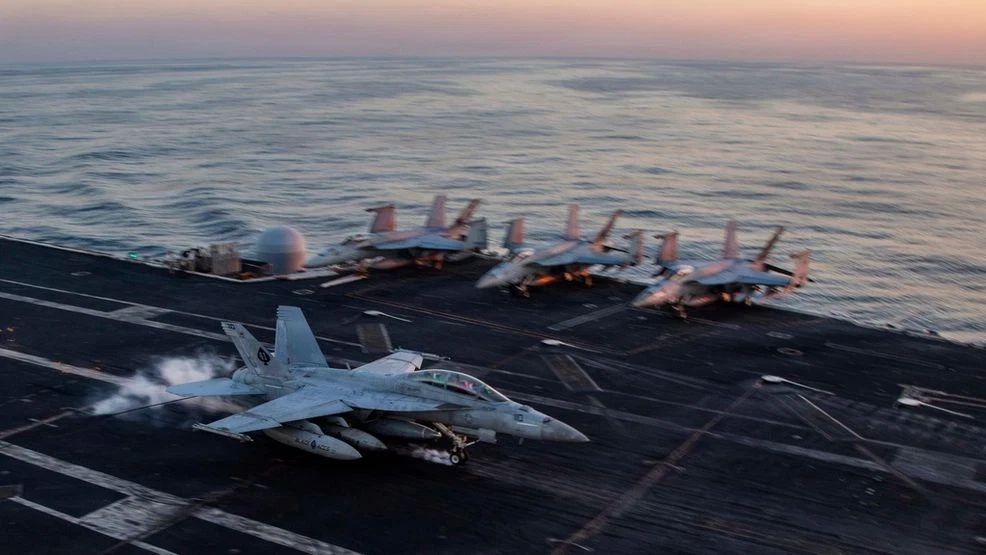
A US official confirmed that in the midst of countering the Iranian aerial bombardment, the pilot of a Kuwaiti F/A-18 Hornet mistakenly locked onto allied aircraft. The Kuwaiti jet launched three missiles directly at a formation of three US F-15E Strike Eagles. All three missiles found their targets, sending the American jets plummeting from the sky over Kuwait.
Miraculous Survival Amidst Viral Chaos
Despite the complete loss of three highly advanced, multi-million-dollar fighter jets, a major human tragedy was averted. Reports confirm that all three American pilots, along with their crew members, successfully and safely ejected from the doomed aircraft before they crashed.
The dramatic moments following the missile strikes were captured on camera by bystanders on the ground. Viral videos circulating on social media showed terrifying footage of one of the US F-15s spinning out of control, spiraling downwards toward the earth with its tail completely engulfed in flames and thick black smoke billowing into the sky.
Shifting Narratives and Official Statements
In the immediate aftermath of the crash, information was incredibly scarce, leading to a flurry of conflicting statements from various military and international entities.
- The Initial US Central Command Assessment: Initially, US Central Command (CENTCOM) released a statement suggesting that the three US jets were mistakenly shot down by ground-based Kuwaiti air defense systems. The assumption was that the jets were caught in the crossfire of active combat as Kuwait attempted to thwart incoming Iranian drones.
- The Iranian Claim: Capitalizing on the chaos, Iranian armed forces quickly stepped in to claim responsibility for the downed aircraft. According to Reuters, Iran falsely boasted that their anti-aircraft measures had successfully hit a US aircraft over Kuwait.
- The Truth Emerges: It wasn't until a deeper preliminary probe was conducted that the truth came to light: it was an air-to-air friendly fire incident involving an allied Kuwaiti jet.
General Dan Caine, identified as the chairman of the Joint Chiefs of Staff, addressed the media to set the record straight, firmly asserting that the downing of the aircraft was not due to hostile enemy fire.
Meanwhile, the Kuwaiti government has officially acknowledged the disastrous incident. As a major non-NATO ally of the United States, Kuwait has launched its own separate, independent investigation to determine exactly how their pilot made such a catastrophic error.
Why the Incident Puzzles Aviation Experts
While the military is treating this as a tragic accident born from the pressure of active combat, veteran aviators and military experts are left scratching their heads. The downing of three distinct allied jets by an allied fighter defies standard military operating procedures.
A former Air Force pilot, speaking to Air and Space Forces Magazine, noted that pilots of allied countries undergo rigorous training specifically designed to avert friendly-fire mistakes.
The primary line of defense against such accidents is the IFF (Identification Friend or Foe) system. US and allied pilots continuously broadcast encrypted IFF codes.
"If you are flying air defense missions, the first thing you do is interrogate using your transponder," the former pilot explained.
There’s more to life than simply increasing its speed.
By Udaipur Freelancer
Furthermore, the physical profile of the aircraft should have been a giveaway. "It's pretty hard to mistake an F-15E for an Iranian aircraft," the expert noted, "particularly if they are not maneuvering in any kind of aggressive fashion."
The failure of the Kuwaiti pilot to correctly identify the IFF signals, combined with the failure to visually confirm the target before pulling the trigger, forms the crux of the ongoing investigations.
Understanding the Aircraft Involved: The F-15E Strike Eagle
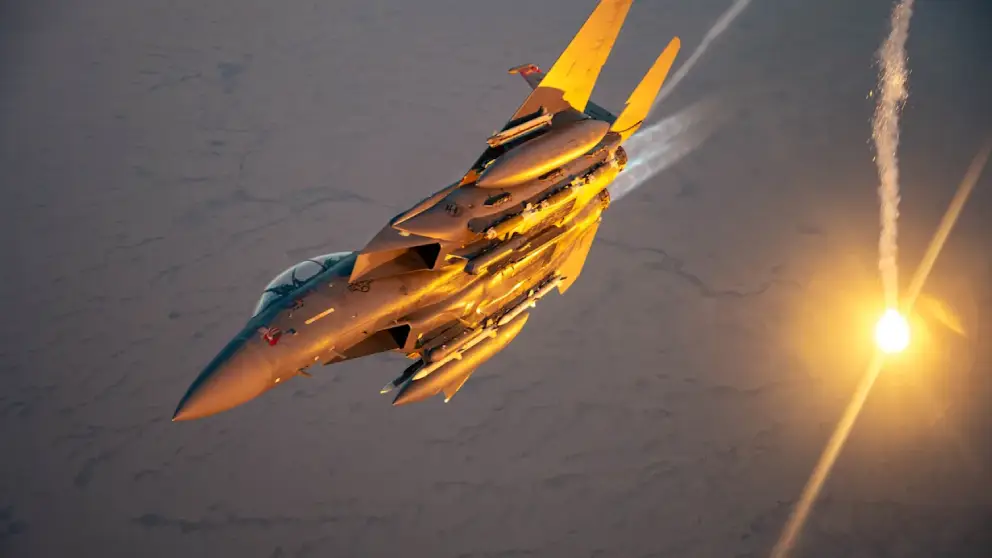
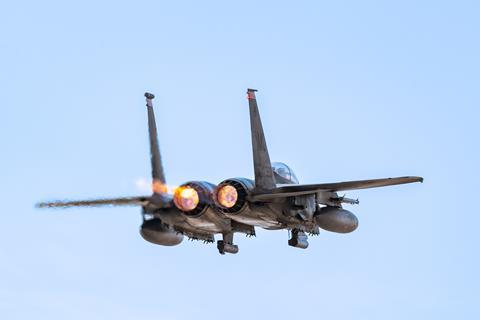
To understand the magnitude of this loss, one must look at the aircraft that were downed. The F-15E Strike Eagle is not an easily replaceable piece of equipment.
Introduced in the late 1980s (building upon the original 1970s F-15 design), the Strike Eagle is a twin-engine, fourth-generation, dual-role fighter jet. Unlike air-superiority-only fighters, the F-15E is capable of executing both air-to-air dogfights and deep air-to-ground strike missions, often operating at high speeds and low altitudes in all weather conditions. The loss of three of these vital assets in a single friendly-fire incident is a significant blow to coalition airpower in the region.
The Broader Impact: A Region on Edge
This friendly-fire incident does not exist in a vacuum. it is a symptom of the terrifying chaos that the current US-Iran conflict has brought to the Middle East. The skies over the Gulf are currently a powder keg.
The shootdown occurred just days after an Iranian drone strike directly targeted a US base in Kuwait, a tragic event that left six American soldiers dead. Earlier in the same week, the US Embassy in Kuwait City was also heavily targeted.
With Iranian missiles flying, allied air defenses working overtime, and fighter jets scrambling to intercept threats, the margin for error has shrunk to zero. This tragic incident highlights the severe risks military personnel face not just from the enemy, but from the overwhelming and chaotic environment of modern, multi-lateral warfare.
As both the US and Kuwait continue their investigations, the findings will likely lead to an immediate overhaul of communication protocols and IFF verification processes among allied forces in the Middle East to ensure an accident of this magnitude never happens again.
Frequently Asked Questions (FAQs)
Q: Did the American pilots survive the friendly-fire incident over Kuwait?
A: Yes. Despite the three F-15E jets being entirely destroyed by missile fire, all three American pilots and their crew members managed to eject safely from their aircraft before they crashed.
Q: What kind of jet shot down the US F-15s?
A: A preliminary investigation revealed that a US-made F/A-18 Hornet, operated by the Kuwaiti Air Force, mistakenly fired the missiles that downed the American jets.
Q: Why was the Kuwaiti jet firing missiles?
A: The incident occurred during an active combat scenario. The Kuwaiti jet was airborne to intercept a barrage of incoming retaliatory drones and missiles fired by Iran at Kuwait and other Gulf countries hosting US military bases.
Q: How do fighter jets usually prevent friendly fire?
A: Military aircraft use a system called IFF (Identification Friend or Foe). This transponder system sends out encrypted radio signals that identify the aircraft as an ally to other friendly radars and fighter jets. Investigators are currently trying to determine why this system failed or was ignored during this incident.












Recommended for you
Must-See Art Exhibitions Around the World This Year
The Revival of Classical Art in a Digital Age
Breaking Down the Elements of a Masterpiece Painting
The Revival of Classical Art in a Digital Age