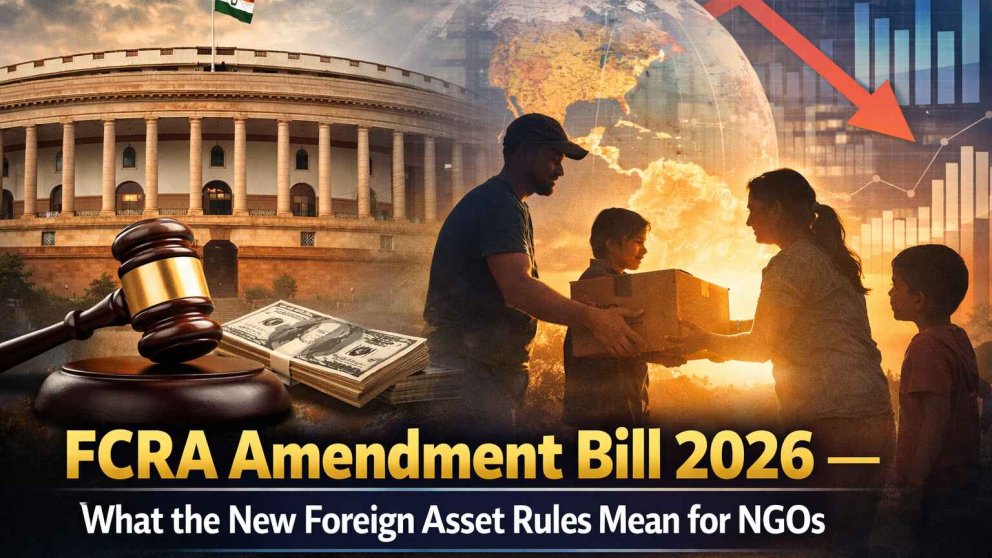
Non-governmental organizations (NGOs) and civil society groups play a very big role in any democracy. They help poor people, run schools, build health clinics, and protect human rights. To do this important work, many of these groups rely on money and donations. Sometimes, this money comes from foreign countries. In India, foreign funding for charities is governed by a special law called the Foreign Contribution (Regulation) Act, or FCRA. Recently, a new proposal called the Foreign Contribution (Regulation) Amendment Bill, 2026 has created a lot of discussion across the country.
What is the Foreign Contribution Regulation Act?
The main goal of the original FCRA law was to make sure that foreign money does not bad influence national politics, public officials, or internal security. Over the years, governments have made this law stronger and tighter. To receive foreign grants, an organization must get a license from the government and follow strict banking rules. While checking foreign money is important for national security, making rules too hard can hurt good organizations that are trying to help poor people every day.
The new Foreign Contribution (Regulation) Amendment Bill, 2026 proposes even stricter controls on how NGOs collect and spend foreign funds. Supporters say these new rules will stop money laundering and keep foreign influence out of domestic issues. However, critics feel the bill creates unnecessary hurdles for genuine social workers and charities.
Key Changes Proposed in the 2026 Bill
The 2026 Amendment Bill introduces several new requirements for civil society groups. First, it places tighter limits on administrative expenses. In simple terms, this means organizations can spend very little foreign money on staff salaries, rent, and office supplies. While this sounds good on paper to ensure money goes directly to beneficiaries, in reality, NGOs need trained staff and offices to work effectively.
Second, the bill gives government inspectors more power to inspect, suspend, or cancel an NGO's license without long formal inquiries. If an organization loses its license, its bank account can be frozen immediately. Third, the bill limits how foreign money can be transferred between different registered charities inside India. This makes it hard for large organizations to support small local groups in rural villages.
Why Are Many People Worried About the Bill?
Many experts and social activists are worried about these proposed changes. They believe the bill could make it almost impossible for smaller charities to operate. Many small groups do not have big teams of accountants or lawyers to handle complex government paperwork. If the rules become too complicated, these small groups might have to close down completely.
Political debates around control and regulation are common in national politics today. Just as internal dynamics like the political alliance tension in Maharashtra show how different groups fight for power and control, laws like the FCRA reflect how governments try to maintain authority over public social spaces. Critics argue that using heavy regulations against non-profits can silence voices that criticize government policies.
There’s more to life than simply increasing its speed.
By Udaipur Freelancer
National Security vs Civil Liberties
Governments often explain strict regulations by highlighting national security risks. Border monitoring and cross-border activities are real concerns for any nation. Strange security events, such as when a mysterious man detained near the Nepal border raised questions about national security, demonstrate why authorities stay alert about foreign actors. Protecting national borders and preventing illegal financial flows are valid goals for any government.
However, many civil rights advocates argue that national security should not be used as an excuse to treat all charities with suspicion. Most NGOs in India work in areas where the government cannot reach, providing food during disasters, offering medical care to remote tribes, and educating underprivileged children. Smothering these groups in bureaucratic red tape harms the poorest communities the most.
Finding the Right Balance
Transparency in financial transactions is essential for a clean and honest society. Nobody wants foreign entities to interfere with a country's democracy or fund harmful activities. Therefore, reasonable rules and clear record-keeping are good things. However, rules should help good organizations work better, not stop them from working altogether.
As parliament discusses the Foreign Contribution (Regulation) Amendment Bill, 2026, lawmakers should listen to the voices of social workers, legal experts, and civil society leaders. A fair law should strictly punish illegal financial activities while giving honest non-profits the freedom and support they need to help those in need.














Recommended for you
Must-See Art Exhibitions Around the World This Year
The Revival of Classical Art in a Digital Age
Breaking Down the Elements of a Masterpiece Painting
The Revival of Classical Art in a Digital Age