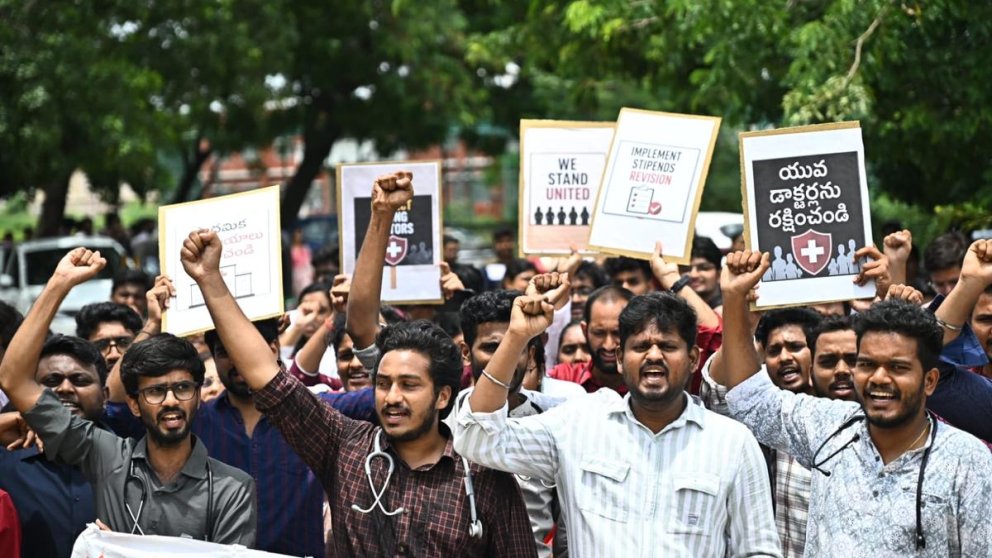
Hospitals are places where people go to get help and heal. However, across government medical colleges and hospitals in Andhra Pradesh, medical services have faced disruptions. Junior doctors across the state have taken to the streets to protest. These doctors include post-graduate medical students, house surgeons, and senior residents who work day and night to take care of patients.
Many people wonder why young healthcare workers are leaving their wards to hold banners and shout slogans. Medical professionals do not stop their daily duties without serious reasons. In this article, we explain the simple reasons behind the Andhra Pradesh junior doctor protests and what demands they are making.
Who Are Junior Doctors and Why Are They Important?
Junior doctors are the backbone of any major government teaching hospital. They are doctors who have finished their basic degrees and are undergoing training for specializations, or they are doing compulsory internships. They work directly in emergency rooms, general wards, and intensive care units.
In most public hospitals, senior professors guide treatments, but junior doctors do most of the continuous bedside work. They check vitals, manage emergency cases, update patient charts, and monitor medicine schedules. When these doctors face severe work problems, the entire public healthcare system feels the pressure.
1. Long Delays in Monthly Stipends
One of the biggest triggers for the strike is the non-payment of monthly stipends. Junior doctors depend completely on this stipend to pay their room rent, buy food, pay off educational loans, and meet basic living expenses. Many of them work continuous shifts lasting 24 to 36 hours without getting their pay on time.
In many districts, stipends have been delayed for several months. The doctors explain that asking for their hard-earned money every single month causes high mental stress. They want the government to create a regular, fixed payment cycle so they do not have to worry about basic survival while treating sick patients.
2. Poor Working Conditions and Security Concerns
Safety inside hospital premises is another key demand. In emergency wards, emotional tension runs high. When a patient arrives in critical condition or passes away, angry family members sometimes attack duty doctors. Junior doctors have reported multiple instances of verbal abuse and physical threats while on duty.
Public safety concerns are not limited to healthcare workers alone; similar questions around safety and duty conditions often arise when the kin of injured Delhi police want views discussed in Parliament to ensure stronger protections on the job. The junior doctors in Andhra Pradesh are demanding proper security guards, active CCTV cameras, restricted visitor passes, and strict enforcement of protection laws inside hospital premises.
3. Shortage of Medicines and Basic Medical Equipment
Doctors can only treat people well if they have the right tools. Protesting doctors have pointed out that many government hospitals suffer from a severe shortage of essential medicines, surgical gloves, syringes, and functional testing machines. When machines do not work or medicines run out, patients and their families often blame the junior doctors on duty.
There’s more to life than simply increasing its speed.
By Udaipur Freelancer
The doctors state that they want better hospital infrastructure. They want the state administration to stock up essential drugs and ensure basic lab facilities work around the clock so that poor patients do not have to buy supplies from private pharmacies outside.
4. Unclear Bond Policies and Service Rules
Medical students in government colleges often sign bonds requiring them to serve in rural or state-run centers for a fixed period after completing their degrees. However, doctors claim that the rules surrounding these compulsory bonds change frequently without proper notice.
Many students face delays in getting their official certificates or postings after completing their service. Much like how major national legislative updates, such as the foreign contribution regulation amendment bill, require clear definitions and transparency for smooth operation, medical professionals are demanding a transparent and stable bond policy that does not harm their future career growth.
The Impact on Common Patients
Whenever doctors protest, regular hospital services slow down. Outpatient departments (OPDs) face long waiting lines, and elective surgeries get postponed. While junior doctors have maintained emergency services to save lives, regular visits for common illnesses remain heavily impacted.
Patients traveling from distant rural areas to city hospitals face major inconvenience. This is why the doctors and patient groups are both urging the health department to resolve these matters quickly through constructive dialogue.
What Needs to Happen Next?
A fair and lasting solution requires immediate steps from the state government. First, all pending stipends must be cleared immediately without further delay. Second, the government must install functional security measures in all sensitive emergency wards to protect on-duty medical staff.
Healthcare workers play an essential role in keeping society healthy and safe. Giving junior doctors fair pay, reasonable duty hours, and safe working conditions is not just good for the doctors—it is vital for every citizen who relies on public hospitals for medical care.












Recommended for you
Must-See Art Exhibitions Around the World This Year
The Revival of Classical Art in a Digital Age
Breaking Down the Elements of a Masterpiece Painting
The Revival of Classical Art in a Digital Age