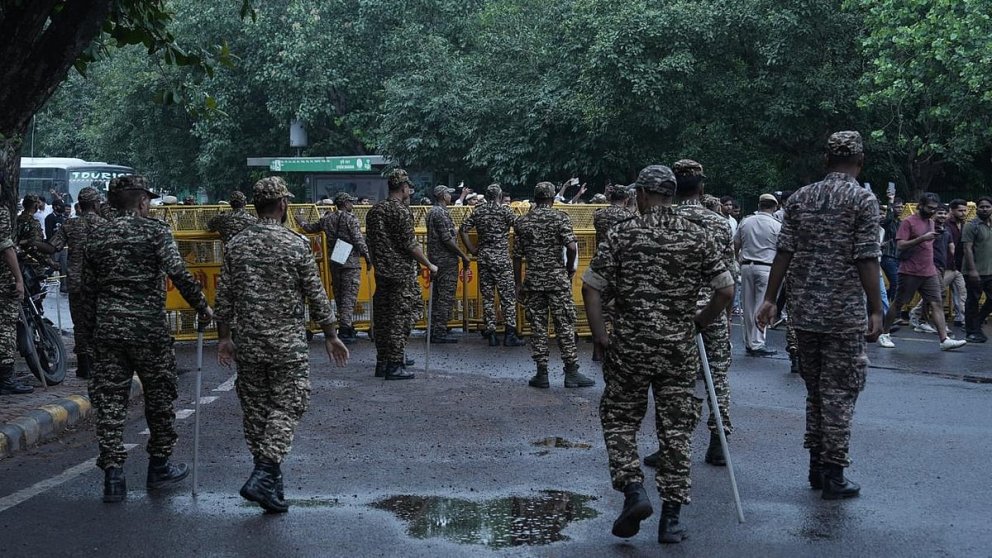
The city of Delhi has turned into a giant fortress. There are heavy police forces, large barricades, and riot control vehicles parked at key places. On Sunday, over 1,200 police officers took their positions across VIP areas and the borders of the capital. This massive security setup is in preparation for a huge march planned for Monday. The protest is led by the Cockroach Janta Party (CJP). Thousands of people have already gathered at Jantar Mantar, which is a famous protest site in Delhi. The air is tense, but the leaders are calling for complete peace.
The Call for a Peaceful Protest
Abhijeet Dipke, the founder of the Cockroach Janta Party, addressed the large crowd on Sunday evening. The crowd was growing bigger by the hour. Dipke told the people that the march on Monday would be the biggest protest march that independent India has ever seen. He shared a message from activist Sonam Wangchuk, who advised him that the protest would only be successful if it remains peaceful. Dipke agreed with this advice and told his supporters that a bigger crowd means a much bigger responsibility for everyone involved.
To keep the peace, the CJP founder asked the protesters to be very watchful. He requested everyone at Jantar Mantar to look out for 'troublemakers' in the crowd and report them immediately to the volunteer team. This shows that the organizers are trying hard to avoid any kind of violence. The leaders also gave specific instructions on what to carry during the march. Instead of weapons or angry signs, they asked supporters to carry the Indian national flag, copies of the Constitution, fresh roses, or photographs of B R Ambedkar and Mahatma Gandhi.
Difficult Conditions at Jantar Mantar
On Sunday night, Jantar Mantar was completely packed with people. There was almost no space left to walk on the streets or footpaths. Many students who have been on hunger strike for days or weeks were resting in small tents pitched along the footpaths. The weather was extremely hot and humid. To fight the heat, the protesters used makeshift fans made from cardboard or pieces of paper they found on the ground. Despite the difficult conditions, the spirit of the crowd remained very high as they waited for the morning.
As the night went on, the presence of the Delhi Police increased. Batches of police officers were seen standing on both sides of the main stage, which is not a common sight at Jantar Mantar. The authorities are taking no chances with the safety of the city. Such massive security arrangements and blockades are quite common during high-profile events in India. For instance, similar tight security and major road blocks were seen during the traffic diversions during PM Modi and Macron's Mumbai visit. In Delhi, the police want to ensure that no government buildings are damaged.
What to Expect From Monday’s March
Vijeta Dahiya, the spokesperson for the Cockroach Janta Party, talked to the media about their plans. He said they expect about one lakh (100,000) people to join the march on Monday morning. According to Dahiya, the march will start heading towards the Parliament building around 9:00 AM. While most people will march, some volunteers will stay behind at the Jantar Mantar site. Their job will be to protect the tents and the protest camp from being removed or damaged while the main group is away.
There’s more to life than simply increasing its speed.
By Udaipur Freelancer
When asked if other major political groups like the Congress party would join them, Dahiya said he was not completely sure. However, he mentioned that the CJP has invited all political parties to support their cause. Many of these protesters are demanding better rights, structural changes, and social security programs. In India, people often protest to ask for better welfare schemes, such as the government's pension programs. For example, people often seek clear information on schemes like the Atal Pension Yojana (APY) scheme details to secure their future. This protest seems to be fueled by similar hopes for a better life and fair opportunities for all citizens.
Security Forces Stand Prepared
On the other side of the barricades, the area around the entrance of the Parliament building was completely quiet on Sunday night. No members of the public were allowed to walk near the entrance. The streets were empty, standing in sharp contrast to the crowded Jantar Mantar. A police officer on duty mentioned that the protesters will not even be allowed to cross the Parliament Street police station. This police station is just a few meters away from the protest site. The police have placed heavy barricades blocking multiple entry points, especially around South Avenue Marg.
It remains to be seen how Monday's march will unfold. The organizers are determined to make a peaceful statement, while the police are prepared to stop any movement toward the Parliament. With thousands of people holding roses and national flags on one side, and hundreds of armed police officers on the other, Delhi is waiting with bated breath. This event highlights the strength of democratic protests in India and the difficult job the security forces have in keeping order while respecting the public's right to raise their voice.














Recommended for you
Must-See Art Exhibitions Around the World This Year
The Revival of Classical Art in a Digital Age
Breaking Down the Elements of a Masterpiece Painting
The Revival of Classical Art in a Digital Age