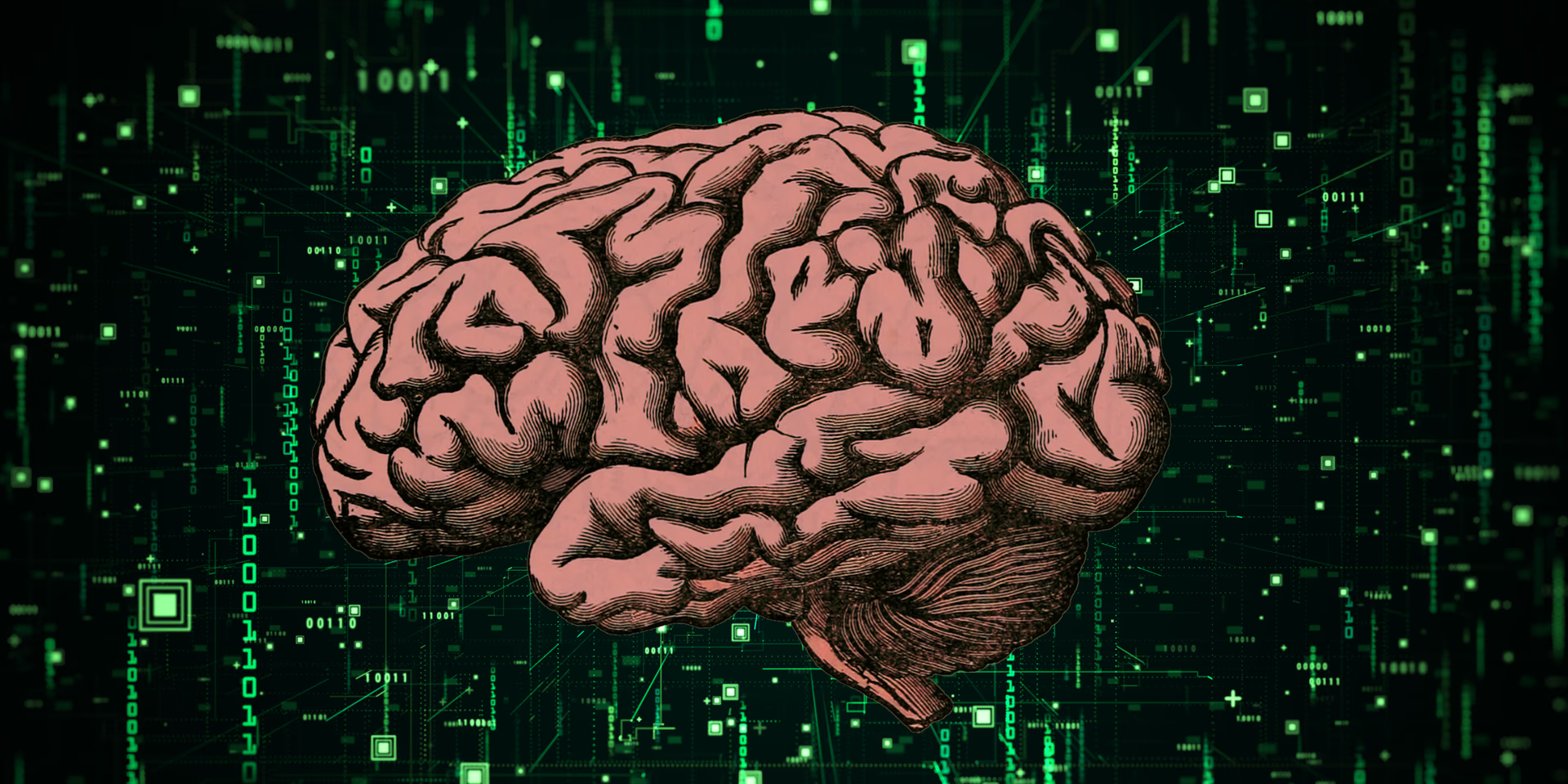
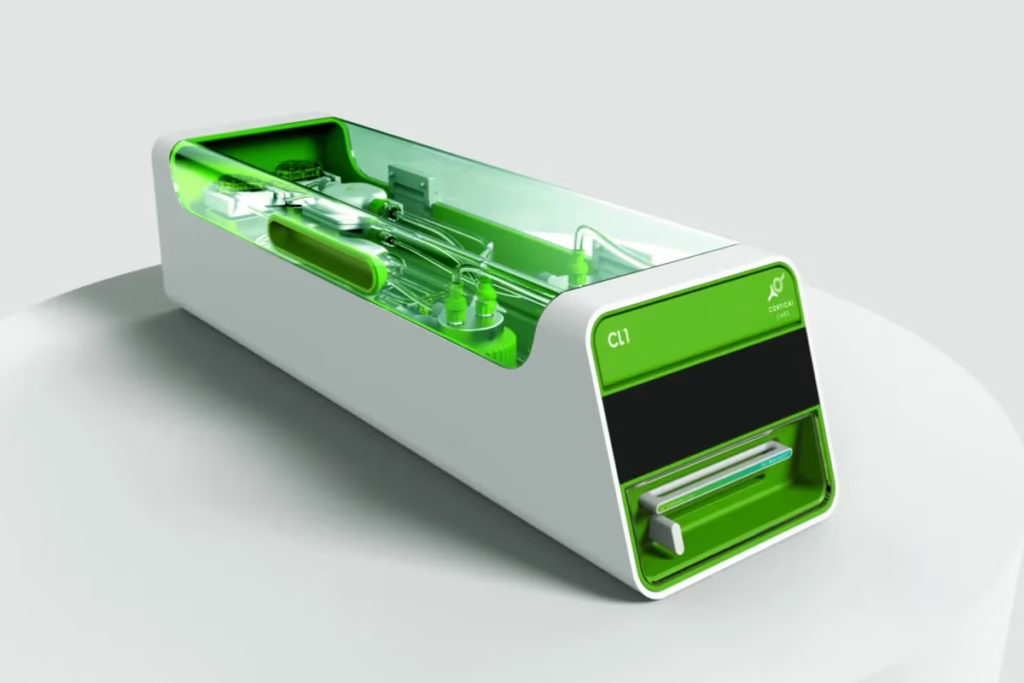
For decades, the evolution of technology has been measured by how many millions of silicon transistors could be packed onto a fingernail-sized chip. However, we are now entering a radical new era where the boundary between hardware and biology is beginning to dissolve. Scientists are no longer just trying to make computers act like brains. they are physically building computers out of human brain cells. By integrating lab-grown neural tissue, known as organoids, with traditional electronic circuits, researchers are creating biocomputers that possess the potential to outclass even the most advanced AI in ways we once thought were exclusive to living organisms. This shift represents a move from rigid, power-hungry silicon toward wetware living systems that can grow, learn, and adapt in real-time.
The primary motivation behind this biological revolution is the staggering efficiency of the human mind. While a modern supercomputer requires an entire building’s worth of space and enough electricity to power a small town, the human brain operates on roughly twenty watts of energy barely enough to light a dim bulb. By utilizing brain cells as computational units, we are tapping into millions of years of evolutionary optimization. These biological circuits possess an innate plasticity, meaning they can physically rewire their connections to learn new tasks without the need for massive datasets or the complex cooling systems required by traditional Artificial Intelligence. This makes biocomputing the ultimate frontier for sustainable, high-performance technology.
Recent breakthroughs have already proven that these living processors are functional and capable of interactive learning. In groundbreaking experiments like the DishBrain project, a cluster of human neurons integrated into a silicon chip demonstrated the ability to learn how to play the video game Pong in less than five minutes significantly faster than conventional machine-learning algorithms. More recently, systems like Brainoware have successfully used neural organoids to recognize human speech and solve mathematical patterns. These milestones suggest that we are moving toward a hybrid era where biological components can handle the nuanced, pattern-based thinking that humans excel at, while silicon handles the raw, high-speed data processing it was built for.
There’s more to life than simply increasing its speed.
By Udaipur Freelancer
As we stand on the precipice of this new frontier, the implications extend far beyond faster processing speeds and energy efficiency. Biocomputing offers a revolutionary window into the human mind, allowing scientists to study neurological diseases like Alzheimer’s or Parkinson’s on living, functioning circuits without risking human subjects. However, this evolution also brings profound ethical questions regarding the potential for consciousness in lab-grown tissues and the moral responsibility of creating living machines. As we refine the interface between human cells and electronics, we are not just upgrading our hardware. we are redefining the nature of intelligence itself. The transition from silicon to cells promises a future where our technology is as organic, intuitive, and alive as the people who created it.















Recommended for you
Must-See Art Exhibitions Around the World This Year
The Revival of Classical Art in a Digital Age
Breaking Down the Elements of a Masterpiece Painting
The Revival of Classical Art in a Digital Age