For decades, India’s foreign policy in the Middle East looked a lot like a master acrobat walking a very thin tightrope. The golden rule was simple, be friends with everyone. India successfully maintained strong, parallel relationships with countries that actively disliked each other, like Israel, Iran, and the various Gulf nations.
But recently, the winds have changed. A massive geopolitical storm is brewing, and that old balancing act is facing its ultimate test. Following the escalating conflicts involving the US, Israel, and Iran, people are starting to ask a very big question: Has New Delhi finally decided to pick a side?
Let’s break down the hidden signals, the phone calls, and the loud silences that suggest India is quietly shifting its weight into the US-Israel corner.
The End of the Long Balancing Act?
The recent flare-up in the Middle East has put India in a very tough spot. The US and Israel recently teamed up for a strike on Iran, and Tehran retaliated by raining down missiles on Tel Aviv and several Gulf countries. Suddenly, two of India’s long-term strategic partners are locked in an indirect, messy conflict.
Normally, India would rush to issue statements urging everyone to calm down while carefully avoiding pointing fingers. However, the initial signaling from New Delhi this time around tells a slightly different story.
While India has urged restraint and de-escalation, it has completely avoided explicitly condemning the US-Israel strike on Iran. Furthermore, India has not expressed any solidarity with Tehran regarding its sovereignty and territorial integrity two concepts that India usually champions on the global stage.
Perhaps the most glaring signal of all is the conspicuous silence from the Indian government following the killing of Iran’s Supreme Leader, Ali Khamenei.
Why Silence Speaks Volumes
In international diplomacy, what a country doesn't say is often just as important as what it does say.
This quiet departure from India's long-standing approach of protecting all sides is significant. After all, New Delhi has a lot to lose. Over nine million Indians work and live in the Gulf region, and India relies heavily on oil imports from the Middle East to keep its economy running.
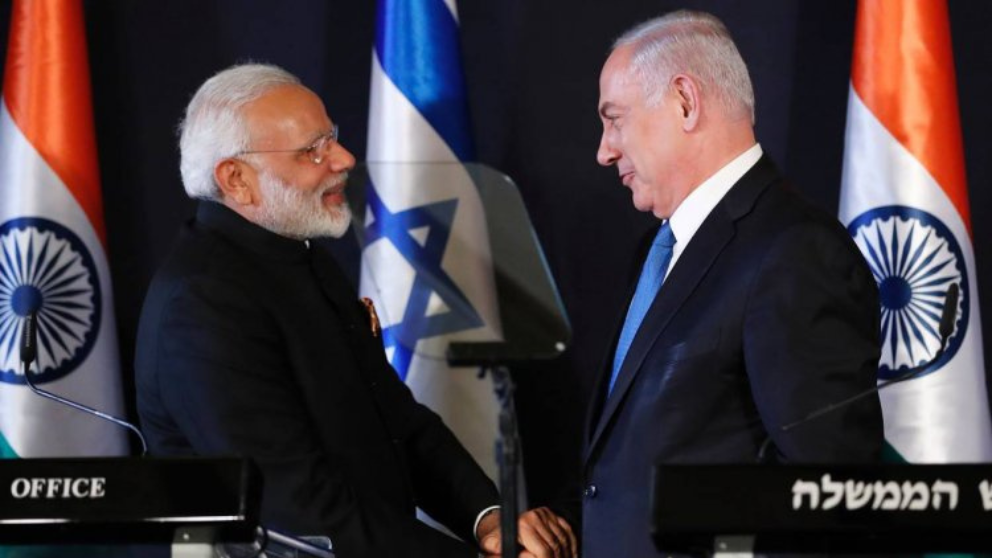
Former Indian Ambassador KC Singh summed up the situation perfectly in a recent interview. Speaking about Prime Minister Narendra Modi’s past engagements, Singh noted, "PM Modi's visit to Israel was wrongly timed and has completely ripped India off its neutrality on the subject." He bluntly added, "There’s nothing we can do about it now. We are seen in the Israel corner."
A Tale of Two Phone Calls
If you really want to see where a country’s loyalties lie during a crisis, look at who their leader calls first. At the very core of India’s current stance are two specific phone calls made by PM Modi while Iranian missiles were falling on Gulf nations.
Call Number 1: The UAE
On a Sunday night, PM Modi picked up the phone to call UAE President Sheikh Mohamed bin Zayed Al Nahyan. In a very warm gesture, Modi referred to the UAE President as his brother. During this call, Modi strongly condemned the attacks that damaged iconic buildings and airports in Dubai and Abu Dhabi, and he shared his condolences for the loss of lives. Interestingly, while it was India's first official condemnation of any side in this conflict, Modi stopped short of actually naming Iran.
What’s even more fascinating is the statement released by the UAE after the call. It featured much stronger language than India’s official release, suggesting that PM Modi fully backed whatever steps the UAE felt were necessary to respond.
Call Number 2: Israel
The very next day, PM Modi had a conversation with Israeli Prime Minister Benjamin Netanyahu. Modi even posted about this conversation on social media in English, Arabic, and Hebrew. In this call, Modi conveyed India’s concerns over the developments and simply called for an early cessation of hostilities.
The Missing Call: Iran
So, who didn't get a phone call? Iran. There was absolutely zero engagement with Tehran. This is a massive deal because Iran is a key strategic partner for India. India has invested heavily in developing Iran's Chabahar port, which serves as New Delhi’s crucial gateway to Central Asia, completely bypassing Pakistan. Yet, during this massive crisis, the phone lines to Tehran remained totally dead.
There’s more to life than simply increasing its speed.
By Udaipur Freelancer
Reading Between the Lines
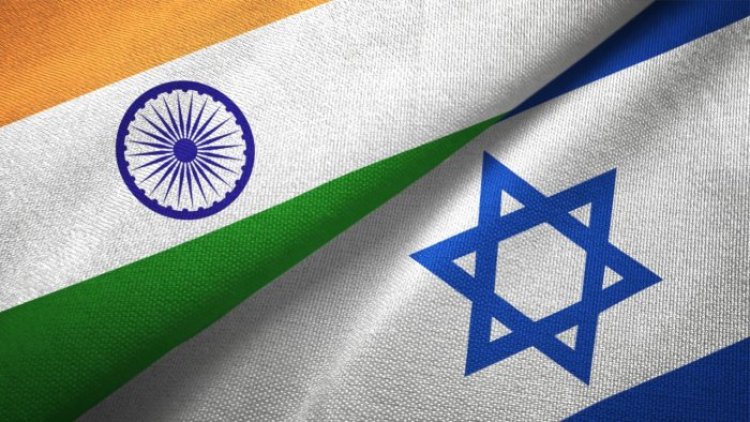
When you look at the big picture, India’s stance becomes crystal clear. Under PM Modi’s leadership, ties between India and Israel have skyrocketed. Tel Aviv now ranks among New Delhi’s top defense and technology partners, and India accounts for over 30% of Israeli arms exports.
Former Indian Army Chief Ved Malik pointed out that while India hasn't publicly announced it is taking a side, the reality of national interest dictates a shift. "India's national interests do definitely lie more with the US-Israel and their allies. Thus, a tilt towards them is becoming obvious," he noted.
This cautious wording is a huge contrast to how India handled the Russia-Ukraine conflict, where the government bent over backwards to balance its ties across rival camps.
The Domestic Uproar: Opposition Cries Foul
Of course, this major shift in foreign policy hasn't gone unnoticed at home, and the political opposition is furious.
Congress party leaders are calling out the government's strategy. Spokesperson Pawan Khera flat-out called it India's betrayal of Iran, while Rajya Sabha MP Jairam Ramesh accused the ruling government of experiencing moral cowardice and letting Tehran down in a time of need.
The sharpest words came from senior Congress leader Sonia Gandhi. She wrote a powerful op-ed questioning the government's absolute silence over the assassination of Iran's Supreme Leader Khamenei. She called this silence an abdication of duty rather than actual neutrality, stating that it signaled a tacit endorsement of the tragedy. Gandhi argued, "Silence, in this instance, is not neutral. The assassination was carried out without a formal declaration of war and during an ongoing diplomatic process."
The Government Strikes Back: Responsible Diplomacy
The ruling BJP party was quick to counter these heavy accusations. BJP national executive member Amit Malviya fired back, stating that India's responsible diplomacy should not be mistaken for silence.
Malviya argued that India has consistently called for restraint, respect for sovereignty, and de-escalation across the board. He also took a direct shot at Sonia Gandhi, claiming her commentary was driven less by a concern for Indian lives and more by a political instinct to view foreign policy through the lens of appeasement.
Furthermore, those defending the government's silence point to a very interesting fact. the Islamic world itself hasn't been very loud about Khamenei's death. Out of the 57 members of the Organisation of Islamic Cooperation (OIC), fewer than 10 have officially condoled the Supreme Leader's death. If Muslim-majority nations are offering a lukewarm response, why should India stick its neck out?
The Final Verdict
So, where does this leave us? On the public stage, India’s messaging remains carefully calibrated. Officially, New Delhi is just a concerned friend urging everyone to maintain peace and stability.
But if you look behind the curtain at the strategic silences, the carefully worded phone calls, and the deep defense ties the story changes. India is quietly stepping off the tightrope. The days of perfectly balanced neutrality in the Middle East might be fading away, replaced by a clear, undeniable tilt toward the US and Israel.
Whether this silent strategy proves to be a masterstroke of diplomacy or a risky gamble, only time will tell.
What do you think about India’s changing stance in the Middle East? Is it smart diplomacy, or are we abandoning old friends? Let me know your thoughts in the comments below!














Recommended for you
Must-See Art Exhibitions Around the World This Year
The Revival of Classical Art in a Digital Age
Breaking Down the Elements of a Masterpiece Painting
The Revival of Classical Art in a Digital Age