Hey everyone, welcome back to the blog! Today, we are diving into a fascinating piece of current events that is deeply intertwined with ancient history, culture, and a whole lot of constitutional paperwork.
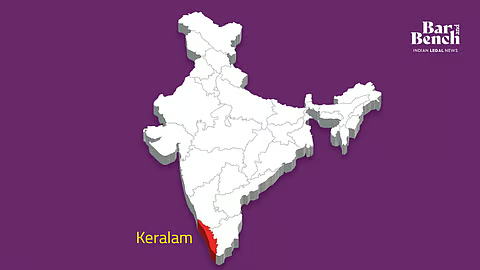
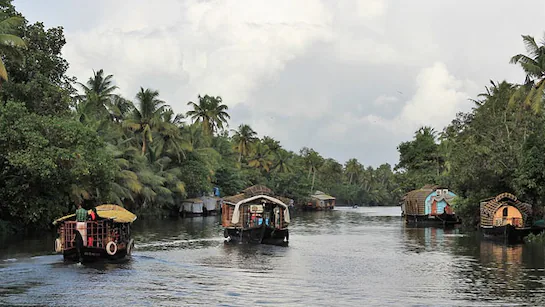
If you have ever visited the beautiful southern tip of India, or if you call it home, you know it as Kerala. It is globally famous for its backwaters, greenery, and rich heritage. But very soon, the official English name of the state is going to align with what its own people have been calling it for centuries: Keralam.
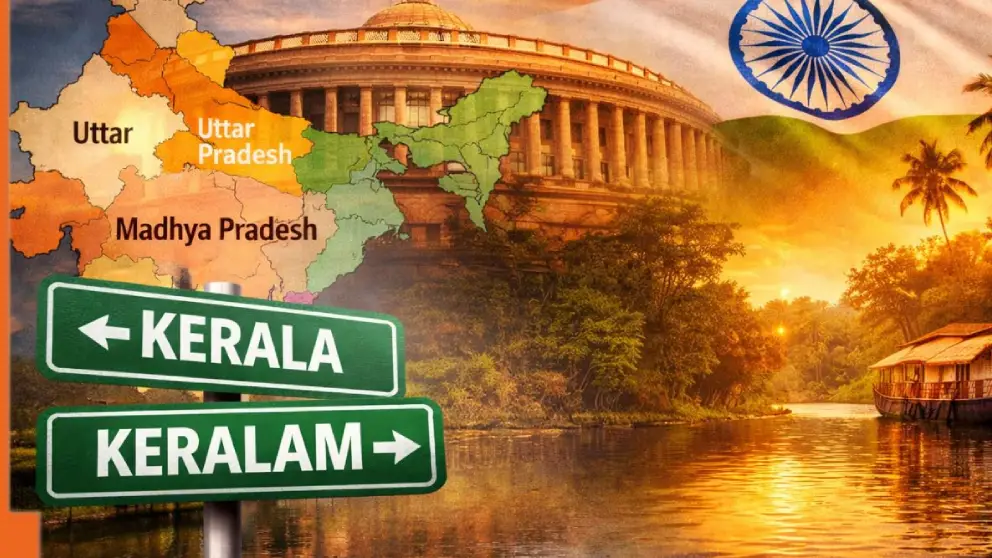
Recently, the Union Cabinet approved a proposal to officially rename the state from Kerala to Keralam. At first glance, you might think, "Oh, they just added an 'm' at the end, what's the big deal?" But let me tell you, this minor spelling adjustment is actually a deeply symbolic move. It represents a massive win for linguistic identity, a nod to historical continuity, and a perfect example of how India’s federal procedures work.
Questions about what we name our states in India often carry deep layers of cultural assertion and administrative complexity. It is never just about spelling. it is about identity. Let's take a deep dive into the historical journey from Kerala to Keralam, breaking down everything from ancient empires to modern-day constitutional law.
A Rare Moment of Political Unity
In today's highly polarized political climate, it is pretty rare to see politicians from opposing sides holding hands and agreeing on something. But the push for Keralam achieved exactly that.
The resolutions that set this whole renaming process in motion were introduced by Chief Minister Pinarayi Vijayan. He made a very clear and passionate argument, changing the name to Keralam is both linguistically appropriate and historically justified.
And guess what? The state agreed with him. Political consensus within the state gave the proposal a massive boost of legitimacy. Support came pouring in from across different party lines. In a notable display of unity, even the state BJP president, Rajeev Chandrasekhar, wrote to the Chief Minister to express his party’s full endorsement of the move.
This bipartisan convergence is a breath of fresh air in Kerala’s usually polarized political environment. Because everyone was on the same page, the proposal gained serious momentum when it reached New Delhi. Usually, state name changes face intense scrutiny, but the Cabinet's approval here wasn't just administrative clearance, it was a nod of respect to the broad-based political and cultural consensus within the state.
The Constitutional Puzzle: Why They Had to Pass the Resolution Twice
Now, you might be wondering, if everyone agreed, why did it take two tries in the state assembly? The Kerala Assembly actually had to back this demand twice once in 2023 and again in 2024 before finally securing the Centre's consent.
This brings us to the fascinating, and sometimes frustrating, world of constitutional law. The necessity of passing the resolution twice shows just how much procedural precision is involved when you want to change something in the Constitution.
Here is what happened: While Malayalam speakers have literally always referred to their home as Keralam, the First Schedule of the Indian Constitution continued to record the English form as Kerala. Chief Minister Vijayan explained that their first resolution in 2023 tried to implement the name change across all the languages listed in the Eighth Schedule of the Constitution.
However, when the legal experts did a technical examination of the request, they found a hiccup. They realized that the correction effectively needed to be confined only to the First Schedule. So, to eliminate this legal discrepancy and make sure everything was perfectly coherent from a legal standpoint, the Assembly had to sit down and adopt a fresh resolution in 2024.
This careful recalibration is a great reminder for all of us, seemingly simple, symbolic reforms still have to navigate the incredibly dense architecture of constitutional law. Every linguistic nuance and every piece of legislative drafting must align perfectly before any alteration can proceed.
Traveling Back in Time: The Ancient Roots of the Name
To really understand why this change is so important, we have to travel back in time. And I don't mean back a few decades. I mean way back to the ancient world. The historical roots of the name lend so much depth to this present-day decision.
Believe it or not, one of the earliest epigraphic references to the region appears in Rock Edict II of Emperor Ashoka. This dates all the way back to 257 BCE! In this ancient text, there is a mention of Keralaputra, which historians and scholars often interpret as a reference to the ancient Chera dynasty.
Over the centuries, the region’s identity kept evolving through various layers of linguistic and cultural transformation. Scholars have spent a long time debating the exact etymology (the origin of the word) of Keralam.
Some trace it back to the word Cheram. The noted German linguist Herman Gundert who is famous for compiling the very first Malayalam-English dictionary had a fascinating observation. He noted that the word Keram actually represented the Kannada form of Cheram. He described Keralam as the vast territory stretching all the way between Gokarnam and Kanyakumari.
Furthermore, the linguistic root cher translates to to join. This reinforces the beautiful idea of a land formed through cultural confluence and the joining of people.
When you look at it in this light, the contemporary renaming from Kerala to Keralam appears less like a modern innovation and much more like a restoration of ancient historical usage. It is about claiming back a name that has been there for over two millennia.
The 1920s Dream: The Aikya Kerala Movement
While the name has ancient roots, the political imagination of a unified, Malayalam-speaking homeland emerged much later, specifically during the early twentieth century.
Imagine India in the 1920s. The Malayalam-speaking populations weren't living in one unified state. Instead, they were distributed across several different administrative units. You had the princely states of Travancore and Kochi, and then you had the Malabar region, which was tucked under the Madras Presidency of British India.
During this time, the Aikya Kerala movement began to gather serious momentum. Driven by passionate intellectuals, social reformers, and political activists, this movement envisioned a brand-new state defined not by old princely boundaries, but by linguistic unity.
Inspired by the broader Indian freedom struggle that was sweeping the nation, the proponents of unification argued that their shared language and their shared cultural traditions totally justified political consolidation. What started as a cultural campaign gradually transformed into a very concrete administrative objective. They were laying the essential groundwork for the state that would eventually emerge in an Independent India.
There’s more to life than simply increasing its speed.
By Udaipur Freelancer
The Path to Statehood: Bringing the Pieces Together
After India gained Independence, the path to creating this unified state accelerated. This happened primarily through the integration of princely territories.
Here is a quick timeline of how the modern state was born:
July 1, 1949: Travancore and Kochi officially merged to form the Travancore-Cochin state. This was a massive, important transitional step.
The State Reorganisation Commission: Later on, the Union government initiated a linguistic reorganization of states across the country. A commission was set up, chaired by Syed Fazl Ali.
The Final Mapping: This commission recommended the creation of Kerala. They did this by combining the Malabar district and the Kasargod taluk with Travancore-Cochin. At the same time, they excluded the southern taluks that now lie within the neighboring state of Tamil Nadu.
November 1, 1956: The state formally came into existence! This date is so important that it is celebrated annually as Kerala Piravi.
The present effort to rename the state to Keralam beautifully echoes the original linguistic logic that shaped the state’s very birth back in 1956.
The Red Tape: Why Changing a State's Name is So Hard
Let’s take a moment to talk about logistics. Changing the name of a state is far more complex than renaming a city or a street. You can't just paint a new sign and call it a day.
Under Article 3 of the Constitution, the initiative must originate from the state legislature (which, as we discussed, Kerala did twice!). After that, the proposal is sent to the Union Ministry of Home Affairs (MHA).
The MHA then has to examine the proposal and circulate it among multiple federal agencies to get no-objection clearances. Think about how many maps, databases, and official documents rely on a state's name. The agencies that have to review this typically include:
The Railways
The Intelligence Bureau
The Department of Posts
The Survey of India
The Registrar General of India
Only after these thick layers of scrutiny are passed can the proposal be introduced in Parliament as a Bill. Once both Houses of Parliament approve the Bill and the official notification is issued, the new name finally becomes legally operative.
This elaborate process is there for a reason. It reflects the delicate federal balance embedded in the Indian Constitution, ensuring that symbolic changes do not accidentally disrupt administrative, cartographic (mapping), or security frameworks.
Diplomatic Hurdles: A Tale of Two States
Past experience shows us that these proposals are not always straightforward. To understand how smooth the Keralam transition has been, we have to look at a time when things didn't go so well.
In 2018, the state of West Bengal attempted to rename itself to Bangla. However, this encountered severe resistance. Why? Because the Ministry of External Affairs flagged concerns about the phonetic similarity between Bangla and the neighboring country of Bangladesh.
That proposal ultimately stalled out. It perfectly illustrates how geopolitical sensitivities can influence even internal nomenclature decisions within India.
The smoother progress of the Kerala-to-Keralam proposal suggests that it faced no comparable diplomatic complications. There is no neighboring country that sounds like Keralam! Nevertheless, the West Bengal precedent highlights why the Union government proceeds so cautiously in matters of state renaming. They always have to balance cultural aspirations against administrative clarity and international considerations.
Beyond Politics: The Cultural Resonance of Keralam
So, we have talked about the politicians, the constitution, the ancient history, and the administrative red tape. But let's get down to the heart of the matter. Beyond procedure and politics, this proposed shift carries an incredibly deep cultural resonance.
For many Malayalis, Keralam has always been the authentic expression of their regional identity. It isn't a new word they are trying to learn, it is embedded deeply in their literature, their everyday speech, and their historical memory.
Retaining the anglicised Kerala in the Constitution created a subtle, lingering dissonance between the official terminology of the government and the lived linguistic reality of the people. By renaming the state, they are attempting to harmonize constitutional language with vernacular consciousness.
This isn't an isolated event, either. Similar impulses have shaped earlier changes across India, where various cities and regions have actively sought to shed their colonial-era spellings in favour of indigenous forms (think Bombay to Mumbai, or Madras to Chennai). In this sense, the move to Keralam reflects a much broader postcolonial trend of linguistic self-assertion within the Indian Union.
Conclusion: Completing a Historical Circle
As this proposal moves toward its final parliamentary formalisation, its significance extends far beyond mere nomenclature.
The shift from Kerala to Keralam reaffirms the enduring power of language in shaping political identity. It highlights the responsiveness of India’s federal structure to regionally articulated aspirations. If and when this is completed, the transition will stand as a rare, beautiful example of near-unanimous political agreement in a deeply plural democracy.
But perhaps most importantly, it will symbolically reconnect the modern state with its ancient linguistic heritage. It is the completion of a historical circle that began more than two millennia ago with Emperor Ashoka, lived through the freedom struggle of the 1920s, and is now finally being cemented into the Constitution of India.
What are your thoughts on this historic name change? Let me know in the comments below!
Udaipur Freelancer delivers high-quality web, marketing, and design solutions. We focus on building impactful digital experiences that help your brand succeed in today's market.













Recommended for you
Must-See Art Exhibitions Around the World This Year
The Revival of Classical Art in a Digital Age
Breaking Down the Elements of a Masterpiece Painting
The Revival of Classical Art in a Digital Age