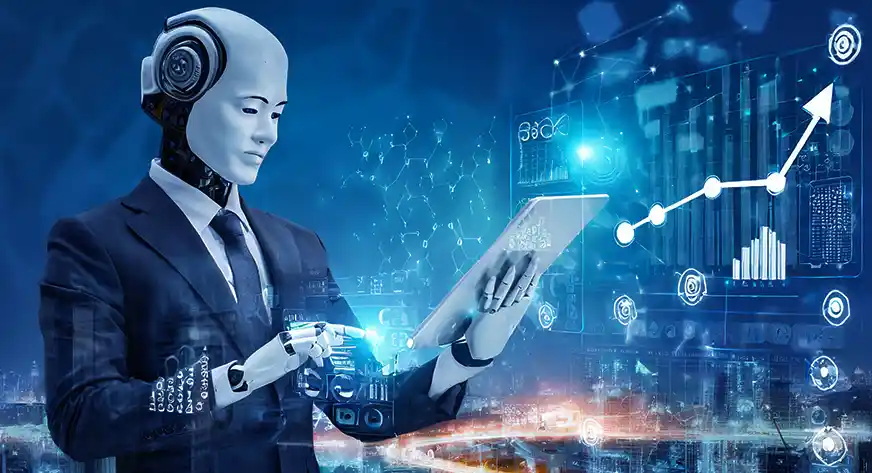
The current landscape of artificial intelligence is defined by the "Era of the Prompt," a phase where human creativity and productivity are limited by our ability to whisper the right commands into a chat box. We have spent the last few years learning the art of prompt engineering, treating AI as a sophisticated calculator that requires constant manual steering. However, 2026 marks the definitive shift away from this reactive model toward a proactive reality defined by autonomous AI agents. These are not merely chatbots that respond to queries; they are goal-oriented systems capable of planning, executing, and refining complex workflows with minimal human oversight. By 2026, the novelty of "chatting" with an AI will be replaced by the utility of delegating to an agent that possesses the agency to navigate the digital world on our behalf.
This transition is fueled by a convergence of long-term memory integration, multi-modal reasoning, and the maturation of standardized agent protocols. In 2026, AI agents will finally move past the "forgetfulness" of current large language models, utilizing personalized data silos to understand a user’s long-term goals, past preferences, and specific professional nuances. This means that instead of a user writing a prompt to summarize a meeting, an autonomous agent will have already cross-referenced the transcript with a project management tool, updated the relevant deadlines, and drafted follow-up emails to stakeholders before the user even leaves the conference room. The shift is from AI as a tool we use to AI as a workforce we manage, transforming the primary human skill from "prompting" to "orchestration."
The economic and social impact of this shift will be most visible in how we perceive professional productivity. For the first time, the "middle-man" tasks of digital life, the scheduling, the data entry, the research loops, and the administrative coordination, will be handled by agents that communicate directly with other agents. This creates a frictionless digital economy where personal agents act as high-level proxies, negotiating schedules and managing complex purchases autonomously. By 2026, the tech industry will have moved beyond the race for bigger models and into a race for more reliable execution. We will see the emergence of "Agentic Operating Systems," where the interface is no longer a collection of isolated apps, but a unified layer of intelligence that understands intent rather than just instructions.
There’s more to life than simply increasing its speed.
By Udaipur Freelancer
Ultimately, 2026 will be remembered as the year we stopped talking to our computers and started letting them work for us. This evolution represents a fundamental change in the human-computer relationship, moving us toward a future where AI is a silent, background partner rather than a demanding foreground distraction. As these agents gain the ability to use software tools just as humans do, clicking buttons, navigating websites, and analyzing visual data, the barrier between human intent and digital action will effectively dissolve. We are moving toward a world of "zero-prompt" intelligence, where the most powerful AI is the one you don't have to tell what to do because it already knows the goal and has the autonomy to achieve it.













Recommended for you
Must-See Art Exhibitions Around the World This Year
The Revival of Classical Art in a Digital Age
Breaking Down the Elements of a Masterpiece Painting
The Revival of Classical Art in a Digital Age