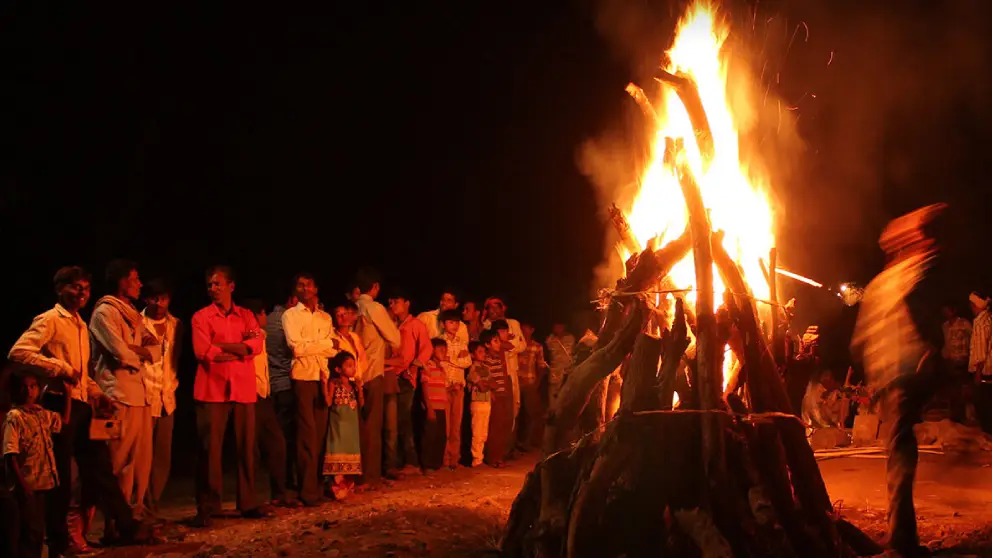
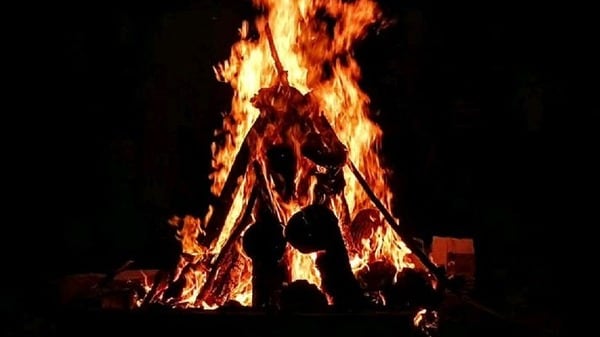
The festival of Holi is one of the most vibrant, joyous, and spiritually significant celebrations in the Hindu calendar. It is a time when the triumph of good over evil is celebrated with the lighting of the sacred bonfire, known as Holika Dahan. However, the year 2026 brings a very rare and highly significant astrological event that has left many devotees with questions.
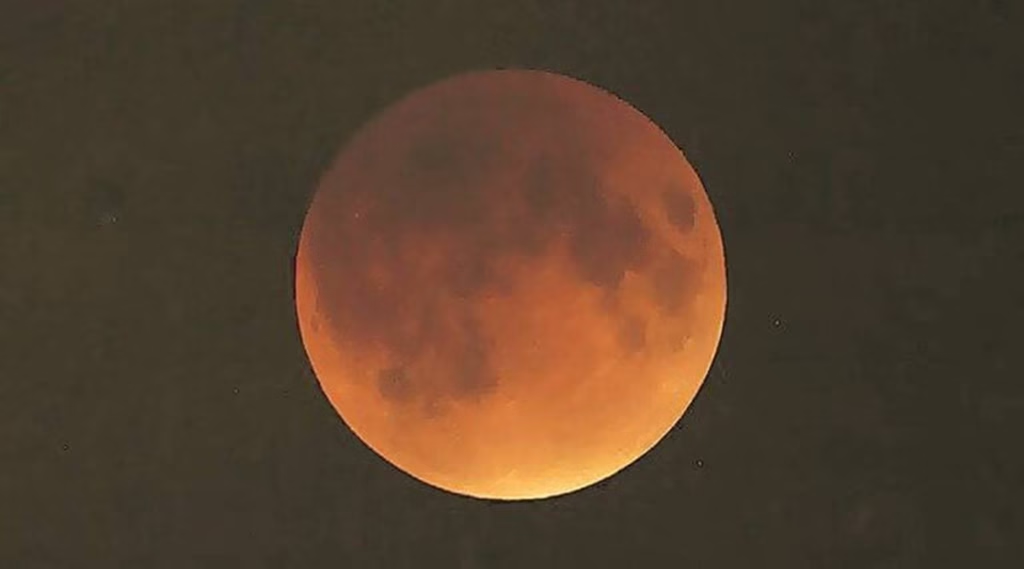
In 2026, Holika Dahan falls on Tuesday, March 3, which coincides exactly with the first Lunar Eclipse (Chandra Grahan) of the year.
According to Vedic astrology and Hindu scriptures, performing sacred rituals during an active eclipse or its preceding Sutak Kaal (inauspicious period) is strictly prohibited. So, this begs a massive question for millions of devotees: When exactly should you perform Holika Dahan in 2026?
In this detailed guide, we will break down the exact Shubh Muhurat (auspicious timings), the schedule of the Lunar Eclipse, the rules of Sutak Kaal, and the perfect window to light the sacred Holika fire without inviting any negative planetary effects.
The Rare Astrological Alignment: Holika Dahan and Chandra Grahan 2026
Holika Dahan is traditionally performed on the night of Phalguna Purnima (the full moon day of the Phalguna month). Interestingly, a Lunar Eclipse can only occur on a full moon night. In 2026, the cosmic calendar aligns in such a way that the Chandra Grahan will be active on the very evening devotees usually gather to light the holy bonfire.
According to Sanatan Dharma, lighting the Holika fire is a profound religious act. It requires a pristine, spiritually clean environment. An eclipse, however, is considered a time of astrological impurity. Therefore, lighting the pyre during the eclipse or during the ominous Bhadra Kaal is believed to bring misfortune and invite negative energies into one's life.
Because of this celestial overlap, the window to safely perform the ritual on March 3, 2026, is incredibly specific.
Holika Dahan 2026: Exact Date and Shubh Muhurat
To ensure your prayers are accepted and your family is blessed with prosperity, you must adhere strictly to the calculated timings provided by astrological almanacs (Panchang). Here are the most critical details you need to note:
- Holika Dahan Date: Tuesday, March 3, 2026
- Holika Dahan Shubh Muhurat: 06:45 PM to 08:50 PM
- Total Duration of Muhurat: 2 Hours 5 Minutes
Why this specific time? To understand why the auspicious window opens exactly at 06:45 PM, we have to look closely at the timings of the Lunar Eclipse.
Understanding the Lunar Eclipse (Chandra Grahan) Timings on March 3
The Chandra Grahan on March 3, 2026, is the primary factor dictating the evening's schedule. During the eclipse, the environment is believed to be filled with toxic energies, and temples are traditionally closed.
Here is the timeline of the Lunar Eclipse in India:
- Lunar Eclipse Starts: 04:20 PM
- Lunar Eclipse Ends: 06:40 PM
As you can see, the eclipse will be active throughout the late afternoon and early evening. Because no holy work can be done while the eclipse is active, devotees must wait patiently for the celestial event to pass. The moment the eclipse concludes at 06:40 PM, the skies are spiritually cleared, paving the way for the Holika Dahan rituals to begin just five minutes later at 06:45 PM.
What is Sutak Kaal and How Does It Affect Holika Dahan?
In Hindu astrology, Sutak Kaal is an inauspicious period that precedes an eclipse. It is a time when the Earth's atmosphere is considered to be contaminated.
For a Lunar Eclipse (Chandra Grahan), the Sutak Kaal begins exactly 9 hours before the eclipse starts.
There’s more to life than simply increasing its speed.
By Udaipur Freelancer
- Since the eclipse starts at 04:20 PM on March 3, the Sutak Kaal will begin at approximately 07:20 AM on the morning of March 3.
Rules of Sutak Kaal to keep in mind:
- No Rituals: You cannot build, worship, or offer prayers to the Holika pyre during this 9-hour window.
- Fasting/Food: Many devout Hindus choose not to consume heavy, cooked meals during Sutak Kaal.
- Tulsi Leaves: It is highly recommended to place Tulsi (Holy Basil) leaves in stored water and cooked food before the Sutak begins to purify them from the eclipse's negative rays.
Because the entirety of the day is overshadowed by the Sutak Kaal, all preparations for the evening bonfire must be handled with care, and the actual worship (Puja) of the Holika must be delayed until the evening.
The Shadow of Bhadra Kaal: Another Astrological Hurdle
Aside from eclipses, the other major astrological phenomenon to avoid during Holika Dahan is Bhadra Kaal. Bhadra is considered an inauspicious time governed by the sister of Lord Shani (Saturn). Performing Holika Dahan during Bhadra Mukha (the face of Bhadra) is strictly forbidden.
Fortunately, in 2026, the Bhadra period falls late at night, well after the Shubh Muhurat for Holika Dahan has concluded.
- Bhadra Punchha (Tail): 01:23 AM to 02:23 AM (Early morning of March 4)
- Bhadra Mukha (Face): 02:23 AM to 04:23 AM (Early morning of March 4)
Because the Bhadra Kaal happens post-midnight, your evening window of 06:45 PM to 08:50 PM on March 3 is completely safe from the negative effects of both the Lunar Eclipse and Bhadra Kaal.
Dos and Don’ts for Holika Dahan During a Lunar Eclipse
Navigating a festival day that is accompanied by an eclipse requires a few extra steps of spiritual purification. Here is what you should do on March 3, 2026:
What to DO:
- Take a Post-Eclipse Bath: As soon as the eclipse ends at 06:40 PM, take a purifying bath before wearing clean clothes to perform the Holika Puja.
- Purify the Area: Sprinkle Gangajal (holy water from the Ganges) over yourself, your home, and the area where the Holika Dahan will take place to cleanse the space of the eclipse's residual energy.
- Prepare Fresh Offerings: Do not use food or sweets cooked during the Sutak Kaal for the Holika Puja. Prepare fresh offerings or use items that were protected with Tulsi leaves.
- Chant Mantras: Chanting the Maha Mrityunjaya Mantra or Vishnu Mantras during the eclipse is highly beneficial.
What NOT to DO:
- Do not light the Holika fire before 06:45 PM under any circumstances.
- Do not look directly at the eclipse with the naked eye.
- Pregnant women should avoid stepping out of the house while the eclipse is active (between 04:20 PM and 06:40 PM).
Holi 2026 Date (Festival of Colors / Dhulandi)
Once the Holika Dahan is successfully completed in the auspicious evening window of March 3, the skies are clear for the grand celebration of colors!
The joyous festival of Holi (also known as Rangwali Holi or Dhulandi) will be celebrated the very next day on Wednesday, March 4, 2026. On this day, people will gather to play with Gulal (colored powder), share traditional sweets like Gujiya, and celebrate the arrival of spring without any astrological hindrances.
Final Thoughts
The year 2026 presents a unique test for devotees with the clash of Holika Dahan and a Lunar Eclipse. However, Vedic astrology provides a clear path forward. By practicing patience, respecting the rules of the Sutak Kaal, and waiting for the exact Shubh Muhurat of 06:45 PM to 08:50 PM on March 3, you can perform your rituals safely. Doing so ensures that the sacred fire burns away negativity and brings peace, health, and prosperity to your life.















Recommended for you
Must-See Art Exhibitions Around the World This Year
The Revival of Classical Art in a Digital Age
Breaking Down the Elements of a Masterpiece Painting
The Revival of Classical Art in a Digital Age