Hello everyone, and welcome back to the blog! Today, we are diving into a massive story that is making waves across the country. It is a topic that involves our schools, our legal system, and the highest levels of our government.
When we send our kids to school, we trust the textbooks they read. We expect the content to be educational, age-appropriate, and thoroughly checked. But what happens when a school textbook becomes the center of a massive national controversy involving the Prime Minister and the Supreme Court?
Well, grab a cup of coffee and settle in, because we need to talk about the latest controversy surrounding a Class 8 NCERT social science textbook. It has sparked intense debates, high-level government meetings, and even a completely strict ban from the Supreme Court of India. Let’s break down exactly what happened, who said what, and why everyone is so upset.
The Spark: What is in the Textbook?
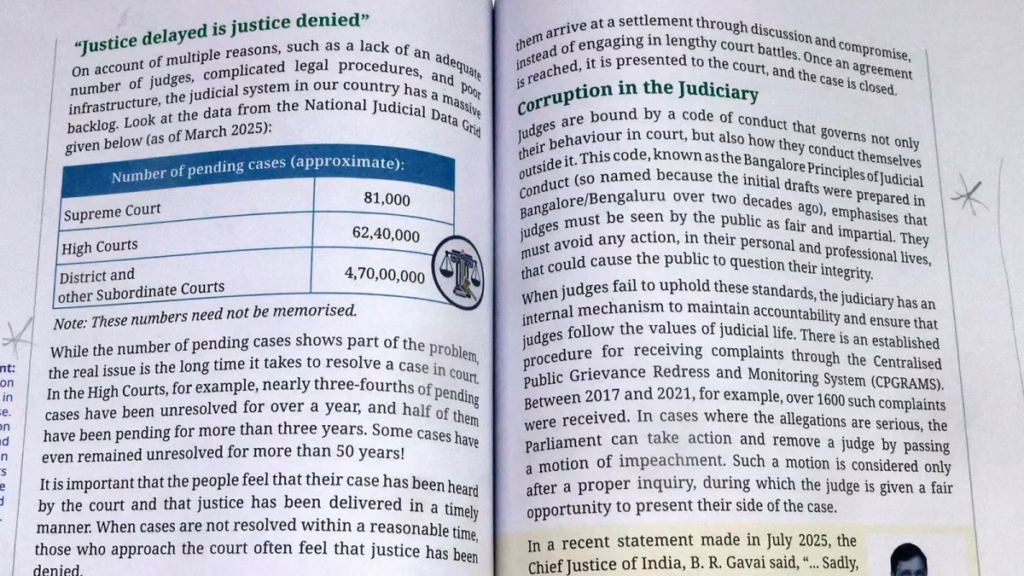
To understand this whole situation, we first need to look at the root of the problem, the textbook itself. The book in question is a Class 8 social science textbook published by NCERT (National Council of Educational Research and Training). Specifically, the book is titled "Exploring Society: India and Beyond (Vol II)."
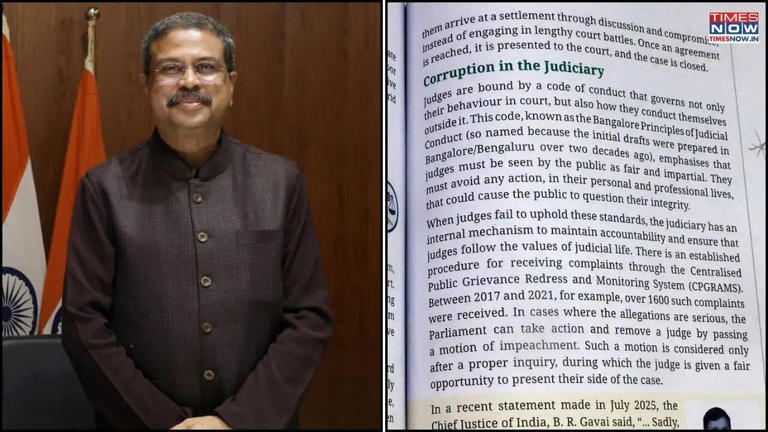
Inside this book, there is a specific chapter that has caused an absolute uproar. The section is titled Corruption in the Judiciary.
According to the details that have come out, this section talks about some very heavy and negative topics regarding our legal system. It refers to corruption within the courts, the massive backlog of legal cases, and the severe shortage of judges in the country. While the book did briefly mention that judges are bound by a strict code of conduct that governs how they behave both inside and outside the courtroom, the main focus on corruption is what caught everyone's attention.
Now, pause for a second and think about a Class 8 student. These are young kids, usually around 13 or 14 years old. They are just starting to learn about how our country works, our democracy, and our institutions. The big question that started this whole firestorm is. Is this the right age to be teaching young, impressionable minds about deep-rooted corruption in the justice system?
The Prime Minister Steps In
This wasn't just a minor issue that folks complained about on social media. This textbook caught the attention of the absolute highest levels of the Indian government.
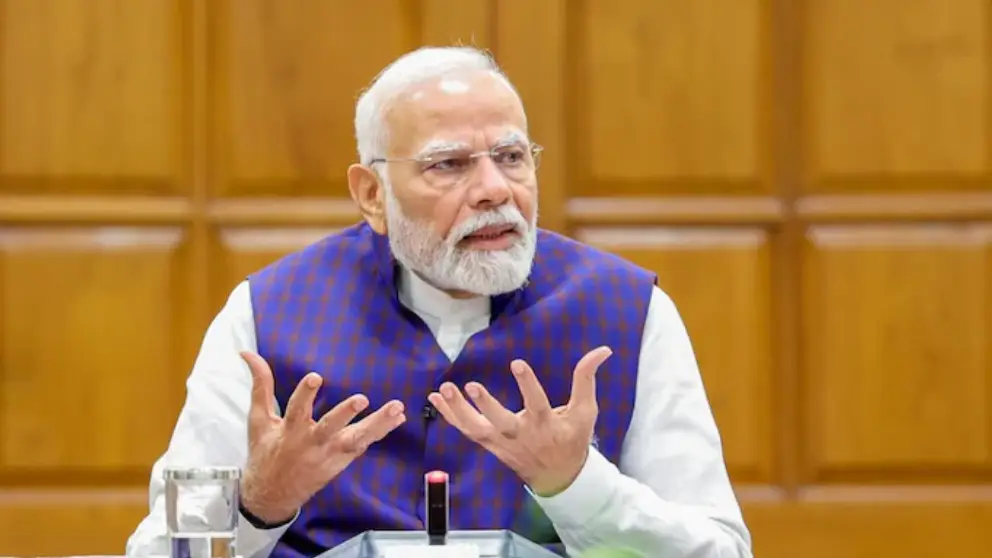
During a very important Cabinet meeting held on a Tuesday, Prime Minister Narendra Modi himself expressed deep displeasure and concern over this specific chapter. According to sources who were aware of the meeting, the Prime Minister was incredibly upset that middle school students were being given this kind of material.
The Prime Minister reportedly asked a very blunt and serious question during the meeting, "What are we teaching Class 8 children about judicial corruption?"
He didn't just stop at the content itself, he questioned the entire system that allowed this to happen. The PM asked about the oversight process. He wanted to know exactly who was monitoring this kind of content and who approved it before it ever reached the hands of young students in classrooms across the country.
His remarks showed a clear feeling of unease about how very sensitive, institutional issues were being introduced to kids at such an early stage of their schooling. Because of the Prime Minister's reaction, the textbook immediately came under intense government scrutiny. Officials started raising serious questions about whether the book was age-appropriate and what kind of safeguards and safety checks are actually in place when school textbooks are being prepared and reviewed.
The Supreme Court Imposes a Blanket Ban
While the government was having its meetings, the situation escalated to a whole new level when the judiciary got involved. And when I say the judiciary, I mean the absolute highest court in the land, the Supreme Court of India.
On a Thursday, the Supreme Court stepped in and brought the hammer down. They imposed a complete blanket ban on the book. This means no further publication, no reprinting, and absolutely no digital sharing or downloading of this Class 8 social science textbook. They cited the offending content about corruption in the judiciary as the reason for this massive step.
The Supreme Court bench that handled this was led by Chief Justice Surya Kant, along with Justices Joymalya Bagchi and Vipul M Pancholi. The court took up this matter suo motu which is a legal term meaning they took action on their own accord after seeing the issue, rather than waiting for someone to file a formal lawsuit.
The Chief Justice did not hold back his feelings. During the hearing, he made a very powerful and visual statement, saying, "They have fired a gunshot. The judiciary is bleeding."
The bench ordered that all physical and digital copies of the book that are currently in circulation must be immediately recalled and completely removed from public access. They didn't view this as just a simple editing mistake. The judges stated that there appeared to be a deep-rooted conspiracy and a calculated move to undermine the institution and to demean the dignity of the entire legal system.
Show Cause Notices and Warnings of Contempt
The Supreme Court wasn't just satisfied with banning the book. they wanted answers, and they wanted accountability.
The court issued strict show cause notices to two major figures. the Director of NCERT and the Secretary of the Department of School Education. Basically, a show cause notice is a legal demand asking someone to explain themselves and justify why the court shouldn't take serious action against them. In this case, the court asked them to explain why contempt proceedings shouldn't be started against the people responsible for putting that offensive chapter into the book.
The bench was extremely clear about their orders. They stated, "As an abundant precaution, a complete blanket ban is hereby imposed on any further publication, reprinting or digital dissemination of the book titled 'Exploring Society: India and Beyond (Vol II)'."
Furthermore, they issued a very stern warning to anyone who might try to be sneaky. They warned that any attempt to bypass this court order for example, by sharing the content electronically or trying to publish the same content under a different book title would be treated as a willful breach and a direct defiance of the court's directions.
There’s more to life than simply increasing its speed.
By Udaipur Freelancer
The Chief Justice made it very clear that someone is going to be held responsible for this mess. He stated, "It is my duty as the head of the institution to find out who is responsible, heads must roll. We would like to have a deeper probe."
The Court Questions the Intent Behind the Content
You might be wondering, how did the Supreme Court even find out about this textbook in the first place? Well, the bench noted that they were completely shocked after reading a newspaper report about the release of this textbook containing the controversial chapter.
After seeing the news report, the court asked its secretary-general to quickly verify if the book had actually been published by NCERT. It turned out to be true.
What makes this story even more dramatic is how NCERT initially reacted. According to the court, instead of taking a step back and looking inward, the NCERT director actually responded in writing to defend the contents of the book!
When the court read this administrative response defending the chapter, they felt it was proof of a calculated attempt to undermine the authority of the institutions and make the judiciary look bad. The bench expressed very deep concerns about the future impact of this text. They said that if this kind of content was left unchecked and continued to be taught, it could seriously erode public confidence in the judicial office. More importantly, they worried it would have a very damaging impact on young, impressionable minds.
The court also pointed out a massive flaw in the chapter's writing. They observed that the narrative in the textbook completely failed to mention any of the positive, transformative initiatives that the judiciary has undertaken. The book didn't talk about the steps the courts have taken to improve people's access to justice, nor did it talk about the vital role the courts play in preserving our democratic framework. It just focused on the negative.
The Government's Unconditional Apology
With the Prime Minister upset and the Supreme Court furious, the government had to act fast to do damage control.
Solicitor General Tushar Mehta stepped up to represent the government in front of the Supreme Court. He tendered an absolute, unconditional apology on behalf of the Department of School Education.
He didn't make excuses. He informed the court that swift action had already been taken against the creators of the content. He stated that the two individuals who prepared this specific chapter would no longer be associated with any work for the ministry. They were out.
Mehta also gave the court an update on the status of the books. He revealed, "There are 32 books which went into the market and are being withdrawn." Just imagine the scramble to track down those 32 specific copies!
He assured the judges that the problem was being completely fixed from the ground up. He announced that the entire chapter will be completely rewritten by a brand new team. In a very telling statement about the government's stance, Mehta added, "We cannot teach our Class 8 students that justice is being denied in the country."
The Supreme Court accepted these updates but the case isn't completely closed yet. The matter has been posted for a further hearing on March 11, so we will have to wait and see if there is any more fallout from this event.
It is also worth noting that a day before the Solicitor General's apology, NCERT itself had already issued an apology for what it called inappropriate content in the textbook, promising that the chapter would be rewritten in consultation with the proper authorities.
What Are Your Thoughts?
This entire situation leaves us with a lot to think about. It brings up massive questions about our education system. How do we decide what is appropriate for children to learn? How do we balance teaching the reality of the world with protecting young minds? And most importantly, how did a textbook chapter go through the entire writing, editing, and approval process without anyone raising a red flag until the Prime Minister and the Supreme Court had to get involved?
It is clear that the systems governing textbook approvals are going to face massive overhauls and reviews in the coming months. The mechanisms for vetting what our children read are going to be tightened significantly to ensure nothing like this slips through the cracks again.
I would love to hear what you guys think about all of this! Do you agree with the Prime Minister and the Supreme Court that Class 8 is too young to learn about institutional corruption? Or do you think kids should be exposed to these hard truths earlier?
Drop your thoughts in the comments below. Let's get a friendly debate going! And don't forget to share this post with your friends and family so they can get caught up on this massive national news story.
Until next time, keep reading, keep questioning, and stay informed!













Recommended for you
Must-See Art Exhibitions Around the World This Year
The Revival of Classical Art in a Digital Age
Breaking Down the Elements of a Masterpiece Painting
The Revival of Classical Art in a Digital Age