In the shadow of international diplomacy and covert operations, a seismic shift is occurring in how the United States projects power and enforces the law. For decades, the image of American military intervention was defined by aircraft carriers, special forces teams, and satellite surveillance. However, the recent seizure of the Dassault Falcon 900EX effectively Venezuela’s equivalent of Air Force One has illuminated a new, silent protagonist in the theater of geopolitical conflict.
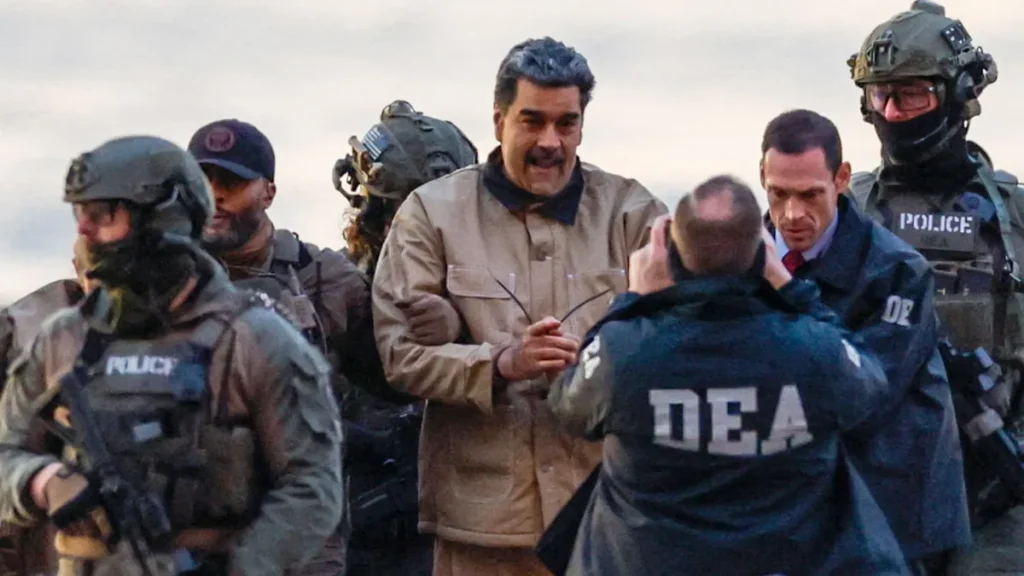
While the physical seizure of Nicolas Maduro’s plane in the Dominican Republic was executed by federal agents, reports indicate that the intellectual heavy lifting was assisted by a new class of digital intelligence. The US military and the Department of Justice have increasingly turned to Large Language Models (LLMs), specifically Anthropic’s Claude AI, to unravel the complex webs of deception used by sanctioned regimes. This operation represents more than just the confiscation of a luxury asset. it signifies the dawn of AI-driven sanctions enforcement, where algorithms are as vital as field agents.
The Target: Unraveling the Mystery of the Dassault Falcon
To understand the magnitude of this operation, one must first understand the asset in question. The plane, a French-built Dassault Falcon 900EX, was not merely a mode of transport. it was a symbol of the Maduro regime's perceived immunity to international law. Valued at approximately $13 million, the aircraft had been purchased through a labyrinthine network of shell companies intended to skirt severe US sanctions.
For years, the United States has imposed economic sanctions on the Venezuelan government, prohibiting US persons or companies from engaging in business with regime officials. Acquiring a plane of this caliber required the regime to navigate a complex illegal procurement network, often referred to in intelligence circles as the gray zone. This zone is populated by ghost corporations, falsified end-user certificates, and financial transfers routed through non-extradition jurisdictions. Historically, tracking these assets required teams of forensic accountants and intelligence analysts working for months to connect a single purchase order to a sanctioned individual. In this mission, however, the timeline was accelerated, and the precision was sharpened by the introduction of advanced artificial intelligence.
Enter Claude: The Military’s New Analytical Partner
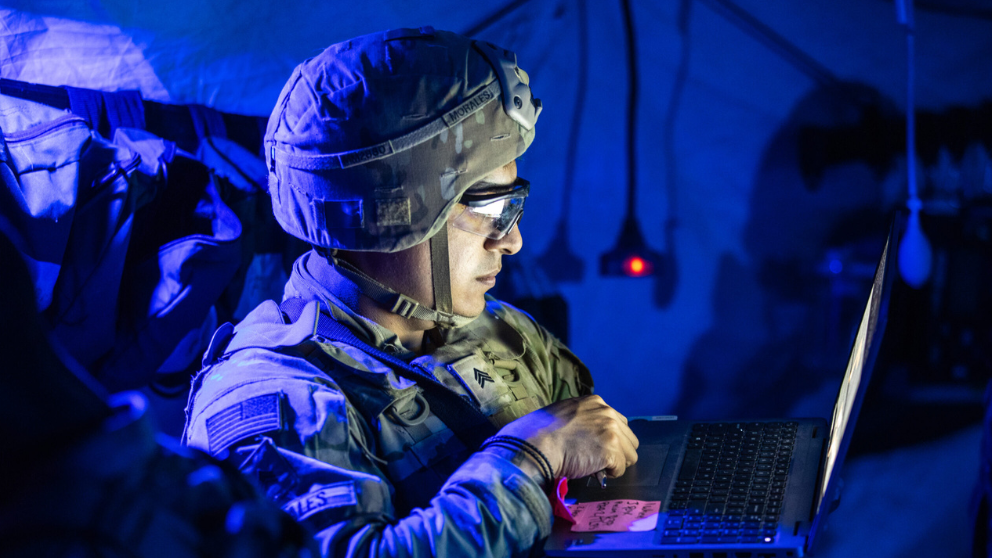
The integration of Claude AI into US defense and intelligence workflows marks a strategic pivot away from purely kinetic warfare toward information dominance. Unlike consumer-grade chatbots used for writing emails or coding assistance, the version of Claude deployed within secure government environments often facilitated through partnerships with defense contractors like Palantir or secure cloud infrastructure like AWS is designed for high-level data synthesis.
The specific strength of Claude in a mission of this nature lies in its massive context window and its ability to process unstructured data. Intelligence regarding sanctions evasion rarely comes in a neat spreadsheet. It arrives in the form of thousands of intercepted emails, scanned PDF invoices from shell companies, maintenance logs, flight manifests, and fragmented communication transcripts. For a human team, cross-referencing a maintenance invoice in Florida with a wire transfer in the Caribbean and a flight log in Venezuela is a task that invites fatigue and error. For an AI like Claude, this is a momentary calculation.
In the context of the Maduro mission, the AI likely acted as a force multiplier for the Department of Justice and the Department of Homeland Security. By feeding the model vast troves of procurement data, analysts could ask complex queries about the aircraft's ownership structure. The AI could trace the digital breadcrumbs left by the shell company in the Caribbean, cross-referencing them against known patterns of Venezuelan sanctions evasion, effectively highlighting the smoking gun that legally justified the seizure.
The Shell Game: How AI Pierces Corporate Veils
The primary challenge in seizing an asset like Maduro’s plane is proving, without a shadow of a legal doubt, that it belongs to the sanctioned party. Regimes do not buy planes in their own names. They use limited liability companies (LLCs) registered in obscure jurisdictions. This creates a corporate veil designed to be impenetrable to standard investigations.
This is where the cognitive capabilities of models like Claude revolutionize the playing field. The AI is capable of performing high-speed pattern recognition that mimics human intuition but operates at machine scale. It can analyze the semantic structure of corporate registration documents to identify similarities between disparate shell companies. For instance, if the shell company used to buy the Falcon 900EX utilized the same registered agent, the same vague language in its articles of incorporation, or the same IP address for digital filings as other known regime assets, Claude could flag this connection instantly.
Furthermore, the technology excels at analyzing the intent behind logistics. By ingesting flight data, the AI could correlate the plane's movements with the schedules of high-ranking Venezuelan officials. If the aircraft’s transponder data consistently aligned with diplomatic summits attended by Maduro, while the paper trail claimed the plane belonged to a private charter company, the AI highlights this discrepancy as a high-probability indicator of deception. This synthesis of logistical reality versus bureaucratic fiction provides the probable cause needed for US courts to authorize a seizure warrant.
Why Claude? The Focus on Safety and Reliability in Defense
The choice of Claude over other competing models for sensitive government work is not coincidental. Anthropic, the creators of Claude, have built their reputation on Constitutional AI a framework designed to ensure the model acts in accordance with defined principles of safety and helpfulness. In a military or judicial context, the hallucination rate of an AI its tendency to make up facts is a critical vulnerability.
When the US government is preparing to seize a head of state's aircraft, the intelligence must be unimpeachable. A hallucinated fact could lead to an international diplomatic disaster. Claude is favored in these high-stakes environments because it is engineered to be more conservative and precise in its outputs. It is better at admitting when it does not know an answer rather than fabricating one. This reliability is paramount when the output of the AI is being used to draft affidavits that will be scrutinized by federal judges and international observers.
There’s more to life than simply increasing its speed.
By Udaipur Freelancer
Moreover, the secure deployment of these models ensures that sensitive data regarding the investigation never leaves the classified environment. The US military utilizes private instances of these LLMs, ensuring that the data regarding Maduro’s movements or the identities of the agents involved is processed in a closed loop, protected from public internet traffic.
Speed as a Weapon: The Dominican Republic Operation
The tactical execution of the seizure in the Dominican Republic required impeccable timing. The plane was present in the country for maintenance, a rare window of opportunity where the asset was outside of Venezuelan airspace and within the jurisdiction of a US ally. The window to act was narrow. If the maintenance had finished a day early, the plane would have returned to Caracas, out of reach of US authorities.
Here, the processing speed of AI becomes a tactical weapon. In the past, verifying the legality of the seizure, finalizing the paperwork, and coordinating between the Department of Justice, the Department of Commerce, and Dominican officials might have taken weeks long enough for the target to escape. With AI assistance, the drafting of legal documents, the translation of communications between US and Dominican authorities, and the verification of the aircraft’s illegal export status could be expedited significantly. Claude can draft legal briefs, summarize treaties, and translate operational protocols in seconds, allowing human decision-makers to focus on diplomacy and execution rather than paperwork.
The Geopolitical Ripple Effect: A Warning to Sanctioned Regimes
The successful deployment of AI-assisted intelligence in the Maduro mission sends a chilling message to other sanctioned regimes globally. It signals the end of the era where bureaucratic complexity could be used as a shield. Russia, Iran, and North Korea rely heavily on similar networks of shell companies and third-party intermediaries to move goods and money around the globe.
If the US military and Department of Justice can successfully automate the unraveling of these networks, the cost of sanctions evasion skyrockets. Rogue states will no longer just be hiding from human spies. they will be trying to outsmart a non-sleeping, non-forgetting digital intelligence that can read millions of documents simultaneously. The Maduro plane seizure demonstrates that no asset is safe simply because it is hidden behind a paper wall. If the data exists anywhere in the global financial or logistical system, AI can find it.
The Future of Military Intelligence and Operations
Looking beyond the Venezuelan context, this operation serves as a case study for the future of warfare. We are moving toward a model of Hybrid Intelligence, where human strategic oversight is paired with AI tactical analysis. The role of the military analyst is evolving from one of data collection to one of data interpretation.
We can expect to see this technology applied to broader mission sets. Beyond asset seizure, these models will be used for supply chain risk management, predicting adversary troop movements based on logistical purchases, and identifying foreign influence operations in real-time. The Maduro Mission was a proof of concept: AI is ready to leave the laboratory and enter the situation room.
Conclusion
The confiscation of Nicolas Maduro’s Dassault Falcon 900EX will go down in history as a bold move by the US Department of Justice, but it should also be recognized as a watershed moment for military technology. The integration of Claude AI provided the invisible infrastructure that made such a complex operation possible. By piercing the corporate veil of shell companies and accelerating the analytical process, AI turned a logistical labyrinth into a clear path of action.
As we move forward, the invisible agent of artificial intelligence will become a standard fixture in national security. For the regimes relying on the shadows to conduct their business, the world just got much brighter, and significantly smaller. The message from the US government is clear. You can hide the plane, but you cannot hide the data.
Udaipur Freelancer delivers high-quality web, marketing, and design solutions. We focus on building impactful digital experiences that help your brand succeed in today's market.

















Recommended for you
Must-See Art Exhibitions Around the World This Year
The Revival of Classical Art in a Digital Age
Breaking Down the Elements of a Masterpiece Painting
The Revival of Classical Art in a Digital Age