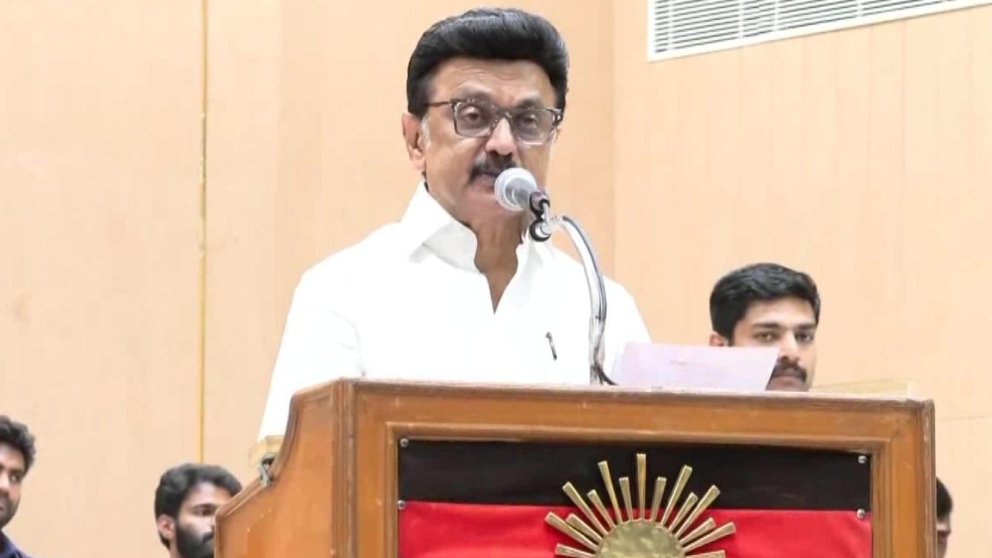
Political news in India is moving fast right now. Recently, the Dravida Munnetra Kazhagam, also known as DMK, made a very big announcement. DMK is the ruling political party in the southern state of Tamil Nadu. They said they will only support the central government's upcoming Delimitation Bill if certain important conditions are met. This statement has started a huge debate across the country.
Delimitation is a process where the boundaries of political seats in parliament and state assemblies are redrawn based on the latest population numbers. While this sounds like a normal administrative task, it carries massive political consequences for states in India. In this blog post, we will explain what delimitation means, why DMK is asking for special conditions, and what this means for the future of Indian politics.
What is the Delimitation Bill?
To understand the news, we first need to understand what delimitation actually is. Every few years, governments count their population through a census. Delimitation means changing the geographical boundaries of Lok Sabha seats and state assembly seats so that every Member of Parliament represents roughly the same number of voters.
The central government wants to update these boundaries soon based on new population data. However, because population growth is not the same everywhere in India, this update will change how many seats each state gets in Parliament. This is where the conflict begins between the central government and southern political parties.
Why Are Southern States Worried?
Over the last few decades, southern states like Tamil Nadu, Kerala, Karnataka, Andhra Pradesh, and Telangana followed government advice and successfully reduced their population growth rates. They invested heavily in healthcare, education, and family planning programs. As a result, their population grew much slower than northern states like Uttar Pradesh and Bihar.
If Parliament seats are given strictly based on current population numbers, northern states will get many more seats. At the same time, southern states could lose seats or see their proportion of political power decrease. DMK and other southern leaders feel that this is unfair. They believe states should not be punished for doing a good job in controlling population growth.
DMK's Main Conditions for Support
To protect the political rights of Tamil Nadu, DMK has laid down clear conditions before they agree to support the Delimitation Bill in Parliament. Here are the key demands made by the party leadership:
First, DMK wants a guarantee that the total number of Lok Sabha seats for Tamil Nadu and other southern states will not decrease under any circumstances. They demand that representation in Parliament should be frozen at current ratios or adjusted in a way that preserves fairness.
Second, DMK asks for a fair formula that rewards states for successful economic development and social policy implementation. They argue that political representation should take into account economic contributions and social progress, not just simple population figures.
There’s more to life than simply increasing its speed.
By Udaipur Freelancer
Political Debates and National Reactions
The stance taken by DMK has created waves across national politics. Political arguments are getting stronger every day, much like when the Congress takes dig at PM Modi over new video during heated electoral campaigns. Opposition parties in other southern states are also supporting DMK's view, creating a unified regional voice.
On the other hand, leaders from northern states argue that democracy relies on equal representation per person. They say every citizen's vote should carry equal weight regardless of which state they live in. Balancing these two views is a major challenge for the central government.
Legal and Constitutional Aspects
Constitutional experts are carefully reviewing the laws around delimitation. Changing the allocation of seats requires constitutional amendments and broad agreement among political parties. Legal issues regarding state rights often reach the highest courts in India.
Ensuring constitutional fairness is critical in federal democracies. Just as judicial oversight corrects local policy errors—such as when the Mumbai Police externment was quashed by Bombay High Court—the Supreme Court of India may ultimately have to review how national delimitation is conducted if consensus cannot be reached.
What Happens Next?
The central government will need to hold talks with regional political parties, including DMK, to build agreement before bringing the Bill to Parliament. Passing such a significant law without the support of key state parties could lead to public protests and political tension between the North and South.
In conclusion, DMK's conditions for supporting the Delimitation Bill highlight a crucial topic in Indian federalism. It is not just about counting people; it is about political balance, fairness, and respecting state achievements. Voters across India will be watching closely to see how the central government responds to these demands in the coming months.













Recommended for you
Must-See Art Exhibitions Around the World This Year
The Revival of Classical Art in a Digital Age
Breaking Down the Elements of a Masterpiece Painting
The Revival of Classical Art in a Digital Age