In the world of international diplomacy and journalism, moments of tension are not uncommon. But what unfolded during a recent Ministry of External Affairs press briefing in Norway went beyond the usual polite Q&A. It was a sharp, direct exchange that highlighted the friction between a nation's self-perception and external scrutiny, particularly concerning human rights and press freedom. This isn't just a story about an argument; it's a window into how complex narratives clash on the global stage.
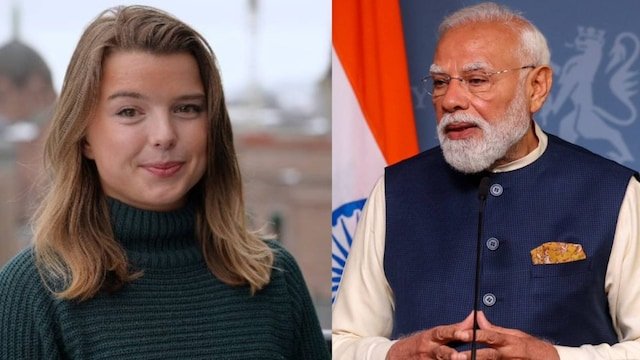
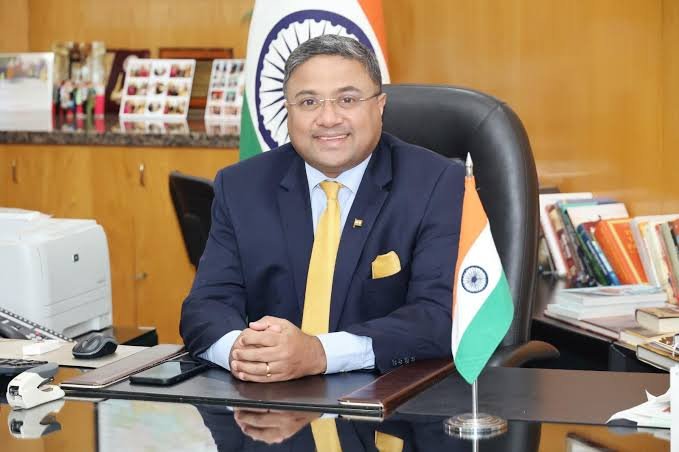
The incident involved a Norwegian journalist, Helle Lyng, who repeatedly challenged Indian diplomats, and MEA Secretary (West) Sibi George, whose firm response quickly made headlines. Lyng's persistence in questioning India's trustworthiness on fundamental rights triggered a powerful defense from George, who didn't hold back in his criticism of what he called 'godforsaken, ignorant NGOs' and their influence on international perceptions.
The Journalist's Push: Seeking Answers
Helle Lyng, the Norwegian journalist, was unwavering in her approach. She pressed diplomats on sensitive issues: press freedom, minority rights, and human rights in India. For her, it was about her 'job & duty' to seek answers, even if it meant being confrontational and interrupting to get a 'more focused response' from those in power. She wasn't looking for 'just talking points'; she wanted substance. This kind of journalism, though sometimes seen as aggressive, aims to hold powerful figures accountable and cut through diplomatic niceties to get to the core of an issue.
India's Diplomatic Counter: Scale, Constitution, and Context
Sibi George's reaction was equally direct. He strongly defended India, emphasizing its democratic framework and vastness. His primary point was that critics often form opinions based on reports from what he termed 'ignorant NGOs,' without truly grasping the country's immense scale and complexity. 'People have no understanding of the scale of India,' George stated, highlighting the sheer number of media outlets – 'at least 200 TV channels in Delhi alone,' covering news in multiple languages daily. This, he argued, showcases a vibrant and active public discourse, far from a suppressed media landscape.
He didn't stop there. George pointed to India's foundational documents, specifically its Constitution, which guarantees fundamental rights for all citizens and provides clear legal remedies for any violations. This wasn't just a theoretical point; it was a reference to a robust legal system designed to protect individual liberties. He also proudly highlighted India's historical commitment to equality, noting that women were granted voting rights immediately after Independence in 1947. This was a significant move, especially when compared to many other countries where women had to wait decades longer to gain the franchise. This historical fact underscores India's early commitment to inclusive democracy.
Beyond Headlines: The Challenge of Understanding India
George's strong words about 'godforsaken, ignorant NGOs' reveal a common frustration felt by many large nations. The sentiment is that external bodies, often well-meaning but sometimes geographically distant, might simplify or misinterpret complex internal realities. India, with its population of over a billion, its diverse cultures, languages, and political landscapes, is not easily summarized in a few reports. Every day, its vast administrative machinery tackles intricate issues, from economic shifts to local governance challenges. For instance, understanding specific policy initiatives like Delhi's efforts for fuel conservation involves diving into local politics, public behavior, and environmental concerns – far more than a simple policy statement.
There’s more to life than simply increasing its speed.
By Udaipur Freelancer
The diplomat's assertion implies that these NGOs might sometimes base their findings on isolated incidents or specific agendas, rather than a holistic view of a nation actively striving for progress within its own democratic framework. It’s a call for deeper engagement and a recognition of the immense internal dynamics at play. Just like an expert might need to sift through vast amounts of data to understand phenomena like a Sensex earnings slowdown and market valuation, understanding a nation's human rights record requires a similarly nuanced approach, looking beyond singular narratives to the broader institutional and societal picture.
A Clash of Perspectives, A Call for Context
This exchange in Norway isn't just about a heated moment; it's a reflection of ongoing debates about accountability, national sovereignty, and the role of international scrutiny. On one side, there's the journalist's inherent duty to question and hold power accountable. On the other, there's a diplomat's responsibility to defend national policy, present the full picture, and challenge what they perceive as incomplete or biased narratives.
What we learn from this incident is the critical importance of context. India is a democracy with a deeply entrenched constitutional system designed to protect its citizens. Like any large nation, it faces challenges and criticisms. But as Secretary George argued, these challenges need to be understood within the vast, complex, and dynamic reality of India itself, not through a narrow lens.
The incident reminds us that dialogue, even when confrontational, is essential. It pushes nations to articulate their positions more clearly and encourages external observers to delve deeper than surface-level reports. Ultimately, understanding requires an open mind, a willingness to look at scale, and an appreciation for the constitutional and historical fabric that shapes a nation's approach to human rights and freedom.
Udaipur Freelancer delivers high-quality web, marketing, and design solutions. We focus on building impactful digital experiences that help your brand succeed in today's market.













Recommended for you
Must-See Art Exhibitions Around the World This Year
The Revival of Classical Art in a Digital Age
Breaking Down the Elements of a Masterpiece Painting
The Revival of Classical Art in a Digital Age