When we think of the Philippines, images of pristine white sands, turquoise waters, and vibrant festivals usually come to mind. However, a darker narrative exists within the dense jungles of the southern archipelago one that recently sent shockwaves through the Australian intelligence community.
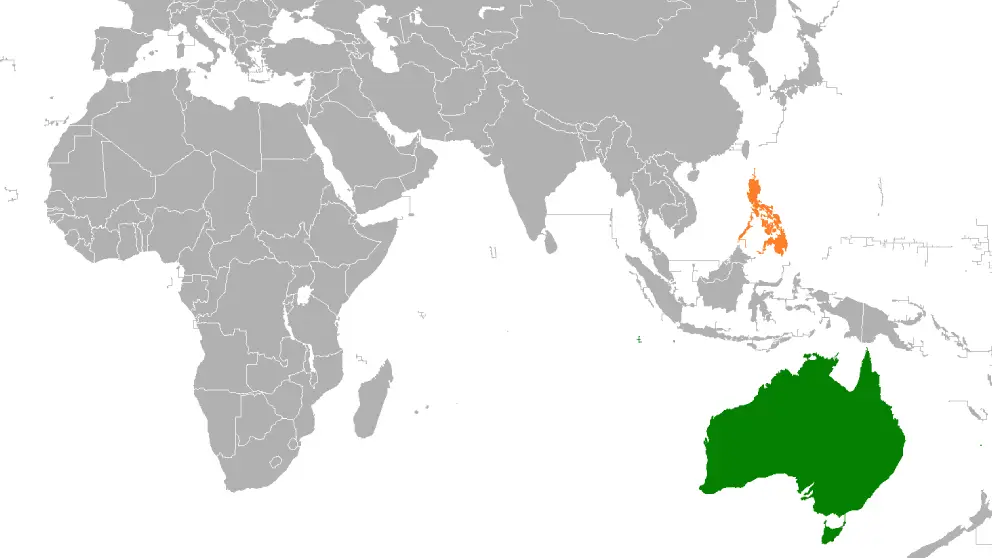
The revelation that the men behind the plotted massacre at Sydney’s Bondi Beach had traveled to the Philippines for military-style training has raised urgent questions. How did a Christian-majority nation become a training ground for Australian extremists?
To understand the link between Australian radicalization and the Philippine hinterlands, we must peel back layers of colonial history, local grievances, and the global evolution of jihad.
The Bondi Connection: A Terrorist Pilgrimage?
The connection was brought to global attention following the investigation into the Bondi Beach shooters, a father-son duo, Sajid and Naveed, who targeted civilians celebrating Hanukkah. Australian Prime Minister Anthony Albanese confirmed that the act appeared motivated by 'Islamic State ideology.'
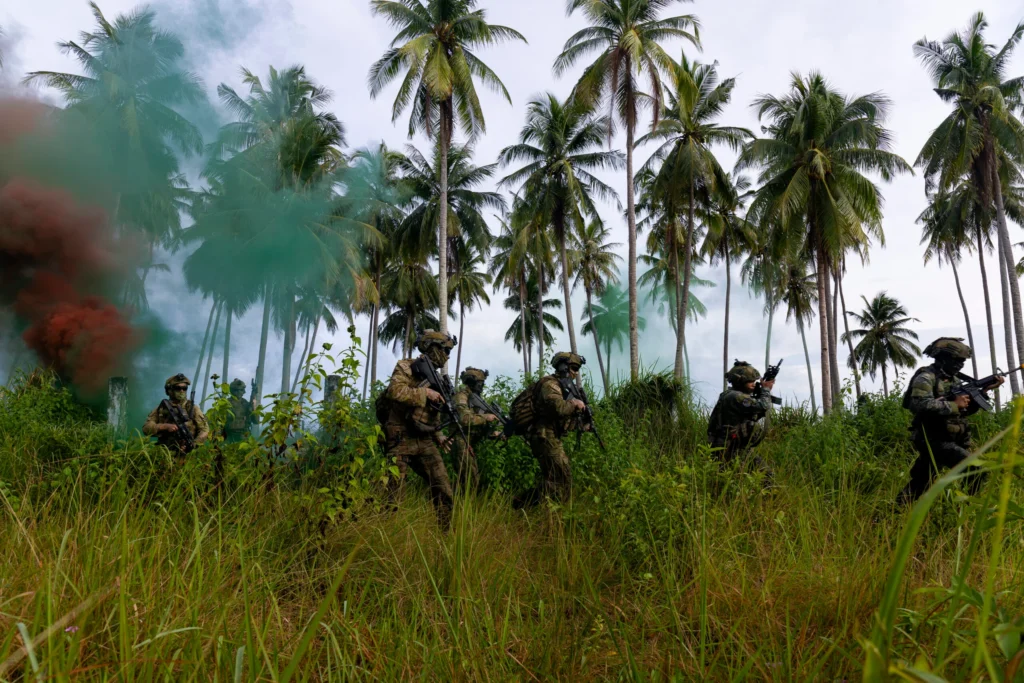
But the most alarming detail was their itinerary. Investigators discovered that the pair had traveled to Mindanao the volatile southern region of the Philippines in November, staying for nearly a month. They didn't go for the resorts. they allegedly went to connect with the remnants of Islamic terror groups. This incident highlights a disturbing reality. despite the geographical distance, the southern Philippines remains a terrorism academy for extremists across the Asia-Pacific region.
The Historical Roots: From "Juramentados" to Insurgency
To understand why extremists flock to Mindanao, we must look at the region's history of resistance. The islands of Mindanao and Sulu have been the home of the Muslim-Moro people for centuries.
When American soldiers arrived in 1902, replacing the Spanish colonizers, they faced a fierce enemy unlike any other. They encountered Moro rebels known as Juramentados warriors who bound their bodies in bandages to prevent blood loss and charged at soldiers with suicidal bravery. The resistance was so intense that it famously forced the US military to commission larger caliber handguns (the .45 caliber) just to stop the charging warriors.
While the US eventually integrated these islands into the Philippines by force, the seeds of resentment were sown. Policies that favored Christian migration from the north marginalized the local Muslim population, stripping them of ancestral lands and political power. This historical grievance is the bedrock upon which modern extremism in the region was built.
The Evolution of Terror: From Nationalism to Global Jihad
For decades, the conflict in the south was about independence and autonomy, led by groups like the Moro National Liberation Front (MNLF). However, as the decades passed, the ideology shifted.
There’s more to life than simply increasing its speed.
By Udaipur Freelancer
In the 1990s, coinciding with the rise of global Islamic movements, hardline factions broke away. The most notorious was the Abu Sayyaf Group, founded by a scholar with ties to the Mujahideen in Afghanistan. Unlike their predecessors who sought political autonomy, Abu Sayyaf and later the Maute Group adopted a brutal interpretation of Islam, engaging in beheadings, kidnappings, and bombings.
This shift turned the southern Philippines into a magnet for international terror funding. Money and ideology flowed from Al-Qaeda and later ISIS, culminating in the horrific 2017 Marawi Siege, where ISIS-affiliated groups held a city hostage for five months in the deadliest urban battle since WWII.
Why the Threat Persists Today
Although the Philippine military has reclaimed territory and signed peace agreements with major rebel groups, splinter groups and pockets of extremism remain active in the jungle.
As Rommel Banlaoi, chairman of the Philippine Institute for Peace, Violence and Terrorism Research, noted, the Philippines has long been regarded as a terrorism academy in Asia. The dense terrain and existing militant infrastructure provide a conducive environment for training activities that are difficult to detect.
Conclusion
The link between Australian extremists and the Philippine hinterlands is not accidental. it is the result of a century-old conflict that has mutated under the influence of global terror networks. While the Caliphate in the Middle East may have crumbled, the jungles of Mindanao offer a dangerous alternative for those seeking radicalization.
The Bondi plot serves as a stark reminder that history, if left unresolved, creates echoes that can be heard thousands of miles away posing a security challenge that requires both vigilance and a deeper understanding of the past.












Recommended for you
Must-See Art Exhibitions Around the World This Year
The Revival of Classical Art in a Digital Age
Breaking Down the Elements of a Masterpiece Painting
The Revival of Classical Art in a Digital Age