Hey everyone! Welcome back to the blog. Today, we are diving into something incredibly fascinating that is happening right under our noses in Indian politics. With elections right around the corner on April 19, all eyes are on the beautiful state of Assam.
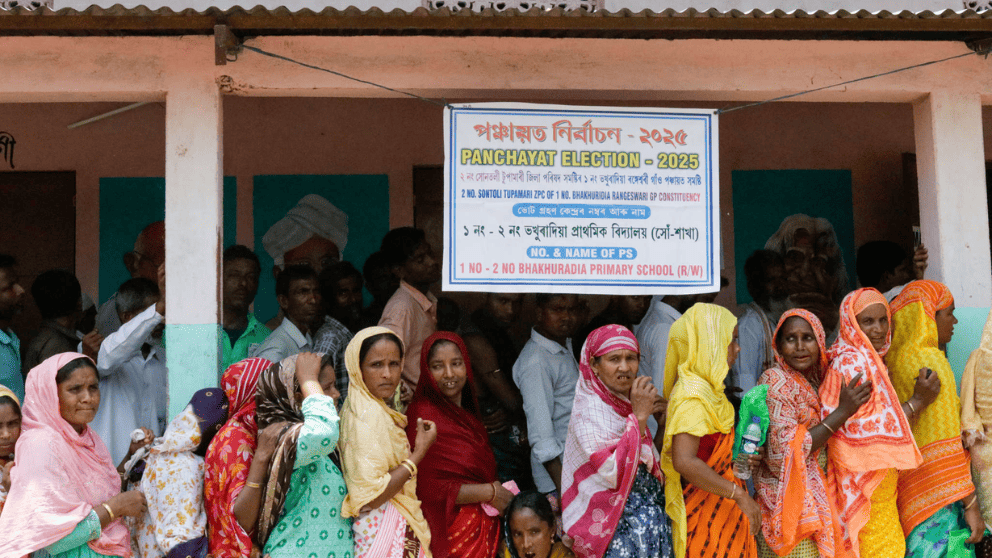
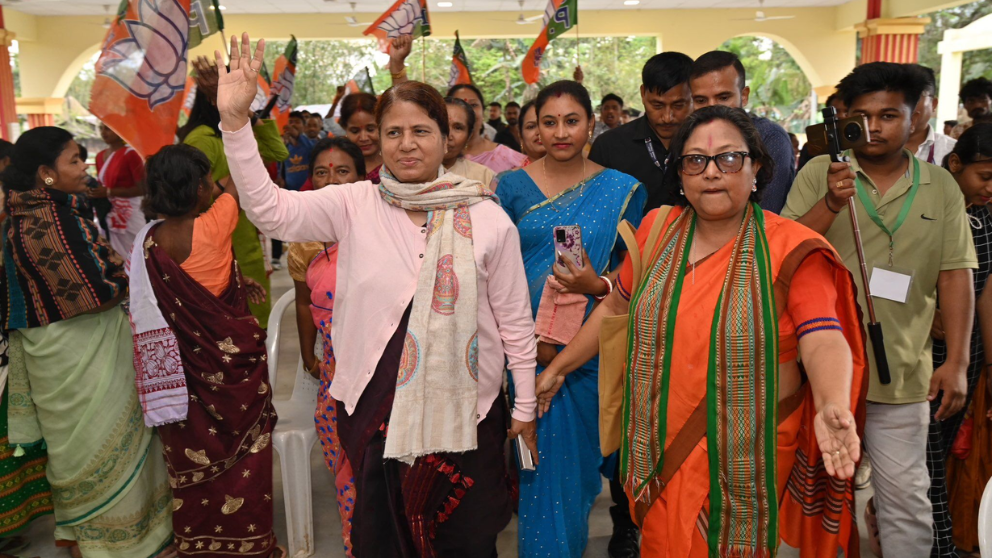
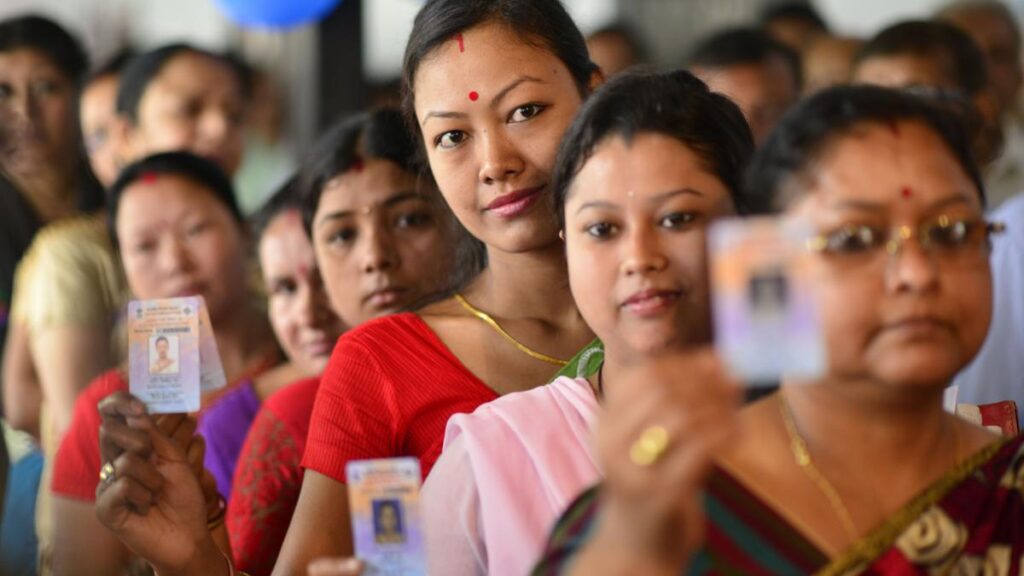
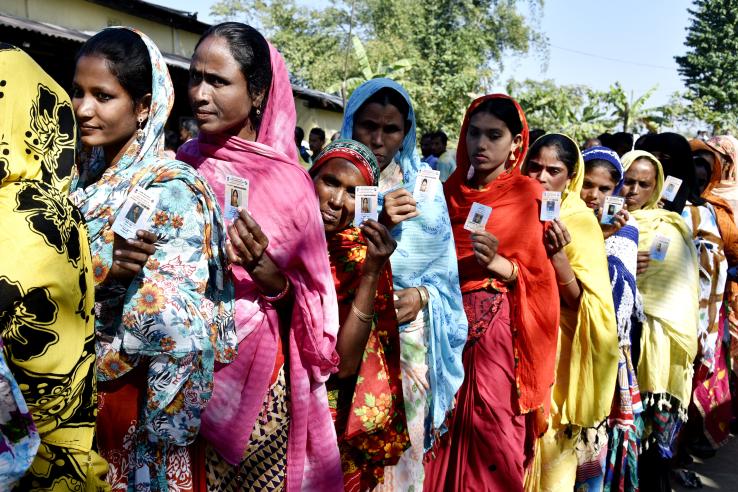
But if you look closely at the numbers, you’ll see a story that isn't just about political parties, massive rallies, or big-name politicians. It’s a quiet, powerful, and decisive story about women. Over the last decade, female voters have completely flipped the script in Assam, changing the way elections are fought and won.
Let's break down exactly what’s happening, without all the confusing political jargon. Grab a cup of tea, and let’s get into how the women of Assam are taking charge of their state's future!
The Great Gender Flip: From Trailing to Leading
To really understand how big of a deal this is, we have to hop in a time machine and go back to the 2011 assembly elections. Back then, it was a totally different ballgame. Men were dominating the voting booths. In fact, women trailed behind men in 128 out of the 126 assembly constituencies in the state. On average, the female voter turnout was nearly two percentage points lower than the male turnout.
But then, the 2016 elections rolled around, and everything changed. This wasn't just a tiny, gradual shift, it was a massive inflection point. Women came out to vote in droves! The gap didn't just close it completely reversed. In 2016, women outpaced men in 73 out of 126 seats.
And if anyone thought that was just a one-time fluke, the women of Assam proved them wrong in 2021. The lead held strong, with women outpacing men in 72 seats. Overall, the state saw a massive 2.4 percentage point swing in the gender gap. Women didn't just catch up, they took the steering wheel.
It’s Not Just a City Thing!
Now, you might be thinking, "Oh, this must be happening in big cities like Guwahati, where there’s more awareness." Nope! That’s the most beautiful part of this data.
There are 19 specific constituencies where women have voted more than men in every single election since 2011. Let's look at Jamunamukh in the Nagaon district. This place had the widest gap in the whole state women led men by a massive 7.4 percentage points in 2021 (up from just 0.6 points back in 2011). Abhayapuri North in Bongaigaon also saw a huge women-led gap of 5.9 points, and Dhemaji stood strong at a 4.6 point lead for women.
Here’s the kicker: Nagaon, Bongaigaon, and Dhemaji are predominantly rural areas. This totally busts the myth that political engagement is just an urban phenomenon. This is a powerful, grassroots movement happening in the villages and towns of Assam.
The Rollercoaster of Voter Turnout
Let's talk about overall voter turnout for a second, because Assam has seen some wild swings.
In 2011, the statewide turnout was around 76%. Pretty standard. But in 2016, a massive wave of enthusiasm swept the state, pushing the turnout up to a staggering 84.7%! However, the 2021 elections couldn't quite maintain that incredible high, and the statewide turnout dipped slightly to 82.4%.
So, where did the numbers drop? The data points directly to Upper Assam specifically the Brahmaputra valley’s tea-garden belt. Historically, this area has always had super high voter turnout, but in 2021, they saw the sharpest drops.
Dibrugarh district saw an average fall of 5.5 points across its seats. Jorhat fell by 5 points, and Tinsukia dropped by 4.8 points. If we look closely at individual towns, Chabua dropped by 7.4 points, Doom Dooma fell by 6.3 points, and Mariani went down by 6.1 points. While the data doesn't tell us exactly why this happened, experts believe that migrant labor and the seasonal movement of workers in these tea-garden heavy districts play a huge role.
There’s more to life than simply increasing its speed.
By Udaipur Freelancer
Surprises, Wildcards, and Record Breakers
While Upper Assam was seeing a drop, other parts of the state were breaking records and going completely against the grain.
Take the Hailakandi district in the Barak Valley. While the rest of the state saw a dip between 2016 and 2021, Hailakandi's average turnout actually rose by 4.1 points! One of its constituencies, Katlicherra, gained a massive 7.1 points the largest rise of any seat in the entire state.
Then there is the absolutely wild story of North Cachar Hills. Back in 2011, this area had the lowest turnout in the state at a dismal 61.6%. But by 2016? They experienced a mind-blowing 20-point climb, reaching 81.1%! They proudly held onto that high engagement, staying at 81.3% in 2021.
If we are giving out medals for voter enthusiasm, the Dhubri district takes the gold for 2021, boasting an incredible 91.4% turnout. Goalpara was right behind them at almost 90%. On the flip side, Karimganj and Cachar (both in the Barak valley) hovered around the 78% to 79% mark.
A Quick (But Important) Caveat for 2024
Before we start making wild predictions for the upcoming polls, there is one technical thing we need to keep in mind, Delimitation.
In September 2023, the Delimitation Commission redrew the assembly boundaries in Assam. Think of it like rearranging the walls inside a house. The total number of seats is still 126, but the names, numbers, and borders of many constituencies have changed. A seat called 'Chabua' today might not have the exact same voters as the Chabua of 2021.
Because of this, we can't perfectly compare seat-by-seat data. However, the overall district trends and the massive gender patterns are rock solid. Whether a boundary moves a few miles to the left or right doesn't change the fact that women are out-voting men across the region!
What to Watch Out For in the Upcoming Elections
So, as we gear up for the upcoming polls on April 19, here are the top three things I'm keeping my eyes on:
- Will the Women Keep the Crown? The gender lead is real, and it is persistent. Women have outpaced men statewide for two straight elections across different districts and different political parties. Let's see if they make it a hat-trick!
- The Tea Garden Comeback: If the 2021 dip in Upper Assam's tea garden belt was just a temporary hiccup, a bounce back to the massive 2016 turnout numbers could totally change the game. A 5-point swing in voter turnout has huge consequences for who wins and loses.
- The Barak Valley Mystery: Hailakandi saw huge gains in turnout, while its neighbors Karimganj and Cachar remained stagnant. Whether this gap widens or closes will depend heavily on which political campaigns actually connect with the voters on the ground.
It is an incredibly exciting time for Assam's democracy. The women of the state have realized the power of their vote, and they are using it to shape their own future.
What are your thoughts on this massive shift? Let me know in the comments below, and don't forget to share this post if you found it interesting!
Stay tuned for more election updates!














Recommended for you
Must-See Art Exhibitions Around the World This Year
The Revival of Classical Art in a Digital Age
Breaking Down the Elements of a Masterpiece Painting
The Revival of Classical Art in a Digital Age