Have you ever made a big promise that seemed almost impossible at the time, but you still managed to keep it years later? In the world of Indian politics, that is exactly what just happened.
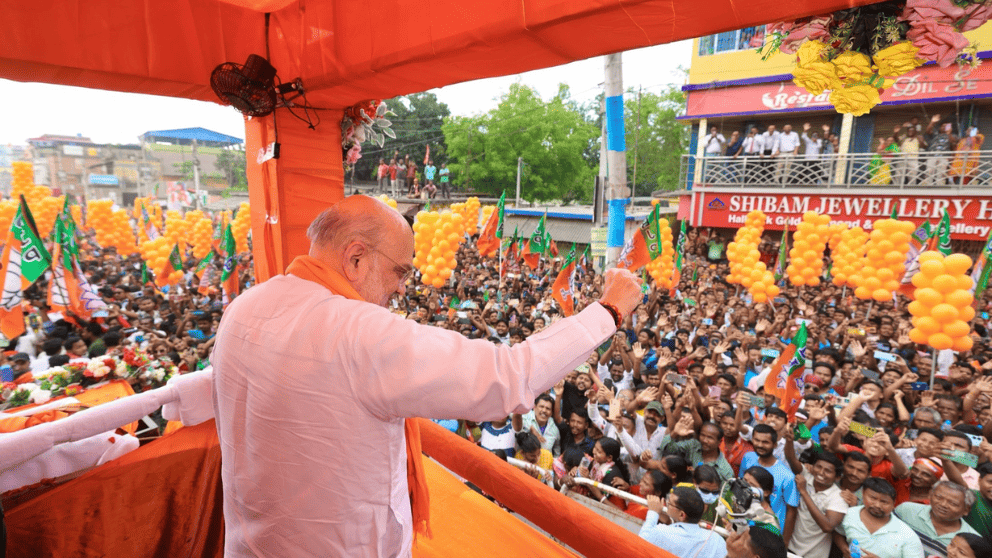
If you have been following the news lately, you might have seen pictures of Union Home Minister Amit Shah holding a massive roadshow at Behala Paschim in Kolkata. The Bharatiya Janata Party (BJP) has completely defeated the Trinamool Congress (TMC) in West Bengal, bringing an end to the TMC’s long 15-year rule.
But this historic win did not happen overnight. It is the result of years of hard work on the ground. More importantly, this big victory has brought an old, forgotten video back to life. It reminds us of a bold vow that BJP leader Amit Shah made in Kolkata way back in December 2014. Let’s dive into this amazing story!
The Flashback: A Challenge from 2014
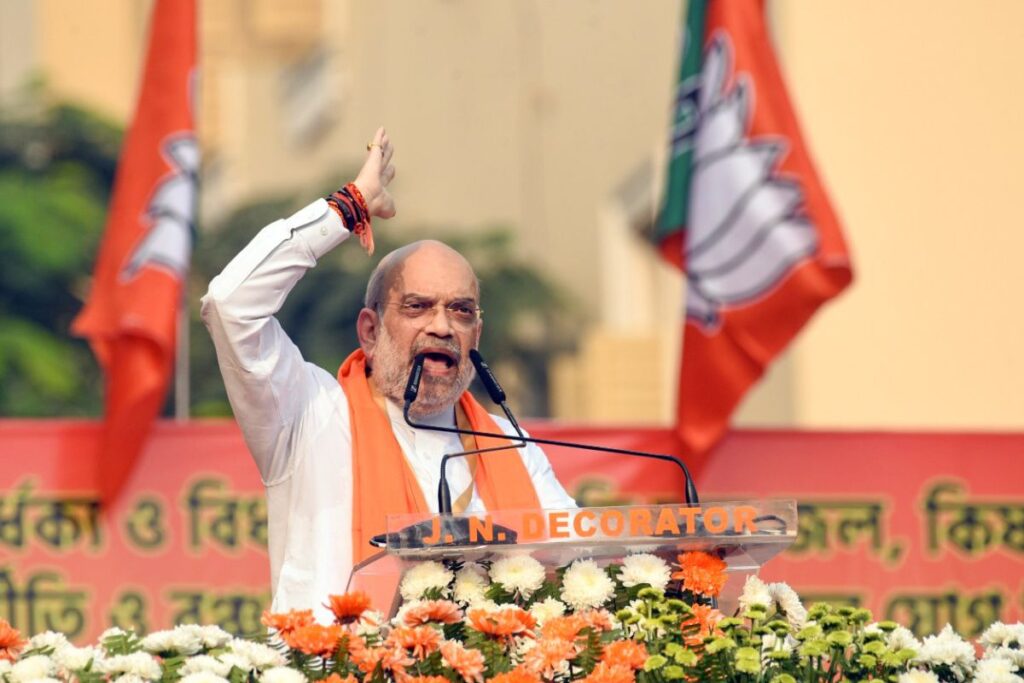
Twelve years ago, Amit Shah was standing in front of a huge crowd at a rally in Kolkata’s Dharmatala area. During his speech, he brought up a question that Chief Minister Mamata Banerjee had recently asked about him.
"Who is Amit Shah?" she had asked.
His answer to her was very simple, but it threw a direct challenge at the ruling party.
"I am Amit Shah, a small worker of the BJP," he proudly told the crowd. Then, he dropped a line that no one would forget "And I have come here to uproot the Trinamool Congress from the soil of Bengal."
For a long time, many people forgot about that video. But as the election results came out on May 4, that old clip quickly went viral all over the internet. Why? Because his 12-year-old promise had finally come true.
The Big 2026 Victory
The results of the 2026 West Bengal Assembly elections were totally game-changing. The BJP easily crossed the required 148-seat majority mark and is now all set to form the government for the very first time in West Bengal.
Out of the 293 seats that went to the polls, the BJP had an amazing lead, winning 207 seats. On the other hand, Mamata Banerjee's TMC, which ruled the state continuously for 15 years, was pushed far behind into a distant second place, managing to get only about 80 seats.
How Amit Shah Made It Happen
So, how did a party that was almost invisible in Bengal a decade ago pull this off? The secret is patience and quiet, steady work on the ground.
Amit Shah played the main role in making this victory happen. In the final days of the election campaign, he actually camped out in the state for nearly two whole weeks. He ran a super high-energy schedule. By day, he addressed over 50 rallies and roadshows. By night, he held late-night strategy meetings with state leaders to fix any issues in their game plan.
There’s more to life than simply increasing its speed.
By Udaipur Freelancer
His team smartly focused on the things that mattered most to the voters, women's safety, corruption, and failures in governance.
Shah also made some big public announcements that made people really happy. He promised to finally implement the Seventh Pay Commission for government workers and promised strict law and order in the state. Also, right after the first phase of voting, he confidently announced that the BJP was on track to win over 110 seats. This bold claim created a strong, positive psychological momentum for his party.
Growing from Zero: The BJP’s Journey in Bengal
When Amit Shah made his famous promise back in 2014, the BJP had almost no real base in West Bengal. Just look at their early voting records it was a very tough start!
In 1982, they had a tiny vote share of just 0.58%. In 1987, it was 0.51%. Even though it jumped to 11.34% in 1991, the party still didn't win a single seat. The numbers went down again to 6.45% in 1996, and 5.19% in 2001 (with zero seats both times). By 2006, it fell all the way down to 1.93%. Even in 2011, with a small 4.06% vote share, the BJP was not a big player.
For the longest time, most Bengali people saw the BJP as a north Indian party that just didn't get Bengal's culture or language. Mamata Banerjee’s TMC looked completely unbeatable.
But the BJP refused to give up. They started small. Party workers started visiting local villages and mohallas, going booth by booth. They quietly built strong teams of local leaders who spoke friendly Bengali and truly understood local everyday problems.
This hard work started showing results. In 2016, they won just 3 seats in Bengal. By the 2021 elections, they jumped up to 77 seats. And now, in 2026, they have a full majority!
What Finally Changed the Public Mood?
In the last few years, several dark issues slowly turned the public against the ruling TMC. People were deeply upset over the shocking Sandeshkhali violence, the tragic RG Kar hospital case, and the growing anger over political corruption.
When polling day finally arrived, a massive, record-breaking 92-93% of voters came out to vote. This huge turnout showed that something big had changed in the state.
This silent wave of voters only became fully visible to the world when the results were announced on Monday. As the celebrations began, that old video started playing on screens everywhere. The small-time BJP worker had indeed kept his promise, exactly 12 years after he was asked who he was.
Udaipur Freelancer delivers high-quality web, marketing, and design solutions. We focus on building impactful digital experiences that help your brand succeed in today's market.










Recommended for you
Must-See Art Exhibitions Around the World This Year
The Revival of Classical Art in a Digital Age
Breaking Down the Elements of a Masterpiece Painting
The Revival of Classical Art in a Digital Age