Imagine being the absolute best at what you do. Imagine bringing your country the highest honor in the world. Now, imagine that same country literally chiseling your name off your own gravestone and pretending you never existed.
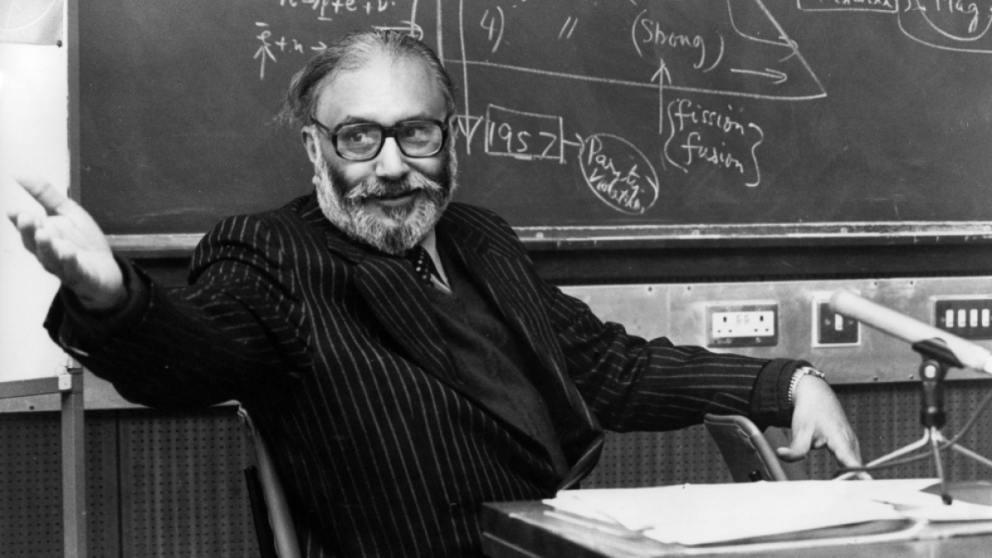
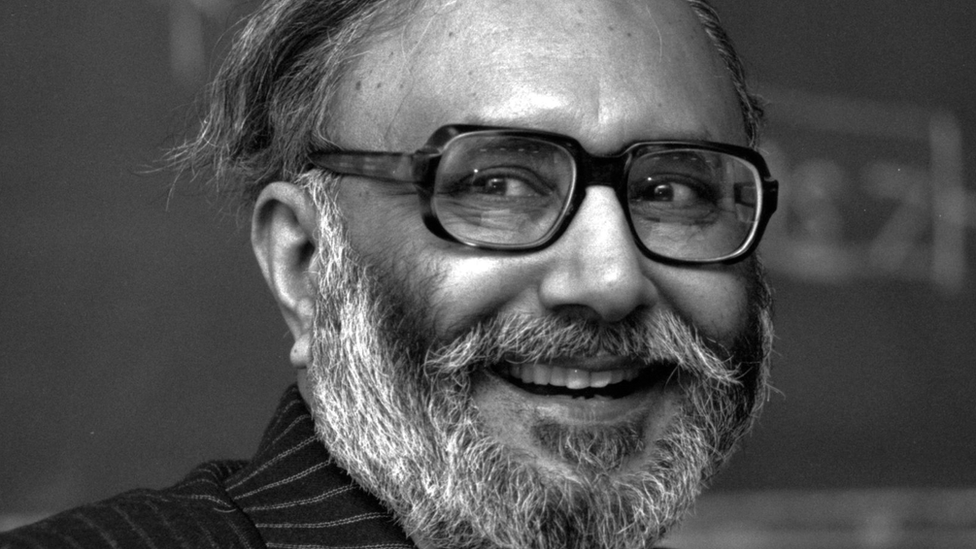
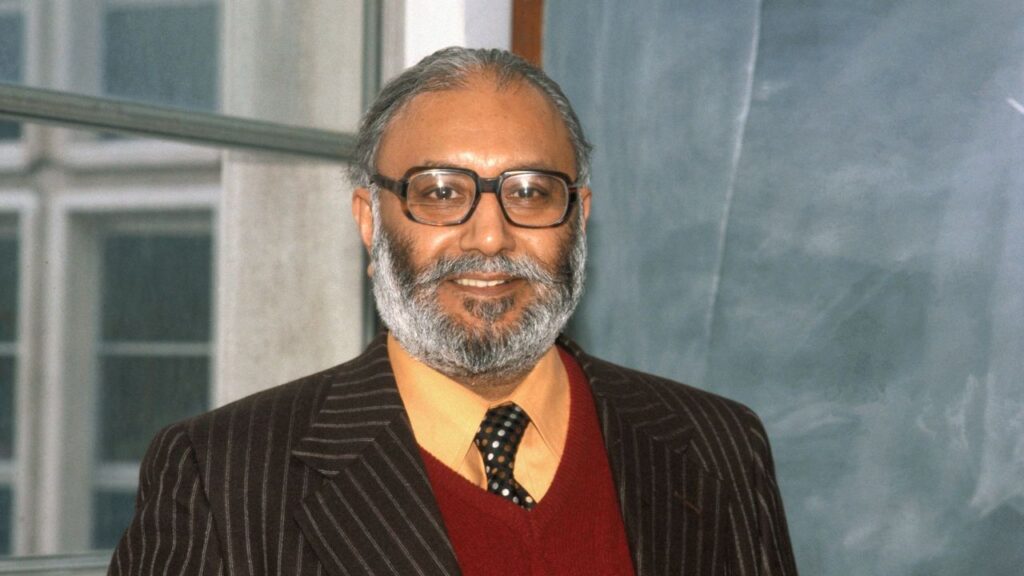
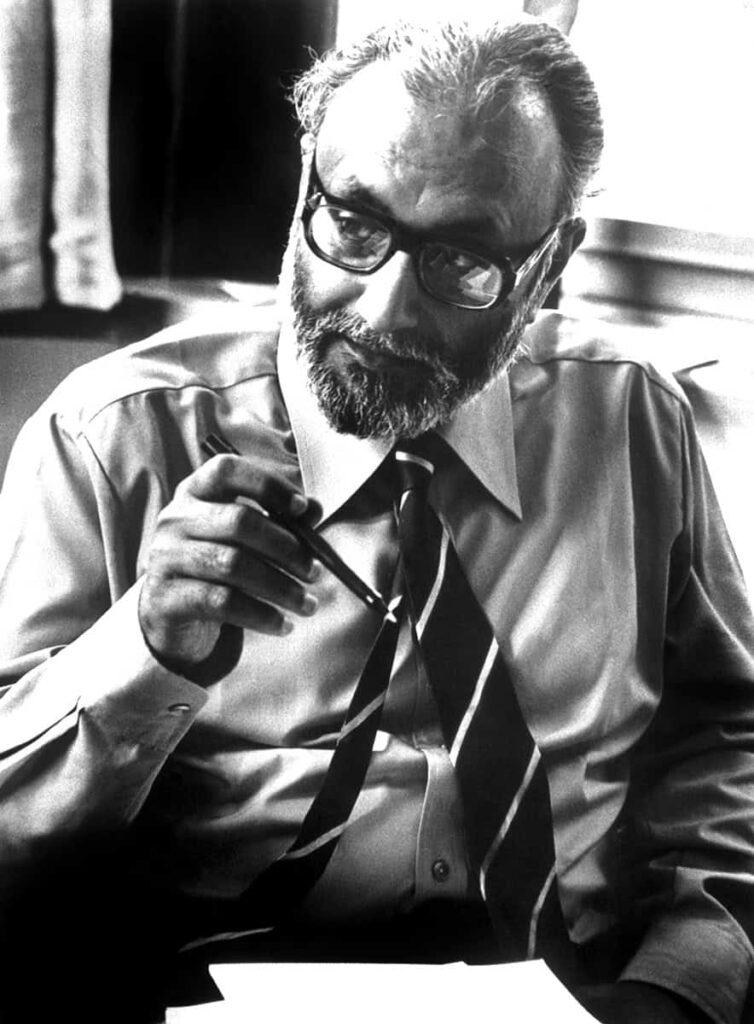
This isn't the plot of a dystopian movie. It’s the very real, very tragic story of Dr. Abdus Salam Pakistan’s first and only Nobel laureate, the actual mastermind behind their nuclear program, and a man who was exiled and erased simply because of how he chose to pray.
Grab a cup of coffee, because this is a story of absolute genius, deep betrayal, and a legacy that a nation tried to bury.
The Tweet That Ignited the Conversation
Recently, Abdus Salam’s name popped back up in conversations, not because the government was honoring him, but because of the sheer irony of a political tweet.
Pakistan’s Defence Minister, Khawaja Muhammad Asif, posted on X (formerly Twitter) about the ongoing tensions in the Middle East, warning about a 'Zionist agenda' that could bring enemies right to Pakistan's borders. To reassure the public, he boasted about Pakistan’s nuclear deterrent, praising former Prime Minister Nawaz Sharif for authorizing the 1998 nuclear tests.
But, like most leaders in Pakistan, he conveniently forgot to mention one crucial detail, the actual man who laid the scientific foundations for that very nuclear program. That man was Abdus Salam.
The Desecration of a Hero's Grave
To understand how deep this betrayal goes, you just have to look at Salam’s final resting place.
Today, his grave lies in the town of Rabwah, in Pakistan’s Punjab province. When he passed away, his epitaph proudly read: "The First Muslim Nobel Laureate."
But because Salam belonged to the Ahmadiyya Muslim sect a minority community that faces severe discrimination in Pakistan the state itself ordered the desecration of his grave. Authorities literally chiseled the word Muslim off his tombstone. It now awkwardly reads, "The First ****** Nobel Laureate."
Let that sink in. The government defaced the grave of their greatest hero just to make a hateful point.
Who Really Built Pakistan’s Nuclear Program?
If you ask the average person in Pakistan who the father of their atomic weapons program is, they’ll confidently say 'AQ Khan.' But history tells a very different story.
AQ Khan is widely known for illicitly obtaining and copying classified centrifuge designs from a European company while working in the Netherlands. Those stolen blueprints allowed Pakistan to produce bomb-grade uranium.
But long before AQ Khan ever entered the picture, it was Abdus Salam who was doing the heavy lifting. From 1961 to 1974, Salam served as the chief scientific advisor to the president. He established the Pakistan Atomic Energy Commission (PAEC) and the space research commission (SUPARCO). He trained over 500 scientists, set up international collaborations, and oversaw the construction of Pakistan’s first research reactor.
In the 1960s, he even negotiated with Canada to build the Karachi Nuclear Power Plant. Later, in 1972, he was present at the infamous Multan meeting where then-Prime Minister Zulfikar Ali Bhutto directed scientists to build a nuclear bomb two years before India tested its own bomb in 1974. Salam organized the effort, set up theoretical physics groups, and recruited top experts to work on weapon designs.
From Small-Town Prodigy to Global Genius
Before he was dealing with nuclear politics, Abdus Salam was just a kid with an incredibly massive brain.
Born in 1926 in a small town called Jhang in undivided India, his father was a simple school teacher. But Salam was a prodigy. At just 14 years old, he scored 97% on his matriculation exam the highest marks in the history of Punjab University.
He rode that wave of brilliance all the way to St. John’s College, Cambridge, in the UK. By the time he was 31, he became a full professor at Imperial College London, making him the youngest person in the institution's history to do so.
His crowning achievement came in the 1960s. He did groundbreaking theoretical work that unified the electromagnetic and weak nuclear forces. It’s heavy science, but basically, he helped figure out how the universe is glued together.
There’s more to life than simply increasing its speed.
By Udaipur Freelancer
For this, he shared the 1979 Nobel Prize in Physics. He became the first Pakistani and the first Muslim to win a Nobel in a scientific category. And to show love for his roots, he proudly wore a traditional turban when receiving his award from the King of Sweden.
Oh, and his math also predicted the existence of the famous God Particle (the Higgs Boson), which scientists finally proved existed in 2012!
A Man of Peace Caught in an Arms Race
Here is the interesting thing about Salam. while he helped start the nuclear program, his heart wasn't in building bombs.
Initially, he wanted nuclear tech to generate energy to help developing countries like Pakistan progress. But the science used for peaceful energy is the same science used for bombs.
After he left Pakistan, his stance completely changed. He became a strong advocate for global disarmament. In a 1987 interview, he point-blank said, "I think the arms race between India and Pakistan is so ridiculous... Why do developing countries have to enter this wasteful field?" He firmly believed politicians needed to get rid of nuclear weapons altogether.
The Ultimate Betrayal: Why He Walked Away
So, why did a man who loved his country so much eventually leave it behind?
It comes down to extreme religious intolerance. The Ahmadiyya community has long been viewed as heretical by orthodox groups. Back in 1953, anti-Ahmadi riots in Lahore forced Salam to temporarily flee.
The final straw came in 1974. Prime Minister Zulfikar Ali Bhutto passed a constitutional amendment that officially declared Ahmadis as non-Muslims.
Imagine dedicating your life to elevating your country on the global stage, only for the government to strip away your religious identity by law. Salam condemned the move as a massive human rights violation, resigned from his post, and went into self-exile in the UK. He spent the rest of his life doing incredible research away from his homeland, passing away in Oxford in 1996.
Even today, textbooks in Pakistan completely skip over his contributions. In 1998, they issued a stamp honoring him, and in 2016, a university center was named after him. Both moves faced massive backlash from clerics. The stamp was pulled, and the university center's name was changed.
A Beautiful Soul: The Teacher in Kolkata
If you want to know what kind of man Abdus Salam truly was, you just have to hear this one story. It is simply beautiful.
Salam had a deep, lifelong passion for math, which was sparked by his pre-Partition Hindu math teacher, Professor Anilendra Ganguly, at Sanatan Dharma College in Lahore. After India and Pakistan split, Professor Ganguly moved to Kolkata.
Salam never forgot him. After winning the Nobel Prize in 1979, Salam actually asked the Indian government to help him track down his old teacher.
In January 1981, Salam finally visited a bedridden Professor Ganguly at his home in Kolkata. Salam, the globally celebrated genius, took his actual Nobel medal, placed it around his old teacher’s neck, and said, "This is your prize, Sir. It’s not mine."
A Bitter Irony
Abdus Salam left Pakistan because his identity was snatched away from him. Yet, throughout his life, he remained a man who didn't care about the religious labels of the people around him. He studied at a Sanatan Dharma college, was mentored by a Hindu teacher, and worked side-by-side with Christian scientists in England to unlock the secrets of the universe.
There is a deep, heartbreaking irony in all of this. Islamabad today prides itself on being the only Islamic nuclear power in the world. Yet, it has so conveniently, and so cruelly, erased the memory of Dr. Abdus Salam the incredibly brilliant, peaceful, and humble man who actually laid the foundations to make it happen.












Recommended for you
Must-See Art Exhibitions Around the World This Year
The Revival of Classical Art in a Digital Age
Breaking Down the Elements of a Masterpiece Painting
The Revival of Classical Art in a Digital Age