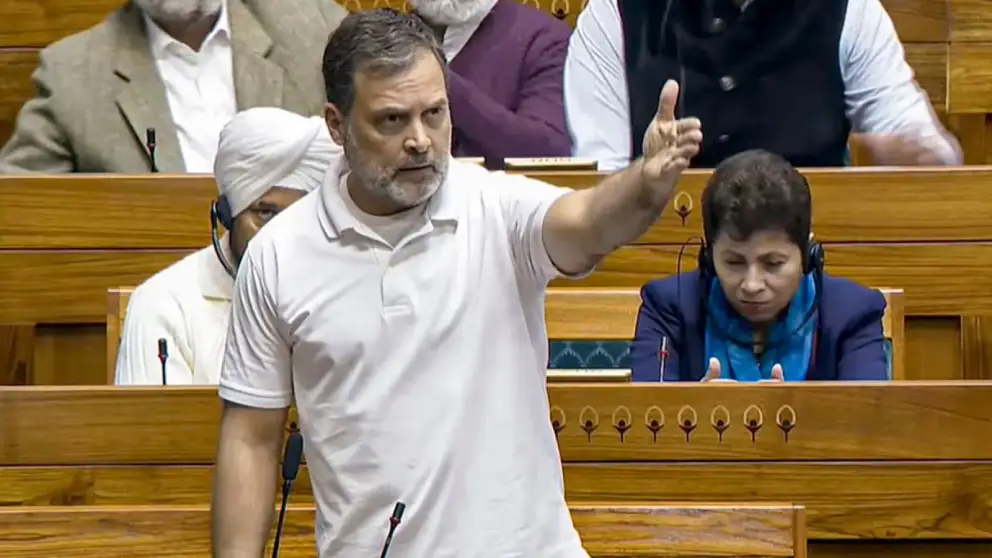
If you have been following the recent debates in the Indian Parliament, you might have noticed a spark of controversy involving the Leader of the Opposition, Rahul Gandhi. Things got quite heated when he brought up a specific incident involving Chinese tanks entering Indian territory.
He was quoting a very serious source an article based on the unpublished memoirs of former Army Chief General MM Naravane. Rahul Gandhi claimed that four Chinese tanks had advanced towards Indian positions in Doklam back in 2020.
Naturally, this caused a storm. People were quick to point out that the famous Doklam standoff happened in 2017, not 2020. So, was he lying? Was he confused? Or was there a grain of truth in what he said?
Let’s dive into the facts, keep it simple, and figure out where he got it right and where he got it wrong.
What Did Rahul Gandhi Actually Say?
During his speech, Rahul Gandhi referenced a magazine article from The Caravan. This article was reviewing Four Stars of Destiny, the memoir of General Naravane (which is currently being reviewed by the Ministry of Defence and hasn't been fully released yet).
Rahul mentioned an incident where four Chinese tanks were climbing a ridge and were within a few hundred meters of Indian troops. He stated this happened in Doklam. He used this to highlight the threat on our borders and question the government's handling of the situation.
This sounds terrifying, right? Enemy tanks rolling up to your doorstep is no joke. But here is where the fact-checking began.
The Big Mistake: Geography and Location
Here is the main point where Rahul Gandhi was mistaken: The Location.
According to the reports and the very article he was quoting, this tank incident did not happen in Doklam. It happened at a place called Rechin La.
Why does this matter? Well, geography matters a lot here.
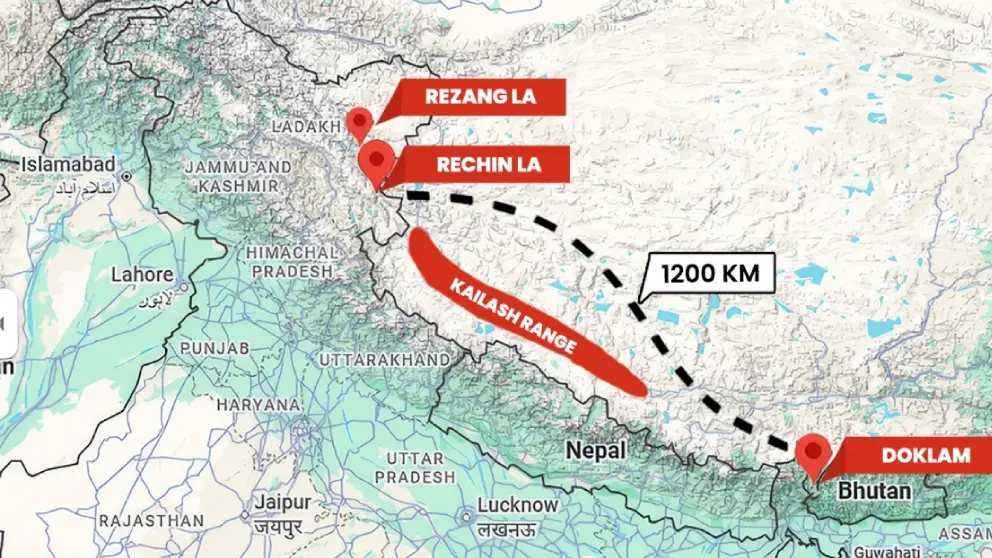
Doklam is a tri-junction area between India, Bhutan, and China. This is where the massive 73-day standoff happened back in 2017.
Rechin La is in Eastern Ladakh.
If you look at a map (or check the distance like the news reports did), the distance between Doklam and Rechin La is roughly 1,200 kilometers in a straight line. That is a huge difference! It’s like confusing Mumbai with Delhi.
So, when critics said he was wrong about the location, they were absolutely correct. The famous 2017 face-off was in Doklam. The 2020 clashes (like Galwan) were in Ladakh. Mixing the two up creates confusion about where the actual threat was happening.
Where Rahul Gandhi Was Correct
Now, let’s be fair. Just because he got the name of the mountain range wrong doesn't mean the whole story was made up. This is where he was actually correct.
1. The Incident Did Happen The scary scenario he described four Chinese tanks moving towards Indian positions actually happened. He wasn't inventing a story, he was quoting a real event described by the former Army Chief.
2. The Timeline Was Right He said this happened in 2020, and he was right about that. specifically, this tension unfolded on the night of August 31, 2020. This was a few months after the deadly Galwan Valley clash. Tensions were sky-high, and both armies were staring each other down.
There’s more to life than simply increasing its speed.
By Udaipur Freelancer
So, while he said "Doklam," he was describing a real, dangerous event from 'Rechin La' that occurred in the year he mentioned.
What Happened at Rechin La?
Since we now know the incident happened at Rechin La, it is worth understanding what actually went down. It is a story of incredible bravery and high stakes.
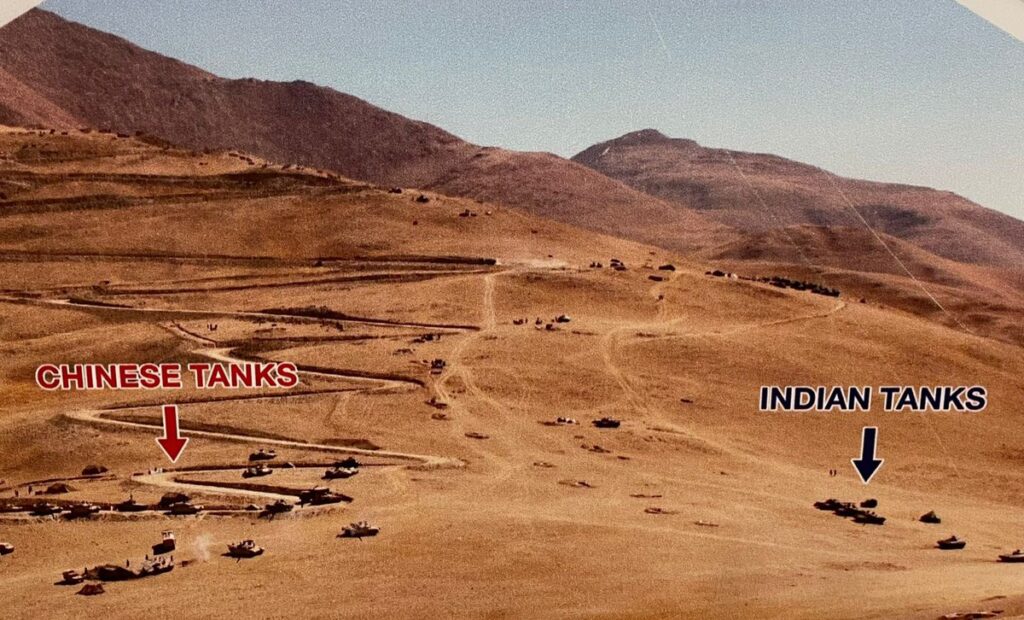
According to the accounts from General Naravane’s memoir (as cited in the reports), Chinese troops and tanks were advancing. They were trying to scare the Indian side into retreating.
The situation was critical.
Lt Gen YK Joshi, who was the Northern Army Commander at the time, reportedly urged for the use of medium artillery to stop the Chinese advance.
However, General Naravane decided on a cooler, albeit riskier, approach. He didn't want to start a full-blown war by firing the first shot.
Instead, Indian tanks were positioned on the forward slopes, pointing strictly nose-down at the Chinese tanks. It was a stare-down. General Naravane described this as a game of bluff.
The idea was to show the Chinese that India was ready to fight if necessary, without actually pulling the trigger first. And guess what? It worked. The Chinese blinked first and halted their advance. It was a massive strategic win for India, preventing a war while holding our ground.
Why Did the Confusion Happen?
You might wonder, how did a major political leader mix up Doklam and Ladakh?
It is likely because the magazine article he was reading discussed the entire border situation.
It talked about the 2020 crisis in Ladakh (where the tanks were).
But it also referenced Doklam multiple times.
Reports suggest that while the main Doklam standoff was in 2017, there was still buzz and activity in the Doklam sector in 2020 as well. The Chinese were building infrastructure near the Bhutan tri-junction, and Indian troops were alert.
Because the article likely jumped between discussing the 2020 Ladakh crisis and the lingering issues in Doklam, it is easy to see how the names could get swapped in the heat of a speech.
Conclusion: A Mix of Fact and Error
So, to wrap up this fact-check:
Was Rahul Gandhi wrong? Yes, about the location. He placed the tanks in Doklam, but they were actually 1,200 km away in Ladakh (Rechin La).
Was Rahul Gandhi right? Yes, about the incident and the year. Chinese tanks did advance on Indian positions in 2020, and the situation was incredibly dangerous.
The core of his message that there was a severe threat on the border in 2020 involving Chinese armor was factual, based on the Army Chief's own words. However, in geopolitics and military matters, specific names and locations carry a lot of weight.
This incident serves as a reminder of how tense the borders were in 2020. Whether it is Rechin La or Doklam, the brave men and women of the Indian Army are constantly facing challenges that most of us only read about in memoirs years later.
Share:
Leave a comment
Udaipur Freelancer
Udaipur Freelancer delivers high-quality web, marketing, and design solutions. We focus on building impactful digital experiences that help your brand succeed in today's market.













Recommended for you
Must-See Art Exhibitions Around the World This Year
The Revival of Classical Art in a Digital Age
Breaking Down the Elements of a Masterpiece Painting
The Revival of Classical Art in a Digital Age