If you follow defense news, you might have heard a lot of buzz recently about the DRDO (Defence Research and Development Organisation). They have just pulled off something spectacular.
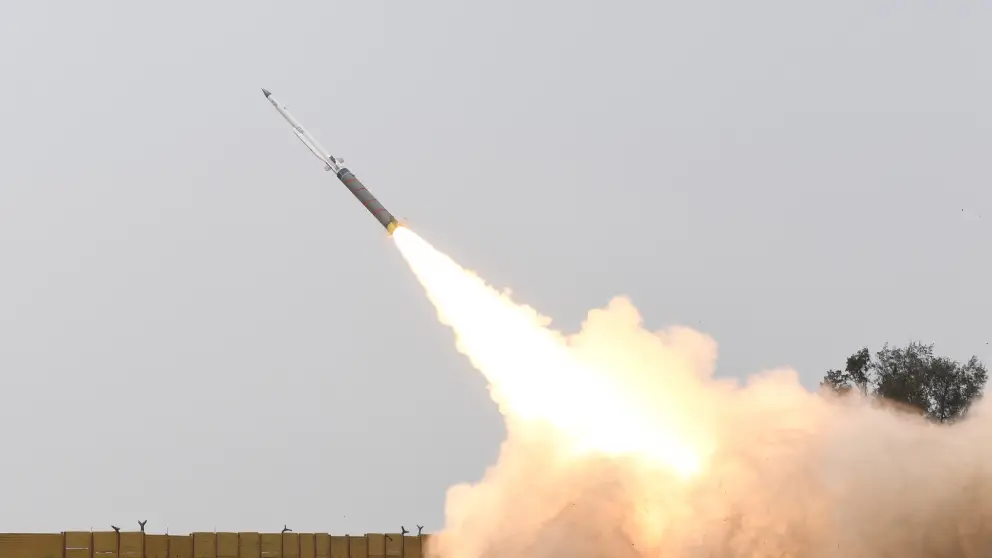
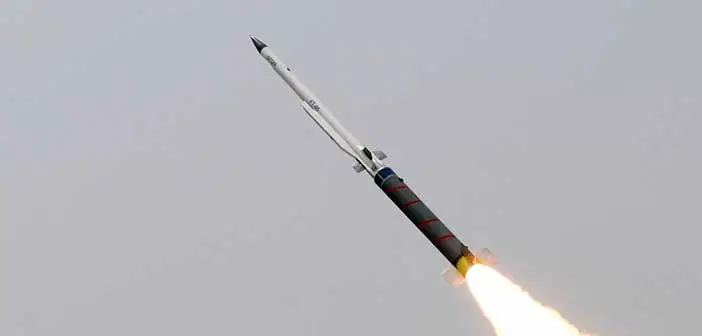
In a massive leap for India’s military capabilities, the DRDO successfully flight-tested something called the Solid Fuel Ducted Ramjet (SFDR) booster. The test took place off the coast of Odisha at the Integrated Test Range in Chandipur.
But let’s be honest terms like 'Solid Fuel Ducted Ramjet' sound like something straight out of a complex sci-fi movie. It sounds heavy, technical, and confusing.
So, let’s break this down. What exactly did India just test? Why is the world watching? And most importantly, why should every Indian be proud of this specifically regarding our fighter jets?
The Big News: What Just Happened?
On a bright morning in February 2024, at around 10:45 AM, a missile system roared into the sky from Chandipur. This wasn’t just a standard missile test, it was a test of a specific type of engine technology.
According to the DRDO, the test was a textbook success. The system was launched using a ground-based booster to get it up to speed, and then the Ramjet engine kicked in. The defense scientists watched as the missile performed exactly as planned, validating complex technologies like the nozzle-less booster and the fuel flow controller.
In simple terms: The engine worked perfectly.
With this success, India has officially entered an 'elite league of nations.' Only a handful of countries in the world (like the US, Russia, France, and China) have mastered this technology. It is extremely difficult to engineer, which makes this achievement a massive win for Indian science.
Ramjet Technology: The Air-Breathing Engine
To understand why this is special, we first need to look at how a normal missile works.
A traditional rocket engine carries two main things inside it:
- Fuel
- Oxidizer (Oxygen to make the fuel burn)
Because the rocket has to carry its own oxygen tank, it is heavy. Once the fuel and oxygen run out, the rocket stops accelerating.
Here is where the Ramjet is different.
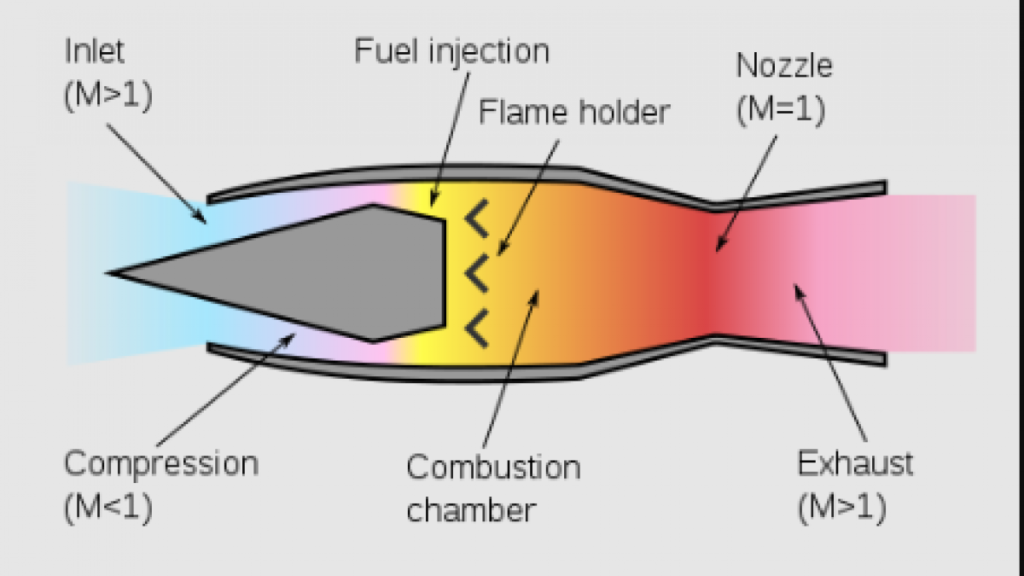
A Ramjet is an air-breathing engine. It does not carry an oxygen tank. Instead, it uses the missile’s forward speed to gulp in air from the atmosphere, compresses it, and uses that oxygen to burn the fuel.
Think of it like a car. Your car doesn't carry oxygen cylinders, it takes air from the outside to burn the petrol. A Ramjet does the same thing but at supersonic speeds.
Because it doesn’t need to carry heavy oxygen tanks, the missile becomes lighter. This means it can carry more fuel or a bigger warhead, and it can fly for a much longer distance.
The Solid Fuel Advantage
The specific tech DRDO tested is the Solid Fuel Ducted Ramjet (SFDR).
There’s more to life than simply increasing its speed.
By Udaipur Freelancer
In the past, ramjets often used liquid fuel, which can be tricky to handle. This new system uses solid fuel. Solid fuel is safer, easier to store, and can be kept ready for launch at a moment's notice.
The Ducted part simply means the engine has a special intake (a duct) that scoops up the air, slows it down slightly so the flame doesn't blow out, mixes it with the fuel, and shoots it out the back to create massive speed.
Why is this Critical for Indian Fighter Jets?
Now, let’s get to the most important part. Why does the Indian Air Force (IAF) need this?
1. The No Escape Zone
This is the biggest game-changer.
When a standard missile is fired, it burns its fuel very quickly (in seconds) to get up to speed. After the fuel runs out, the missile just coasts or glides toward the target. As it glides, it slowly loses speed and energy.
If an enemy fighter jet pilot realizes a missile is coming, they can perform sharp turns to dodge it. If the missile is coasting, it might not have enough energy to turn with the jet. The pilot escapes.
A Ramjet missile is different. Because it breathes air, it burns fuel efficiently and keeps the engine running for a much longer time. It stays powered almost until it hits the target. This creates a large No Escape Zone. Even if the enemy pilot tries to turn or dive, the missile still has engine power to chase them down.
2. Hitting from Far Away (Beyond Visual Range)
Modern air combat isn’t about seeing the enemy plane with your eyes, it’s about shooting them down before they even know you are there. This is called Beyond Visual Range (BVR) combat.
With SFDR technology, Indian missiles will have a much longer range. Our pilots can lock onto enemy jets from a safe distance, fire the missile, and turn back, knowing the missile has the range and energy to reach the target.
3. Safety for Our Pilots
If our missiles have a longer range than the enemy's missiles, our pilots are safe. We can shoot at them, but they cannot shoot at us. This technology gives Indian fighter jets (like the Tejas or the Rafale) a decisive edge in the sky.
Breaking the Foreign Dependence
For a long time, if India wanted top-tier long-range missiles (like the Meteor missile used on the Rafale jets), we had to buy them from Europe at a very high cost.
By mastering SFDR technology, DRDO is paving the way for the Astra Mark-3 missile program. This will be an indigenous, Made-in-India long-range air-to-air missile.
This reduces our dependence on foreign suppliers. We won't have to rely on other countries to sell us their best tech. we will build it ourselves. It strengthens the vision of Atmanirbhar Bharat (Self-Reliant India) in the defense sector.
Conclusion
The successful test of the SFDR technology is not just a scientific experiment. it is a warning to adversaries and a shield for India.
It proves that Indian scientists can tackle the most complex engineering challenges in the world managing stable combustion at supersonic speeds is no joke!
In the near future, when you see an Indian Air Force jet soaring through the sky, it might just be carrying one of these next-generation ramjet missiles. It makes our skies safer and our defense forces stronger.
What do you think about India’s growing capabilities in defense technology? Let me know in the comments below!














Recommended for you
Must-See Art Exhibitions Around the World This Year
The Revival of Classical Art in a Digital Age
Breaking Down the Elements of a Masterpiece Painting
The Revival of Classical Art in a Digital Age