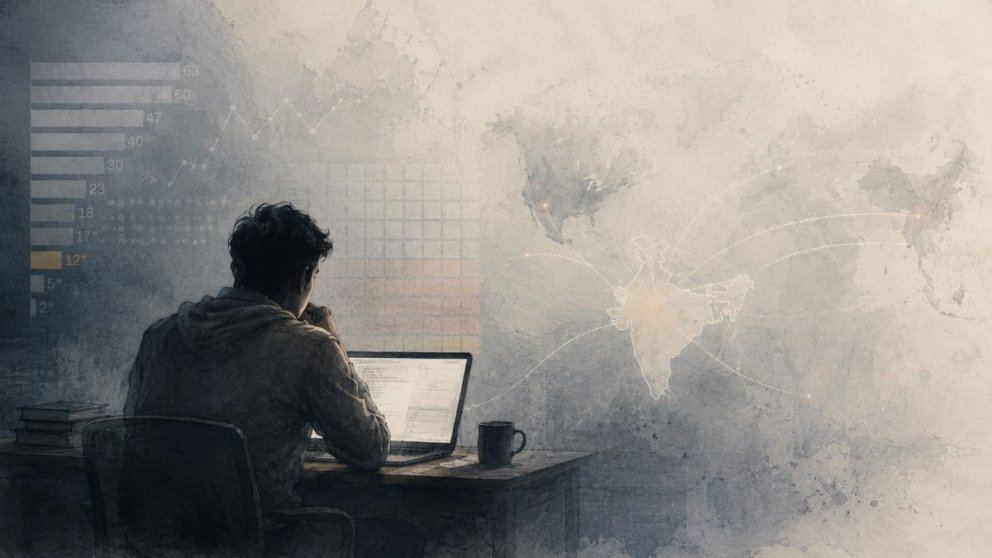
When you ask your bank app why a payment failed or use a homework tool to learn about science, you get a fast answer in good English. But almost none of that smart technology is actually made in India. A recent report shows that most of the artificial intelligence work sent out by Indian developers goes to machines built in America or China. While India is moving fast in other areas like transportation progress, its local AI technology is falling behind the rest of the world.
Benchmarking data shows that India has only two major AI models on the market today. Both are built by a company in Bengaluru called Sarvam. India's top model is named Sarvam 105B. On a standard scoreboard that tests how well these systems work, it gets a low score. The best models from America and China score much higher. In fact, India's strongest model is currently at the same level where the world's best technology stood two years ago. The gap is big, and it is not closing very fast because very few new Indian models are being released.
Why the Indian AI Model is the Cheapest
Even though the local AI is weak, it has one major benefit: price. Sarvam models are among the cheapest in the entire world. Running a batch of work that costs a lot of money on top global models costs almost nothing on Sarvam 105B. Furthermore, the company lets developers download and use its models for free. This cheap and open strategy is very similar to how Chinese labs gained market share globally. China also offers affordable options that many developers now prefer over American systems.
There’s more to life than simply increasing its speed.
By Udaipur Freelancer
High Usage but Low Production
Even though India does not build many models, its people use a huge amount of AI. Over a seven-month period, Indian users processed trillions of word fragments through an AI routing service. This makes the country one of the biggest markets in the world for these tools. However, more than half of that traffic goes to American models, and a large portion goes to Chinese machines. Just as global partnerships help shape international relations, India now relies heavily on foreign technology for its daily digital needs. To change this, local creators will need to build stronger systems and catch up with global tech giants.















Recommended for you
Must-See Art Exhibitions Around the World This Year
The Revival of Classical Art in a Digital Age
Breaking Down the Elements of a Masterpiece Painting
The Revival of Classical Art in a Digital Age