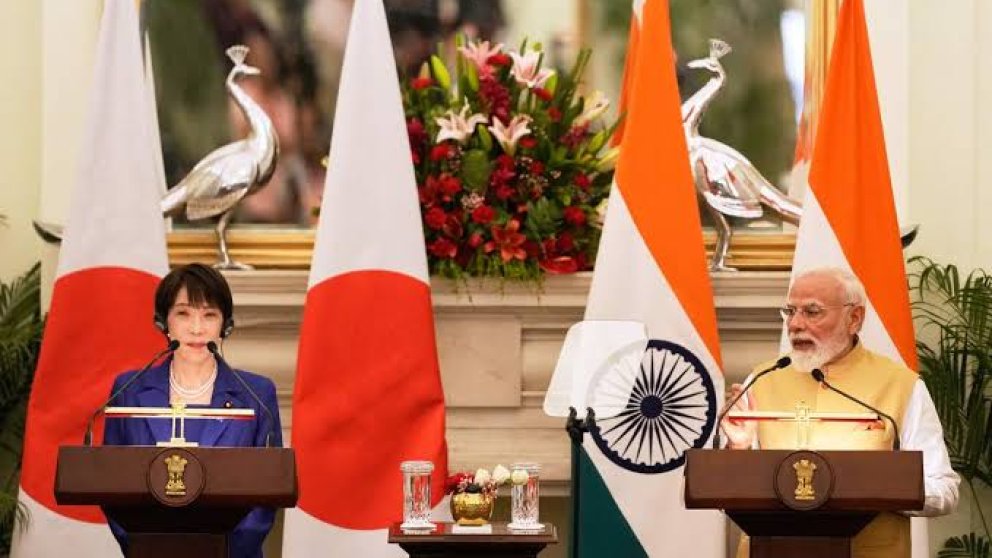
India and Japan have taken another major step forward in their bilateral relationship. Both nations recently signed a key maritime security pact aimed at deepening defence cooperation. This agreement comes at a time when ensuring peace, open sea lanes, and stability across the Indo-Pacific region has become more critical than ever.
Both countries share a vision of a free, open, and rules-based international order. By coming together to protect common maritime interests, India and Japan are sending a clear message about their commitment to regional peace and shared security.
Why This Maritime Security Pact Matters
The oceans connect countries across the globe, carrying vast amounts of trade, energy supplies, and essential goods. The Indo-Pacific region is home to some of the busiest sea routes in the world. When trade routes are safe, economies grow, and international commerce flourishes smoothly.
India has been expanding its international footprint in multiple sectors, whether building strong diplomatic alliances or rising as a major trade partner, much like how India is becoming a global snack supplier to markets worldwide. As economic ties expand, securing the waters through which goods travel becomes a top priority for leadership in New Delhi and Tokyo.
This new pact allows both nations to coordinate closely in monitoring maritime traffic, sharing real-time information, and addressing mutual security challenges. From countering piracy to responding quickly to natural disasters, this partnership covers a broad range of critical activities.
Key Areas of Defence Cooperation
The agreement between India and Japan covers several vital areas designed to strengthen military readiness and mutual trust:
1. Joint Naval Exercises: The Indian Navy and the Japan Maritime Self-Defense Force will participate in more frequent and complex joint exercises. These drills help both forces understand each other's operational techniques and work together seamlessly.
2. Information Sharing: Real-time domain awareness is critical for ocean security. Under this pact, both countries will share maritime surveillance data to detect suspicious movements and prevent illegal activities in international waters.
3. Defence Technology and Equipment: The pact opens new avenues for joint research, co-development, and sharing of advanced defence equipment. This collaboration supports technological self-reliance and modernizes defence capabilities for both partners.
4. Humanitarian Assistance and Disaster Relief: Natural disasters often strike island nations and coastal regions. By coordinating disaster relief efforts, Indian and Japanese armed forces can deliver rapid medical aid, food, and rescue services when emergencies occur.
There’s more to life than simply increasing its speed.
By Udaipur Freelancer
A Shared History of Peace and Cooperation
The partnership between India and Japan is built on deep cultural bonds, shared democratic values, and mutual respect. Throughout history, great civilizations have recognized that long-term stability depends on mutual respect and just laws. Even ancient history shows us, through records such as the Cyrus Cylinder and its ancient message of freedom, that lasting governance and diplomacy rely on cooperation rather than force.
Today, India and Japan are applying modern diplomatic tools to preserve peace. Their strategic alignment is not aimed against any single country; instead, it seeks to maintain an open international environment where all nations, large and small, can navigate and trade freely without fear of intimidation.
The Growing Importance of the Quad
Both India and Japan are active members of the Quadrilateral Security Dialogue, commonly known as the Quad, alongside the United States and Australia. This bilateral maritime pact further reinforces the foundational goals of the Quad group.
When individual Quad members strengthen their bilateral ties, the collective strength of the group grows. Improved coordination between the Indian and Japanese navies ensures better communication across the entire Indian Ocean and Pacific Ocean networks.
Economic and Strategic Benefits for the Future
Maritime security is directly linked to economic well-being. A huge portion of oil imports and manufacturing trade passes through key choke points like the Strait of Malacca. Any disruption in these shipping lanes could lead to supply shortages and price spikes around the globe.
By maintaining strong naval patrols and high-level defence coordination, India and Japan help protect these vital trade arteries. This creates a secure environment for shipping companies, encourages global investments, and stabilizes energy supply chains.
Conclusion
The signing of the maritime security pact between India and Japan marks a defining milestone in their special strategic partnership. It highlights a shared determination to uphold international laws, protect open sea corridors, and promote peaceful growth across the Indo-Pacific.
As both countries continue to deepen their joint military exercises, intelligence sharing, and technological collaborations, their relationship will remain a cornerstone of regional security and global stability for years to come.















Recommended for you
Must-See Art Exhibitions Around the World This Year
The Revival of Classical Art in a Digital Age
Breaking Down the Elements of a Masterpiece Painting
The Revival of Classical Art in a Digital Age