The flood situation in Assam remains very serious. Heavy rains during the monsoon season have caused big rivers to overflow their banks. According to official reports, around 1.28 lakh people across seven districts are still suffering from severe flooding. Sadly, two more people have lost their lives in the past twenty-four hours, taking the total death toll to 87 this season.
Families living in the flood-affected areas are facing major problems. Water has entered thousands of houses, forcing people to move to safer places. The state government has opened emergency relief camps, but life in these camps is hard. People are struggling to get clean drinking water, sufficient food, and basic medical treatment.
Which Districts Are Hit the Hardest?
The floodwaters have affected seven major districts in Assam. Among these, places like Cachar, Dhubri, Nagaon, and Kamrup are experiencing deep waterlogging. In many villages, road transport has completely stopped because roads and small bridges are destroyed or drowned under water.
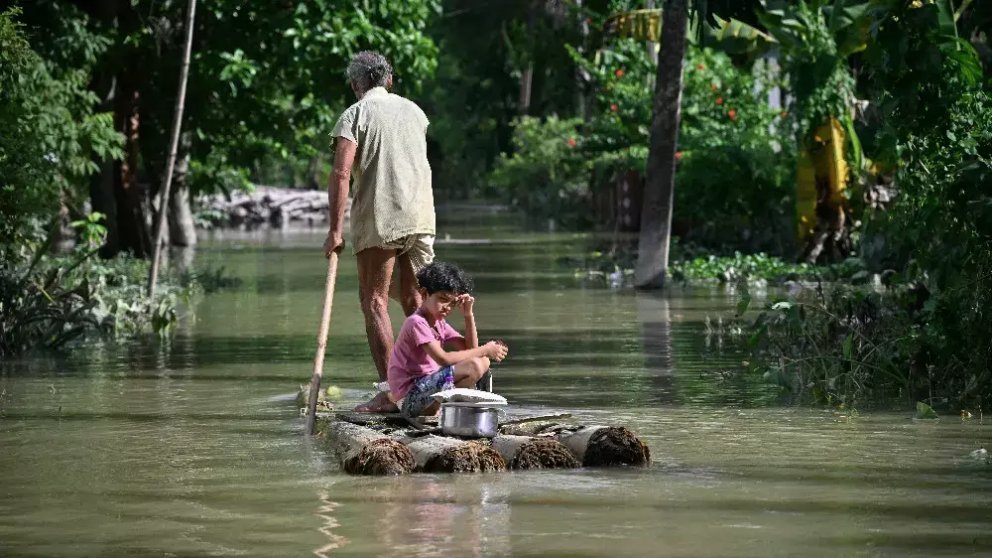
In these districts, boats are now the only way for villagers to move around. Rescue teams are working day and night to take stranded people out of danger zones. Many elderly citizens and small children need special care, but shifting them safely is proving to be a big challenge due to fast water currents.
Loss of Crops, Animals, and Livelihoods
The current flood disaster is not just a threat to human lives. It has also devastated the local agricultural economy. Large fields of paddy crops are under water. Farmers are deeply worried because their months of hard work have been destroyed in just a few days.
Domestic animals are also suffering. Villagers are trying their best to carry their cows, goats, and ducks to high grounds. However, there is a severe shortage of fodder for livestock. Many animals have drifted away in the rising waters or died due to hunger and diseases.
The Challenge of River Water Management
Assam faces flood problems almost every year because of its geography and powerful rivers like the Brahmaputra. Heavy rainfall in the mountains brings huge amounts of water into the valleys. Managing river waters and dams is always a major challenge for state and central authorities.
Water management is a key subject of debate all across the country. For example, issues related to major river projects often reach national discussions, such as when the Centre stands firm on Mekedatu dam project in Lok Sabha. Proper planning and modern technology are needed to build dams and embankments that can protect people from water disasters.
Government Actions and Relief Operations
The Assam State Disaster Management Authority (ASDMA) is coordinating rescue operations with the help of the National Disaster Response Force (NDRF) and local police. Thousands of food packets, water bottles, and medicine kits are being distributed in relief camps daily.
There’s more to life than simply increasing its speed.
By Udaipur Freelancer
Government departments must work fast and fulfill their duty during health and natural crises. Efficient governance is essential, just as courts remind authorities in other matters, such as when the Kerala HC directs state to operationalise promised NDPS courts on time. During floods, speed and accountability in delivering relief materials can save hundreds of lives.
Health Risks After Floodwaters Recede
While the water level is starting to fall slowly in a few areas, new health threats are emerging. Standing muddy water causes the spread of water-borne diseases like cholera, diarrhea, and skin infections. Mosquitos also multiply rapidly, increasing the risk of malaria and dengue.
Health workers are visiting affected villages to distribute chlorine tablets to purify drinking water. Doctors are advising people to boil water before drinking and to wash their hands properly to prevent infectious diseases.
What Long-Term Solutions Are Needed?
People in Assam cannot keep living through this tragedy every single year. Temporary relief camps are helpful for a few weeks, but long-term structural changes are required to solve the flood crisis permanently.
First, the government needs to repair and strengthen old river embankments. Second, advanced early warning systems should be installed to alert villagers before water surges. Finally, better drainage systems in towns and careful land management will help prevent severe waterlogging in the future.
For now, the focus remains on saving lives and providing support to the 1.28 lakh affected citizens. The thoughts and prayers of the nation are with the victims and families who have lost loved ones in these devastating floods.















Recommended for you
Must-See Art Exhibitions Around the World This Year
The Revival of Classical Art in a Digital Age
Breaking Down the Elements of a Masterpiece Painting
The Revival of Classical Art in a Digital Age