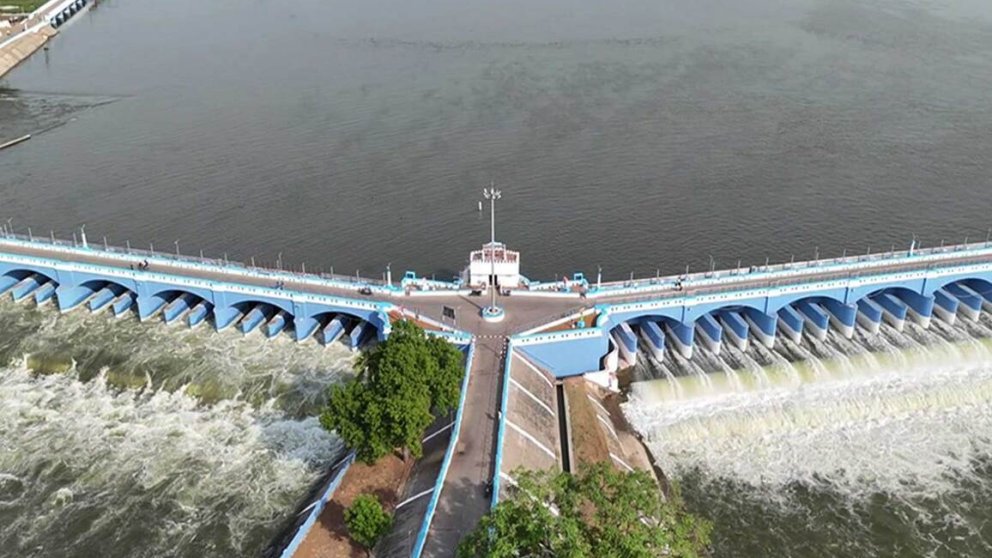
The central government of India has once again made its stand clear on the Mekedatu dam project. Speaking in the Lok Sabha, the government reiterated its position regarding the proposed reservoir on the Cauvery River. This issue has been a long-standing point of debate between neighboring states, Karnataka and Tamil Nadu.
The Mekedatu project is a major balancing reservoir project proposed by the Karnataka government. It aims to collect excess water during rainy seasons and use it for drinking water supply in Bengaluru and surrounding regions. However, the project faces strong opposition from Tamil Nadu, which worries about its share of river water.
What Did the Centre Say in Lok Sabha?
In a formal reply in the Parliament, the Union Ministry of Jal Shakti stated that the Detailed Project Report (DPR) submitted by Karnataka cannot be cleared without the required approvals. The central government emphasized that consensus among all basin states is crucial before taking final decisions on inter-state river projects.
The ministry explained that the Cauvery Water Management Authority (CWMA) must first review and discuss the project proposal. Since Tamil Nadu has strongly objected to the project, the central authorities maintain that legal rules and inter-state agreements must be strictly followed to protect the rights of downstream states.
Understanding the Mekedatu Dam Conflict
To understand why this issue is so sensitive, we need to look at what both states want. Karnataka wants to build the reservoir near Mekedatu in Ramanagara district. The primary goal is to ensure drinking water security for the growing population of Bengaluru and generate hydroelectric power.
On the other hand, Tamil Nadu argues that constructing a new dam will obstruct the natural flow of the Cauvery River. Farmers in Tamil Nadu depend heavily on Cauvery water for irrigation. The state fears that if Karnataka stores water at Mekedatu, downstream areas will not receive their rightful share of water as determined by the Supreme Court order.
Government Policies and Inter-State Relations
Managing natural resources across state borders requires careful balance and strong legal frameworks. The central government plays the role of a mediator to ensure that development projects do not hurt the interest of any state. Similar to how national economic planning works, such as reviewing updates on budget 2026 EV price drop in India to understand government policies, water management requires careful central regulation.
There’s more to life than simply increasing its speed.
By Udaipur Freelancer
Because inter-state river disputes involve complex legal and environmental matters, progress can be slow. State leaders often struggle to find common ground, leading to long delays in project approvals and public debates that last for years.
The Challenge of Long-Term Decision Making
Resolving water sharing disputes takes significant time and patience from all side leaders. When official procedures move slowly due to legal checks, leaders must manage their schedules and priorities wisely. Understanding how work gets delayed is very similar to learning why traditional time management is actually killing your productivity when dealing with big tasks.
In the case of Mekedatu, technical committees must evaluate rainfall patterns, water storage capacity, and environmental impact assessments before any construction can be considered. Every step requires verification from central bodies like the Central Water Commission (CWC).
What Happens Next?
With the Centre sticking to its firm stance, Karnataka will have to convince the Cauvery Water Management Authority and address the concerns raised by Tamil Nadu. Without approval from all relevant authorities and consensus among riparian states, the project cannot move forward to the implementation stage.
For now, the situation remains unchanged. Farmers and residents in both states are closely watching how the central government and courts handle future discussions on the Cauvery river water allocation.












Recommended for you
Must-See Art Exhibitions Around the World This Year
The Revival of Classical Art in a Digital Age
Breaking Down the Elements of a Masterpiece Painting
The Revival of Classical Art in a Digital Age