Imagine waiting for days for the city to fix an overflowing, smelly drain near your home. You call the authorities, you plead, and finally, the machine arrives. But instead of getting to work, the people in charge start fighting over who gets to claim the credit. This is exactly what happened recently in Ward 14 of Vadodara, and it left residents wondering if their representatives care more about politics than public service.
The Incident in Ward 14
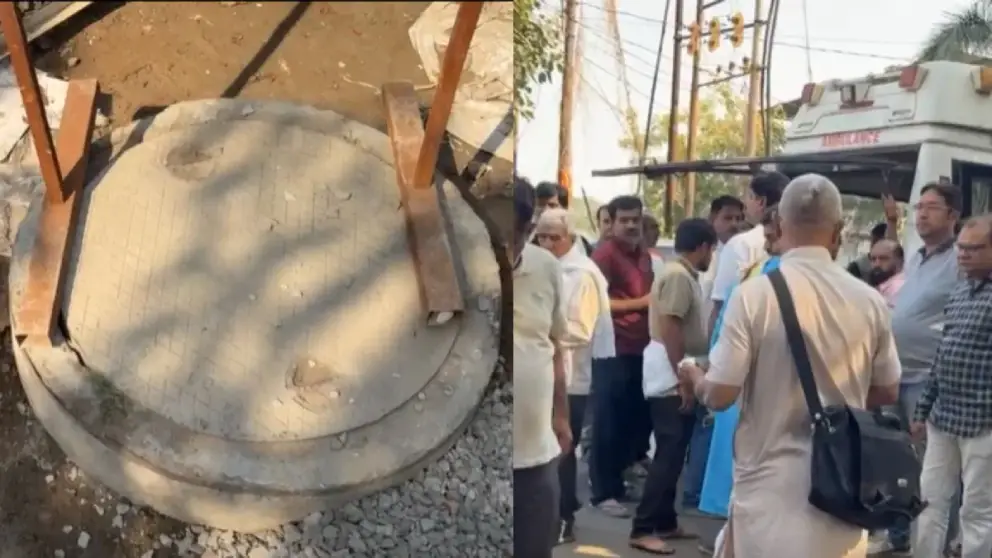
The situation began with chronic drainage problems in areas like Wadi, Mogalwada, and Baranpura. These residents have been dealing with filth and health hazards for a long time. When the Vadodara Municipal Corporation finally sent a jetting machine to handle the blockage, a public confrontation erupted. Congress corporators Tirth Brahmbhatt and Deepa Srivastava claimed they had requested the machine for their constituents. Meanwhile, BJP corporators Deepika Patni and Ankita Soni arrived, arguing that they had already booked the machine for a different street in the same ward.
What followed was a heated exchange that made headlines. While the politicians argued over who had the right to direct the machine, the clogged drains remained blocked, and the residents suffered. It was a classic case of political one-upmanship, where the machine became a tool for influence rather than sanitation.
Is Productivity Being Lost to Petty Conflicts?
This incident is a reminder of how political rivalry often slows down basic civic work. When leaders focus on territory marking, the actual work of governance suffers. It is much like how traditional time management is actually killing your productivity—when you focus on the wrong processes rather than the core mission, nothing gets done effectively. These corporators were so caught up in the optics of the situation that they forgot their primary job was to ensure the city is clean for the people who elected them.
Eventually, the machine did start working, clearing the drains one by one. But the damage to public trust was already done. The question residents are now asking is simple: why must civic maintenance be a battlefield? If all these representatives serve the same ward, why can't they coordinate for the common good instead of fighting over access to a single piece of equipment?
There’s more to life than simply increasing its speed.
By Udaipur Freelancer
A Lesson for Local Governance
This is not just about a drain cleaner. It is about accountability and the way we handle digital accountability and transparency in our public systems. Just as companies need to clean up their platforms from bots and scams, our local government needs to clean up its culture of constant political bickering. Voters expect their local leaders to work together to improve urban life, not to turn everyday maintenance into a political stunt.
In a city like Vadodara, which faces regular challenges with urban infrastructure, coordination is key. Citizens deserve to see their leaders collaborating to solve problems like flooding, poor road conditions, and sanitation. When the focus shifts from serving the public to gaining personal or party-based political points, the people are the ones who pay the price. Let us hope that in the future, the machinery of local government works as smoothly as the machines it deploys to clean our streets.














Recommended for you
Must-See Art Exhibitions Around the World This Year
The Revival of Classical Art in a Digital Age
Breaking Down the Elements of a Masterpiece Painting
The Revival of Classical Art in a Digital Age