Have you ever wondered if we need to travel millions of miles into deep space to understand how alien life might survive? Well, it turns out that some of the best clues are hiding right here on our very own planet!
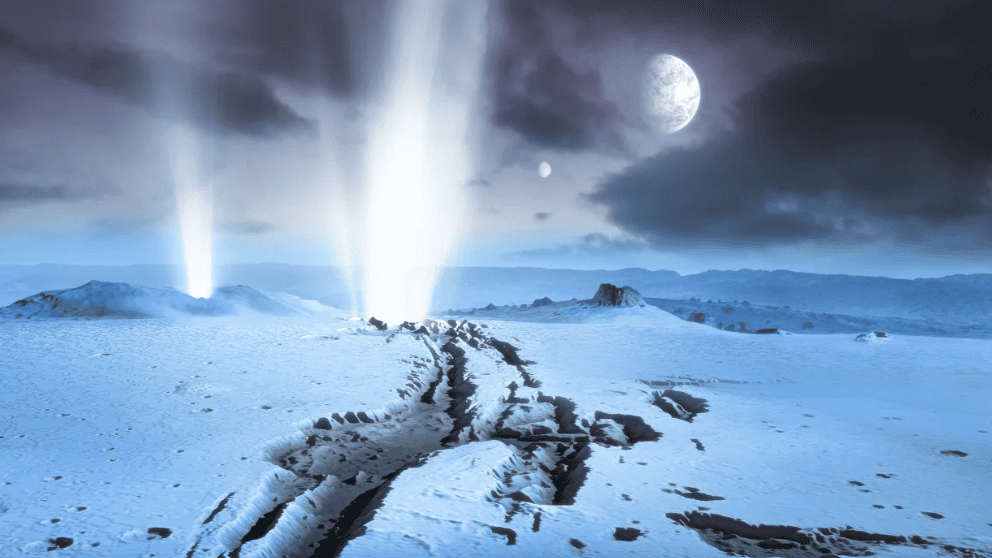
Recently, NASA made an incredible discovery deep in the freezing, harsh environments of Antarctica. They are studying a fascinating place called Lake Untersee. What they found there is giving scientists a massive sneak peek into how life could potentially exist on other planets, like Mars, or even on Jupiter’s icy moon, Europa.
Let's dive into this amazing discovery and see what makes this hidden lake so special!
A Hidden Time Capsule Under the Ice
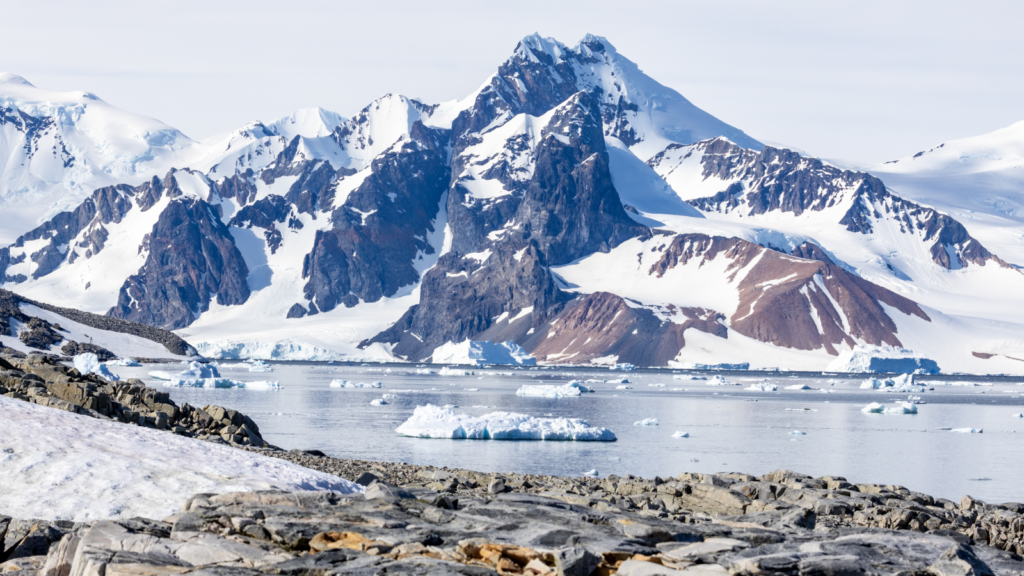
NASA describes Lake Untersee as an underground body of water that rests high up in the snow-capped peaks of East Antarctica. Because it is completely sealed off from the outside world by thick ice, it acts just like a giant natural time capsule.
This hidden lake is a dream come true for scientists. It gives them a unique resource to look back in time and study how life might have formed in the early days of our universe. The water inside Lake Untersee has a very unique chemistry, with a high alkalinity level (a pH of 10.4). But the coolest part? It contains the absolute largest amount of dissolved oxygen that has ever been found in any freshwater ecosystem on Earth!
Because the conditions here are so extreme and almost extraterrestrial (meaning out-of-this-world), it serves as the perfect testing ground. It helps scientists understand exactly where and how life could be hiding underneath the frozen ice caps of Mars.
Meet the Astrobiology Living Laboratory
Dale Andersen, a principal researcher at the SETI Institute, knows this place better than almost anyone. In fact, he has conducted over 30 rough trips to this freezing location!
During his visits, he has studied conically shaped things called 'stromatolites.' To put it simply, these are microbial reefs that look a lot like the oldest known fossils ever found on Earth. Andersen notes that studying these ancient-looking microbial forms will be super helpful in figuring out where to look for life beneath the red dust and ice of Mars.
Because this lake is so cut off from the rest of the world, it acts as a 'living laboratory' for astrobiology. Researchers get a front-row seat to watch tiny microbial life thrive completely isolated from the rest of Earth's biosphere. By looking at how these tough little organisms adapt to high oxygen levels and high alkalinity, NASA and SETI experts can totally refine their search for life in the hidden, dark oceans of Europa and the icy depths of Mars.
How Does Lake Untersee Stay So Oxygen-Rich Under Thick Ice?
You might be asking yourself: If the lake is buried under permanent ice, how does it get so much oxygen?
The most fascinating characteristic of this lake is its overwhelming abundance of oxygen. Because the lake has a perpetual, never-ending cover of thick ice, gases like oxygen and nitrogen get trapped (or sequestered) inside the water.
Here is how the magic happens, For thousands of years, the ice at the very top surface sublimates which is a fancy way of saying it changes directly from solid ice into gas without melting into water first. Meanwhile, brand new ice is constantly freezing right at the bottom of the ice layer. This constant freezing at the bottom literally pushes and forces those gases straight down into the water column.
There’s more to life than simply increasing its speed.
By Udaipur Freelancer
According to NASA, this wild process results in a condition where the lake has 150% more oxygen than any normal lake on Earth! Scientists believe that this oxygen-smuggled environment offers a very stable home for alien microbial creatures that might be living on Europa. Why? Because Europa is an icy moon, and the exact same gas-trapping process could be happening there right now!
What Was the 2-Meter Rise Mystery of 2019?
Even though the lake is usually very quiet and stable, something super weird happened in 2019. Measurements taken from high-up satellites and ground-based sensors caught an unprecedented and incredibly rapid rise in the lake's water level. The surface of Lake Untersee rose by a whopping 2 meters (over 6 feet) in the course of just a few short weeks!
Scientists from the University of Ottawa cracked the case. They discovered that this dramatic rise happened because of something called a Glacial Lake Outburst Flood (GLOF). Basically, a nearby lake called Lake Obersee had a breached ice dam. This caused a massive outflow of about 17.6 million cubic meters of water to rush out of Lake Obersee and flood directly into Lake Untersee!
Despite this crazy flood event, Lake Untersee is usually incredibly stable. In fact, SETI geobiologist Dale Andersen noted that the microbial pinnacles (the little towers made of bacteria) in Lake Untersee are absolutely massive compared to other lakes. In most Antarctic lakes, these pinnacles are just a few centimeters tall. But in Lake Untersee, they are half a meter tall!
This is because the ice cover is permanent. There are zero water waves, and absolutely no animals to disturb or eat the bacteria. Because they are left completely alone, the cyanobacteria (blue-green algae) have been able to grow very, very gradually in the limited sunlight. They have built forms and structures that look totally alien, unlike anything seen on Earth in over 3 billion years.
Why Lake Untersee's Microbial Pinnacles are Scientific Gold
These half-meter-tall pinnacles sitting at the bottom of the lake are a huge mystery. Honestly, they simply shouldn't be able to survive in an extreme environment as harsh as this one!
These structures are conical stromatolites formed by cyanobacteria. The NASA Earth Observatory stated that these organisms act as a skyline marker for scientists. Just like you can identify a city by its tall buildings, scientists can use these tall microbial towers to identify the presence of living organisms.
To wrap it all up, these little bacteria are truly scientific gold. By examining the exact process of how these fascinating pinnacles form under the ice in Antarctica, scientists will be armed with the knowledge they need to identify similar types of organisms hiding on the frozen surfaces of Mars and deep within the ice crusts of Europa.
It just goes to show sometimes you have to look down into the deepest, coldest parts of our own world to understand the glowing stars and planets above us!
Let me know in the comments below: do you think we will find similar microbial life hidden under the ice of Mars or Europa in our lifetime?















Recommended for you
Must-See Art Exhibitions Around the World This Year
The Revival of Classical Art in a Digital Age
Breaking Down the Elements of a Masterpiece Painting
The Revival of Classical Art in a Digital Age