Have you ever pulled up to a petrol pump, looked at the meter going up, and wondered exactly why fuel prices seem to be on a constant rollercoaster? Well, grab a cup of coffee, because today we are diving deep into a massive global drama that directly affects our wallets.
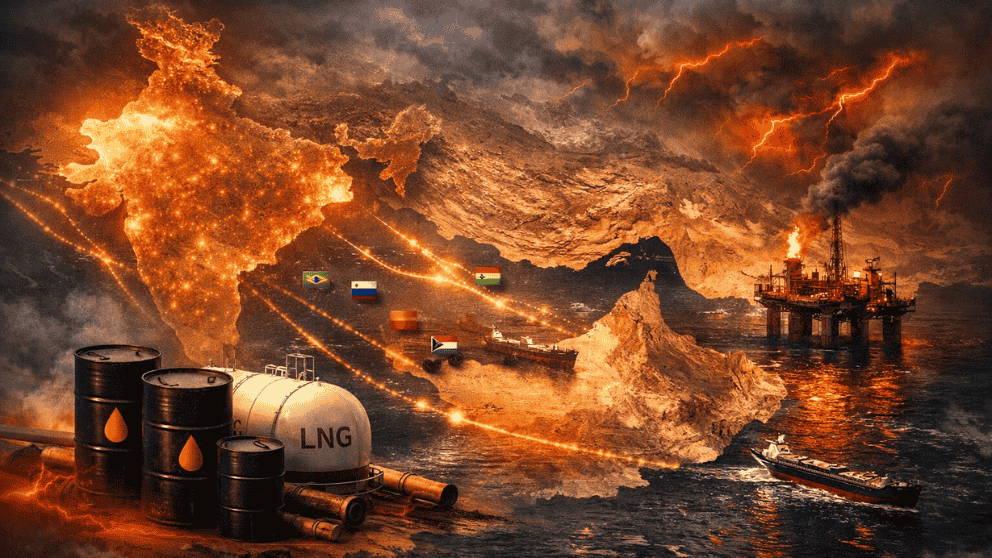
Right now, the world’s most important oil highway is under serious threat, and for a country like India, this is not just some distant political issue it is a direct hit to our economy. Let’s break down exactly what is happening in the Gulf, how it impacts us, and what India is doing to keep the engines running.
The Chokepoint: Why the Strait of Hormuz Matters
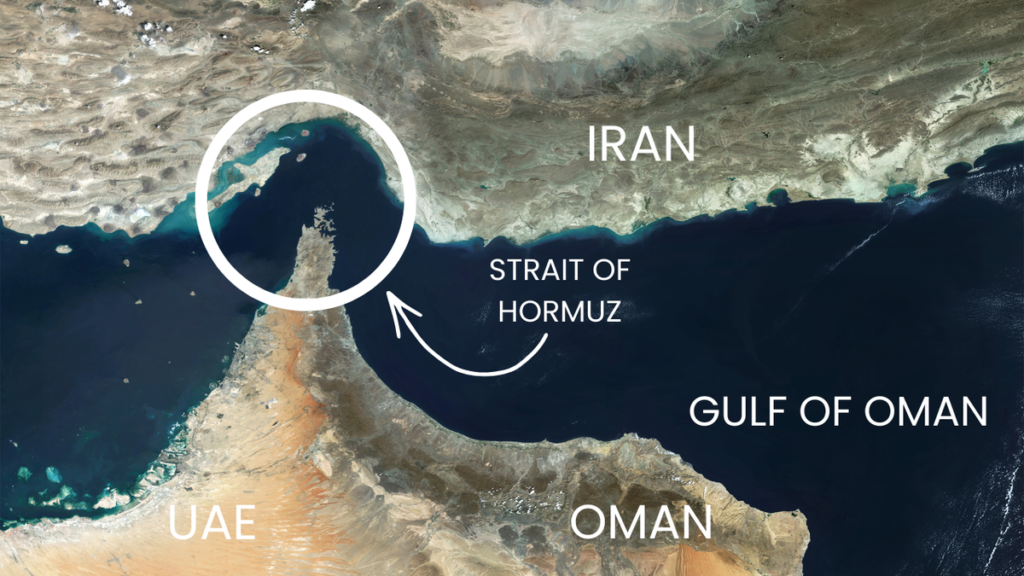
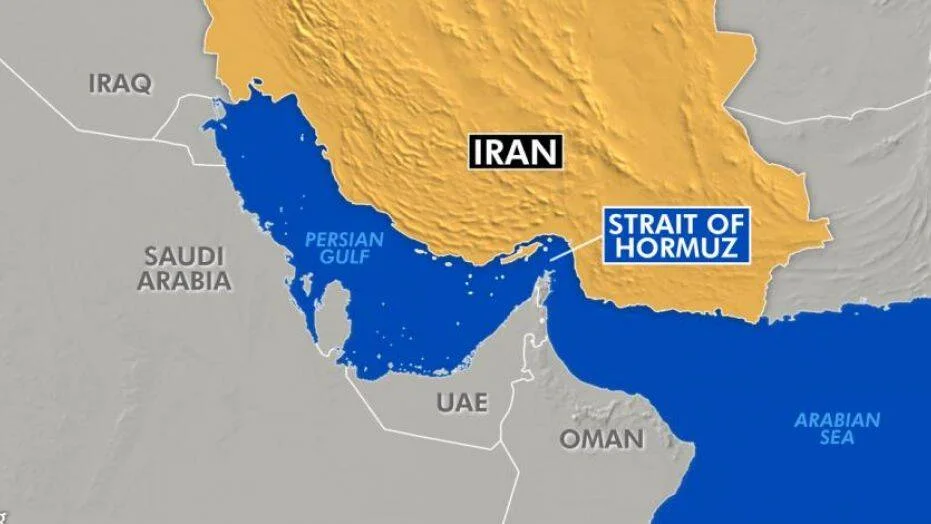
Imagine a narrow, super-crowded highway where nearly all of the world's most vital supplies have to pass through. That is essentially the Strait of Hormuz, a narrow waterway sitting right between Iran and Oman.
Recently, there has been a scary wave of drone and missile attacks on commercial oil tankers and energy setups in this area. With the ongoing US-Israel conflict with Iran, the tension in the Gulf is at an all-time high.
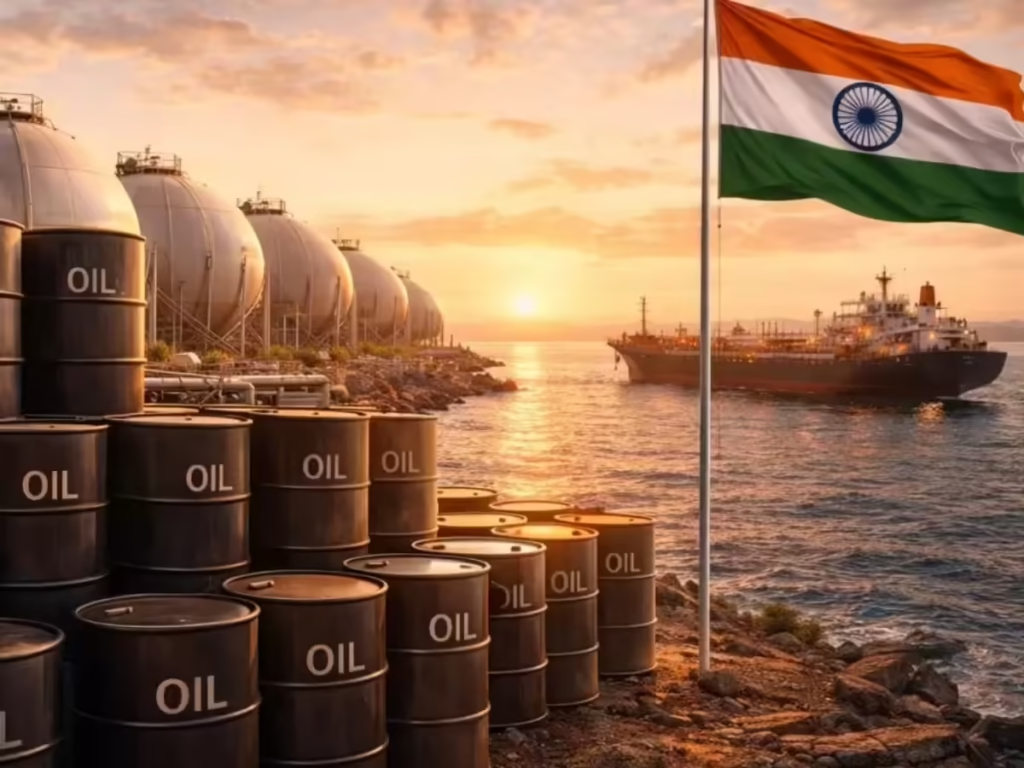
Why should we care? Because India imports a massive 85 percent of its crude oil. And out of all the oil heading to India from the Gulf, nearly two-thirds of it has to pass right through this exact narrow waterway. Over the past week alone, multiple cargo ships navigating these lanes have reported attacks or serious security threats. When energy setups in Gulf countries get targeted, it creates a real fear that oil production and export terminals across the entire region could be affected. For Indian policymakers and oil refiners, this is a massive headache.
It’s Not Just About Oil It’s About Shipping Costs
Here is the interesting part: the first real impact we are feeling isn’t actually a shortage of oil itself, but a massive headache in logistics and shipping.
Because the waters are so dangerous right now, insurance companies are charging extra. War-risk insurance premiums for vessels entering the Gulf have shot up like crazy. In some cases, this alone adds $1 to $2 per barrel to the final cost of the crude oil.
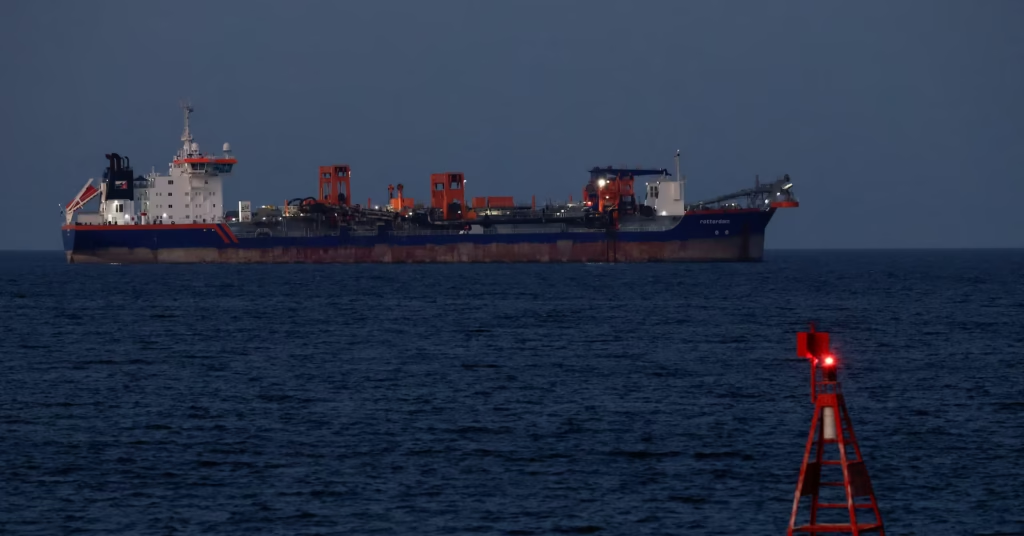
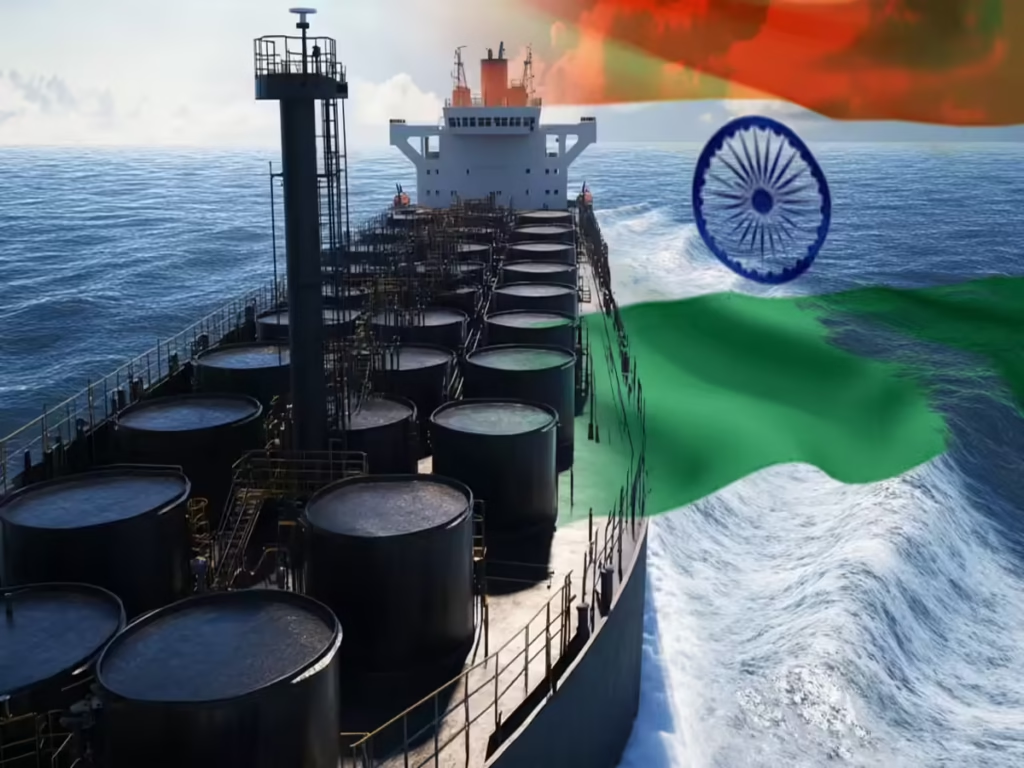
On top of that, shipping companies are slowing down their journeys or even temporarily pausing them until they can get naval escorts or guarantees of safety. Tankers are literally queuing up outside the corridor, just waiting for a safe time to pass. For India, a country that relies on a steady, non-stop flow of oil to feed its giant refineries, even a tiny delay can completely mess up supply schedules.
Naturally, the people who own these massive crude carrier ships transporting oil to Asia are demanding much higher pay for taking the risk of driving through a conflict zone.
The Price Tag: How This Affects Our Pockets
Even before any major supply cuts happened, just the fear of a disruption caused oil prices to jump.
If you were watching the global oil markets on March 9, it was a pretty scary day. Global crude prices suddenly spiked, with Brent crude jumping 25 to 29 percent in a single day of trading. It briefly crossed $110 to $115 per barrel the highest we have seen in nearly four years! Thankfully, things cooled down the next day, dropping to around $92 to $93 per barrel after US President Donald Trump stated that the situation was getting under control and promised that Washington would prevent any major disruptions.
But still, for India, importing over 5 million barrels of oil every single day means even a small price bump hurts. The math is pretty shocking, experts at the petroleum ministry estimate that for every $10 increase in crude oil prices, India’s annual import bill goes up by roughly $15 to $16 billion.
If oil stays expensive, it widens our country's current account deficit and pushes consumer inflation up by adding extra costs to transport, fertilizers, and logistics. Our government made their budget calculations for the financial year 2026-27 assuming oil would stay between $70 and $75 a barrel. If prices stay higher than that, it’s going to make managing inflation and the country's finances very tricky.
The Good News: India’s Secret Shields
Now, don’t panic just yet. The good news is that Indian energy planners say we are actually in a much better position to handle this crisis today than we were during past Gulf conflicts.
How? By not keeping all our eggs in one basket. Over the last few years, New Delhi has been very smart about buying oil from a bunch of different places. The biggest game-changer has been Russia. Since the Ukraine conflict started, Russia has become India’s largest crude supplier, jumping from almost nothing before 2022 to making up 35 to 40 percent of our crude imports recently.
There’s more to life than simply increasing its speed.
By Udaipur Freelancer
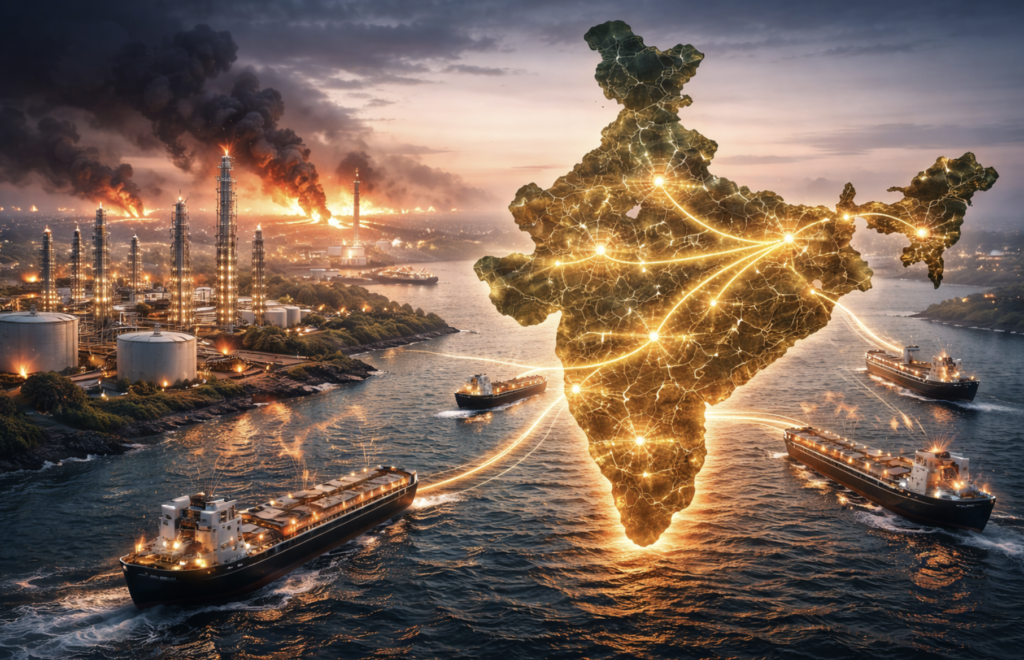
The best part about Russian oil? It doesn't travel through the dangerous Strait of Hormuz! It comes to India via the Baltic or Arctic ports, completely skipping the Gulf chaos. At the same time, India is buying more oil from the United States, Brazil, Mexico, and West Africa. All these alternative sources now make up almost half of our oil imports, giving us the flexibility to shift gears if Gulf shipments slow down.
We also have a superpower: our refineries. India has the capacity to process roughly 255 million tonnes of oil per year. We have some of the most complex refineries in the world. Companies like Indian Oil Corporation, Reliance Industries, and Nayara Energy can easily switch between processing light, medium, and heavy types of crude oil. If one type becomes hard to get, they just adapt and use another.
The Emergency Stash and Global Help
Did you know India has a secret underground oil stash? We have built an emergency buffer known as strategic petroleum reserves. These are massive underground storage facilities in Visakhapatnam, Mangaluru, and Padur that hold about 5.3 million tonnes of crude oil. That is enough to cover the whole country for 9 to 12 days.
When you add that to the commercial oil held by refineries and marketing companies, India has an overall stockpile that can cover nearly 55 to 60 days of demand. The government is even planning to build more of these facilities in Chandikhol and Padur Phase II.
Globally, we are also catching a few lucky breaks. The US has informally allowed Indian refiners to receive certain Russian crude cargoes that were already loaded or stuck at sea without hitting them with immediate sanctions. This is a very practical move to keep oil flowing into Asia and prevent a global shortage.
Additionally, the International Energy Agency stands ready to release emergency global oil stocks if things get worse. Meanwhile, OPEC+ countries (especially Saudi Arabia and the UAE) are holding back a spare production capacity of about 4 to 5 million barrels per day that they could activate if global supplies get choked.
The Uncomfortable Truth: We Still Need the Gulf
Despite all our smart planning, backup suppliers, and emergency stashes, the harsh truth is that the Gulf remains irreplaceable for India in the long run.
Countries like Iraq, Saudi Arabia, the UAE, and Kuwait are still massive suppliers for us. Iraq alone often makes up more than 20 percent of our imports. Almost all of this oil must pass through the Strait of Hormuz before it reaches huge Indian ports like Jamnagar, Vadinar, and Paradip. If that waterway closes for a long time, it would have terrible consequences for our energy security and trade balance.
Final Thoughts
For now, the mood in the Indian energy sector is cautious, but no one is hitting the panic button just yet. Cargoes are still moving, even if shipping costs and insurance are higher. Our Russian imports and Atlantic supplies are acting like a cushion, softening the blow.
Industry experts are secretly hoping that diplomatic talks and the presence of naval ships in the area will restore peace before India is forced to dip into its emergency underground reserves.
Ultimately, India’s energy safety won't just depend on how intense the conflict gets, but on how long it lasts. Our diverse suppliers, flexible refineries, and emergency reserves are great for short-term hiccups. But if the world's most critical energy corridor stays under threat for weeks or months, it will be a harsh reminder of how quickly global politics can shake up our everyday lives.
What do you guys think? Let me know in the comments below if you think the world can find a peaceful resolution before we start seeing the impact at our local petrol pumps!
Udaipur Freelancer delivers high-quality web, marketing, and design solutions. We focus on building impactful digital experiences that help your brand succeed in today's market.














Recommended for you
Must-See Art Exhibitions Around the World This Year
The Revival of Classical Art in a Digital Age
Breaking Down the Elements of a Masterpiece Painting
The Revival of Classical Art in a Digital Age