Things are heating up on the global stage, and the fire has just spread to India’s own backyard. If you thought the tensions in the Middle East were staying over there, think again. The ongoing conflict has officially spilled over into the Indian Ocean in a major, shocking way.
In a massive escalation of the US-Israeli conflict with Iran, an American submarine has just torpedoed and completely sunk an Iranian warship. Yes, you read that right. A full-blown submarine attack happened right near India and Sri Lanka.
Let’s break down everything you need to know about this crazy situation, why it happened, and what it means for the world right now. Grab a cup of coffee, because this is a wild ride.
The Target: What Happened to the IRIS Dena?
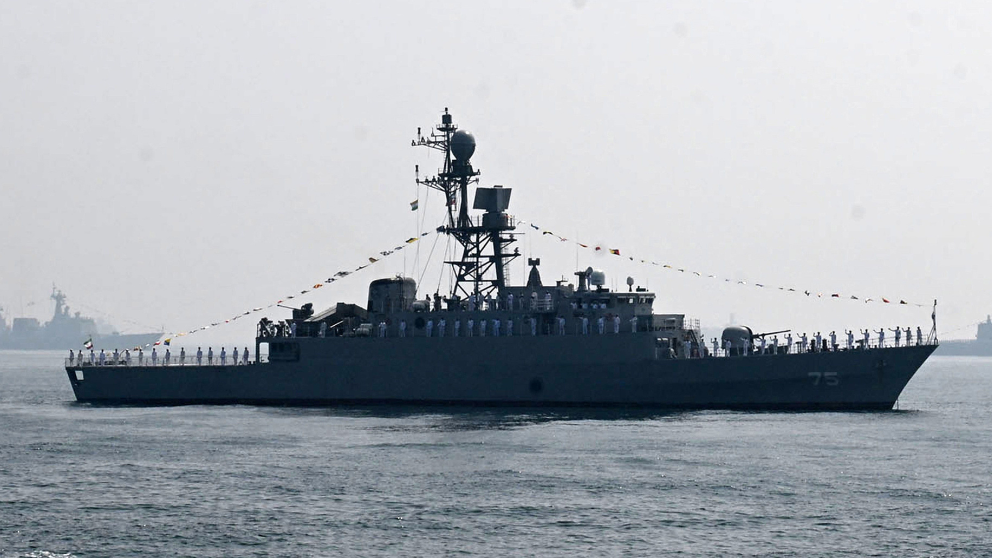
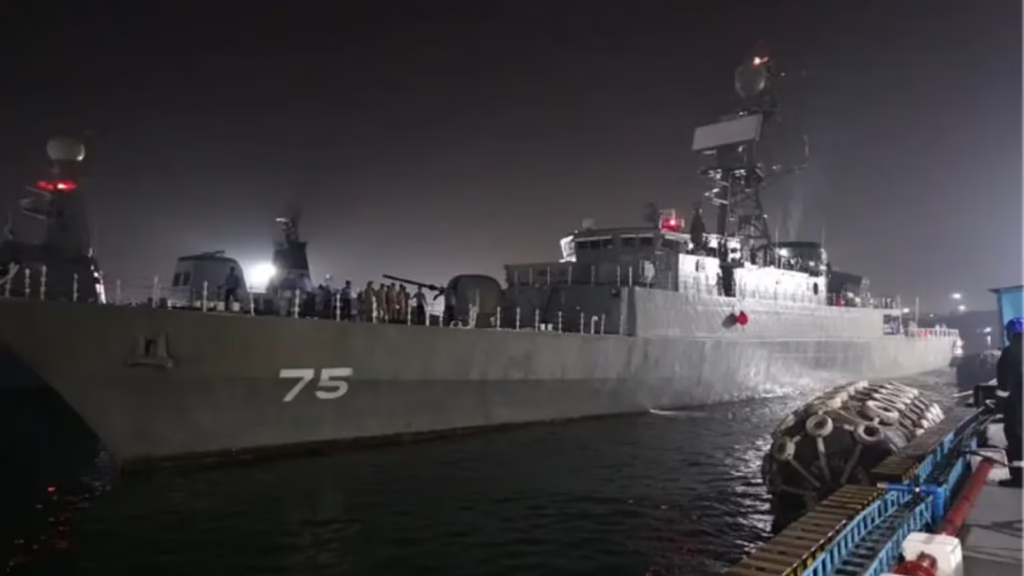
The ship that went down was the IRIS Dena, an Iranian frigate-class warship. The wildest part about this? The ship wasn’t out looking for a fight when it got hit. It was actually on its way back home from a friendly trip.
From February 18 to 26, the IRIS Dena was right here in India. It was participating in the Milan International Fleet Review, a huge gathering of navies in Visakhapatnam, Andhra Pradesh. The Indian Navy even welcomed them with open arms.
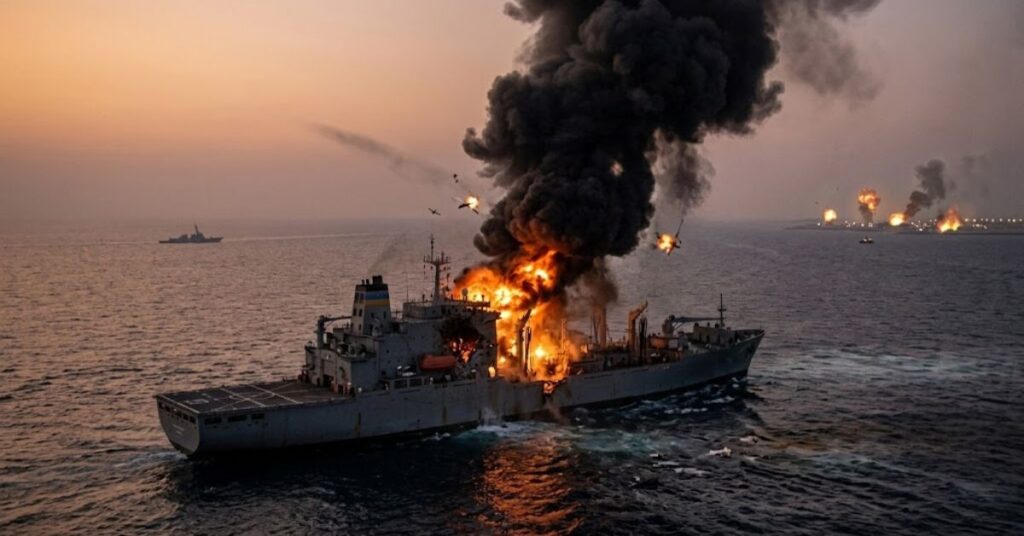
But as the ship left India and made its way into international waters just off the southern coast of Sri Lanka, disaster struck. A US submarine locked on and fired a torpedo, sinking the Iranian ship into the depths of the Indian Ocean.
A Frantic Rescue Mission
When a ship goes down in the middle of the ocean, it’s a terrifying scene. Reports say there were about 180 people on board the IRIS Dena when the American torpedo hit.
The ship sent out a desperate distress signal, and the Sri Lankan Navy quickly jumped into action. They launched a massive search and rescue mission with the help of the air force. They managed to pull about 30 survivors from the water, rushing them to Karapitiya Hospital in the southern city of Galle so they could get medical help. Sadly, rescuers also recovered bodies from the sea, and spotting an oil slick was the only sign left of the massive vessel.
Sri Lankan Foreign Minister Vijitha Herath and Navy Commander Buddhika Sampath made it clear that they weren't taking sides in the war. They were simply following the rules of the sea (known as the UNCLOS code from 1982), which says you have to help any ship in distress, no matter what flag it flies. Their only focus was saving human lives.
Why Did the US Attack Now?
To understand why this happened, we have to look at the massive mess unfolding in the Middle East. The US and Israel are currently in a heavy conflict with Iran.
Just recently, on February 26, Israel and the US launched huge strikes on Iran, even taking out some of their top-tier leadership. In return, Iran has been firing missiles and drones at any country hosting American bases. Basically, the whole Middle East has turned into a giant conflict zone, and now, that war has floated right over to the Indian subcontinent.
The fact that the US used a submarine to carry out this attack is a massive flex of power. It shows that the US Navy’s Fifth Fleet which normally hangs out around the Persian Gulf and the Red Sea is heavily patrolling the Indian Ocean. The Fifth Fleet usually has around 15 to 35 major warships ready to go, including nuclear-powered attack submarines. By striking the IRIS Dena, the US is sending a loud message, their Indo-Pacific Command is now deeply involved in the Iran war.
A Very Rare Piece of History
Here is a mind-blowing fact about this attack, sinking a ship with a submarine torpedo is incredibly rare these days.
According to defense expert Sandeep Unnithan, this is only the fourth time a warship has been sunk by a submarine in the last 80 years since World War 2! And it is the very first time the US has done it since WW2. Torpedo attacks completely break a ship's structure apart, which explains why the Sri Lankan rescuers couldn't even find the vessel when they arrived, only oil and debris.
There’s more to life than simply increasing its speed.
By Udaipur Freelancer
Why India is Extremely Worried
Now, let’s talk about how this affects India. Even though the attack happened in international waters, it was way too close to home. Experts are having heated debates in New Delhi right now.
Former Chief of Naval Staff, Admiral Arun Prakash, hit the nail on the head when he said, "India should convey its deep concern and displeasure that the US brought maritime warfare to our doorstep."
Things get even trickier when you look at India's agreements with the US. Back in 2016, India and the US signed a pact called LEMOA. To keep it simple, this agreement allows the US and Indian militaries to use each other's bases for refueling and supplies. Geopolitical analyst Zorawar Daulet Singh pointed out a scary thought, What if the US submarine that fired the torpedo was using Indian pacts to stay supplied? If so, India could accidentally be seen as part of the war, which would be incredibly dangerous.
Congress leader Pawan Khera also asked a tough question online. He wondered how an Iranian ship, invited by India to a peaceful event, gets blown up just outside Indian waters. He asked if India has lost its influence in its own neighborhood.
Plus, India actually has a decent relationship with Iran! They share deep historical ties, work together on energy security, and even partner on the famous Chabahar port. India definitely does not want to be stuck in the middle of a US-Iran war.
A Clever Game of Ocean Chess
You might be wondering, if the ship left India, why didn't the US just attack it right away? Why wait until it was near Sri Lanka?
It all comes down to ocean borders. As columnist Kamlesh Singh pointed out online, "the Indian Ocean is not equal to Indian territory." The IRIS Dena was scheduled to stop at Kochi on India's west coast. If the ship had traveled around Sri Lanka and reached Kochi, it would have been sailing inside India's safe maritime borders all the way up to Gujarat.
The US couldn't attack the ship while it was in Indian waters because that would be a massive insult to India and cause a huge diplomatic fight. So, the US submarine waited patiently. As soon as the Iranian ship was in international waters off Sri Lanka, they took their shot. It was a very calculated move.
Pakistan Enters the Chat
As if things weren't complicated enough, Pakistan is now signaling that they might get pulled into this mess.
Pakistan has a strong defense pact with Saudi Arabia. Reports say Pakistan's foreign minister, Ishaq Dar, actually warned his Iranian counterpart not to fire missiles or drones at Saudi Arabia. While Pakistan might just be talking tough for now, experts worry that the sinking of the IRIS Dena could push the Middle Eastern fire further east, dragging neighboring countries into a wider war.
Wrapping It Up
At the end of the day, the sinking of the IRIS Dena is a massive wake-up call. We are watching history unfold, but not the good kind. The fact that an American submarine blew up an Iranian ship just a few miles away from the Indian coast is terrifying.
It proves that the Middle East crisis isn't staying in the Middle East anymore. For India, it’s a tightrope walk. They have to protect their own interests, maintain their friendships, and somehow keep the flames of a massive international war away from their doorstep. Let's hope calmer heads prevail soon, but right now, the waters are looking very, very rough.
Udaipur Freelancer delivers high-quality web, marketing, and design solutions. We focus on building impactful digital experiences that help your brand succeed in today's market.












Recommended for you
Must-See Art Exhibitions Around the World This Year
The Revival of Classical Art in a Digital Age
Breaking Down the Elements of a Masterpiece Painting
The Revival of Classical Art in a Digital Age