The geopolitical landscape of the Middle East has entered a new, volatile chapter as former President Donald Trump openly floats the idea of regime change in Tehran. Against a backdrop of escalating naval maneuvers and stalled diplomatic talks, Trump’s rhetoric signals a potential pivot in strategy one that moves away from decades of circular negotiations and toward a direct confrontation with Iran’s clerical leadership.
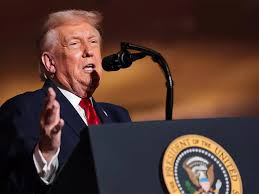
With U.S. warships moving into strategic positions and tensions reaching a boiling point, the world is watching closely. Trump’s comments, made during a visit to troops at Ft. Bragg, North Carolina, suggest that Washington is not only losing patience but is actively considering whether a fundamental shift in power within Iran is the only remaining solution to regional instability.
The Best Thing That Could Happen: A Shift in Rhetoric
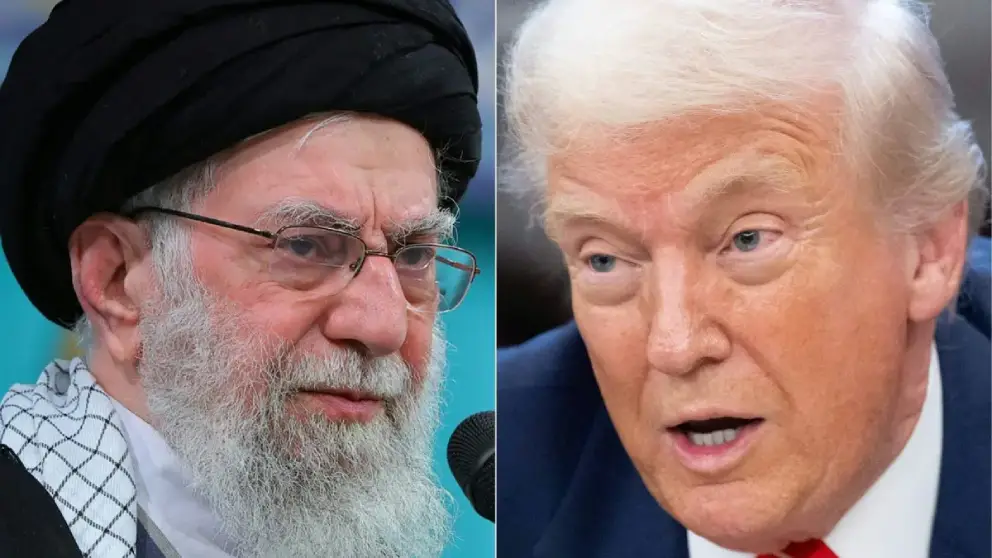
For nearly half a century, the relationship between the United States and Iran has been defined by hostility, sanctions, and proxy conflicts. However, President Trump’s recent statements mark a significant escalation in verbal posturing. When questioned by reporters about the possibility of pressing for the ouster of Iran’s Islamic clerical leadership, Trump did not hesitate. "It seems like that would be the best thing that could happen," he stated, signaling a departure from mere containment strategies to an endorsement of systemic change.
Trump’s frustration appears to stem from the perceived failure of traditional diplomacy. He referenced the 47 years of talking and talking and talking, a period during which he argues the United States and its allies have seen little progress but significant loss. He painted a grim picture of the human cost of this prolonged conflict, vividly describing the injuries sustained by service members legs blown off, arms blown off, faces blown off as a consequence of a stalemate that has dragged on for a long time.
While Trump declined to name a specific successor to Iran’s current leadership, his vagueness simply stating that there are people suggests a belief that alternatives exist within the Iranian populace or the diaspora. This rhetoric aligns with a growing sentiment in his camp that the current regime is not just an adversary, but an immovable obstacle to peace that can no longer be negotiated with in good faith.
Military Pressure Builds: The Second Carrier Deployment
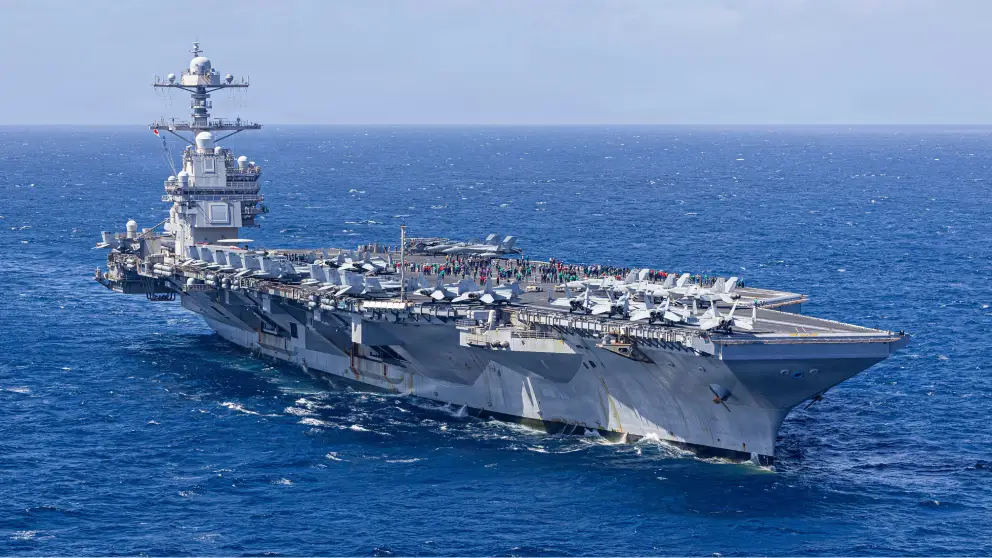
Rhetoric is often just noise until it is backed by steel, and in this case, the steel is arriving in the form of a massive naval buildup. The United States is not just talking. it is actively expanding its military footprint in the region. In a move that significantly raises the stakes, the USS Gerald R. Ford, the world’s largest aircraft carrier, has been ordered to redeploy from the Caribbean to the Middle East.
This deployment is not a routine rotation. The Ford carrier strike group had been stationed in the Caribbean for months conducting operations, but its sudden redirection to join the USS Abraham Lincoln which is already operating in the region sends an unmistakable message to Tehran. The presence of two carrier strike groups in the same theater is a rare and potent display of force, designed to provide the U.S. President with a full spectrum of military options should diplomacy collapse entirely.
Trump confirmed the deployment with a warning that underscores the conditional nature of this buildup. "In case we don't make a deal, we'll need it," he told journalists at the White House. He characterized the additional firepower as a very big force that serves as leverage. The implication is clear. the United States prefers a negotiated settlement, particularly regarding Iran's nuclear program, but it is preparing for a scenario where talks fail. If a deal is struck, Trump indicated the ships would be leaving very soon. If not, the hardware is in place to act.
A Bad Day for Iran: The Ultimatum of Diplomacy
The deployment of the carriers coincides with a critical window for diplomatic negotiations. Despite the warlike posture, there remains a sliver of hope for a diplomatic breakthrough, though the timeline is shrinking rapidly. Trump expressed a guarded optimism that a nuclear agreement could be reached, potentially within weeks, or over the next month.
However, this optimism came with a stark ultimatum. "I think they'll be successful. If they're not, it's going to be a bad day for Iran, very bad," Trump warned. This bad day scenario likely refers to the unleashing of the military capabilities currently amassing in the region. The pressure is being applied not just by the U.S., but through coordination with key allies. Trump noted he held lengthy discussions with Israeli Prime Minister Benjamin Netanyahu, agreeing that while negotiations should continue, the terms must be strict.
The demands placed on Tehran are heavy. According to reports regarding the Trump-Netanyahu talks, any deal would require Iran to not only curb its nuclear ambitions but also dismantle its ballistic missile program and end its financial and military support for militant groups like Hamas and Hezbollah. These are concessions the Iranian regime has historically viewed as non-negotiable pillars of its national defense and regional influence, making the likelihood of a bad day seemingly higher than the likelihood of a deal.
There’s more to life than simply increasing its speed.
By Udaipur Freelancer
Flashpoints and Fragility in the Gulf
The urgency of the situation is driven by more than just high-level policy disagreements. the operational reality in the Persian Gulf is becoming increasingly dangerous. The region is a powder keg, and sparks are already flying. Gulf Arab nations have issued warnings that any further military escalation could trigger a wider regional conflict, a fear that is particularly acute given the ongoing tensions following the Israel-Hamas war in Gaza.
Recent incidents at sea highlight how close the two sides are to direct conflict. U.S. forces recently shot down an Iranian drone that approached the USS Abraham Lincoln, a defensive action that underscores the hair-trigger alertness of American naval forces. Furthermore, reports indicate that Iran attempted to stop a U.S.-flagged vessel in the strategic Strait of Hormuz. Such provocations in one of the world's most vital maritime choke points demonstrate that Iran is willing to test American resolve, even as the U.S. doubles down on its military presence.
These skirmishes serve as a prelude to what a full-scale confrontation might look like. With drones in the air and carriers in the water, the margin for error is nonexistent. A single miscalculation by a drone operator or a naval captain could spiral into the bad day Trump predicted, bypassing diplomatic channels entirely.
The Internal Front: Calls for Uprising and Global Days of Action
While the U.S. squeezes Iran from the outside, the Iranian regime faces a formidable challenge from within. Trump’s comments about regime change coincide with renewed calls for protests from Iranian opposition figures. Most notably, Reza Pahlavi, the U.S.-based son of the Shah who was ousted in the 1979 Islamic Revolution, has issued a direct plea to his brave compatriots to intensify their resistance against the clerical establishment.
Pahlavi’s call to action focuses on a Global Day of Action, urging citizens to cast anti-government slogans from their rooftops and homes. In a statement widely circulated on social media, Pahlavi wrote, "The Islamic Republic has failed to break your will to reclaim Iran, even through brutality and murder." He explicitly linked the protests to the memory of fallen heroes and the "nightly chants" that have become a symbol of defiance in Iranian cities.
The timing of these protests is significant. Iranians have been observing 40-day mourning ceremonies for those killed in recent crackdowns a traditional cycle of mourning that often serves to re-ignite political unrest. Human rights groups estimate the toll of the regime's crackdown to be staggering. The U.S.-based Human Rights Activists News Agency reported that over 7,000 people have been killed and more than 44,000 arrested (though rights groups note the toll could be even higher).
This internal pressure creates a pincer movement against the regime. On one side, the U.S. Navy waits with ballistic missiles and fighter jets. on the other, the Iranian populace, led by figures like Pahlavi, demands the end of the Islamic Republic. Trump’s assertion that regime change is the best possible outcome likely banks on this convergence of external military threat and internal civil disobedience.
Conclusion: A Pivot Point in History
We are witnessing a high-stakes gamble in the Middle East. By openly discussing regime change and deploying a second carrier strike group, Donald Trump is abandoning the strategy of cautious containment. The message to Tehran is binary. accept a restrictive new deal that dismantles your regional power projection, or face the combined wrath of internal uprising and external military force.
As the USS Gerald R. Ford steams toward the Persian Gulf and Iranians take to their rooftops to chant against the regime, the status quo appears to be shattering. Whether this leads to a historic diplomatic breakthrough or a devastating regional war remains the question of the hour. One thing, however, is certain. the era of talking and talking is over. The coming weeks will decide the future of Iran and the stability of the entire Middle East.
Udaipur Freelancer delivers high-quality web, marketing, and design solutions. We focus on building impactful digital experiences that help your brand succeed in today's market.













Recommended for you
Must-See Art Exhibitions Around the World This Year
The Revival of Classical Art in a Digital Age
Breaking Down the Elements of a Masterpiece Painting
The Revival of Classical Art in a Digital Age