In the high-stakes world of global finance, timing is everything. A fraction of a second can mean the difference between losing a fortune and making one. But what happens when market timing appears too perfect?
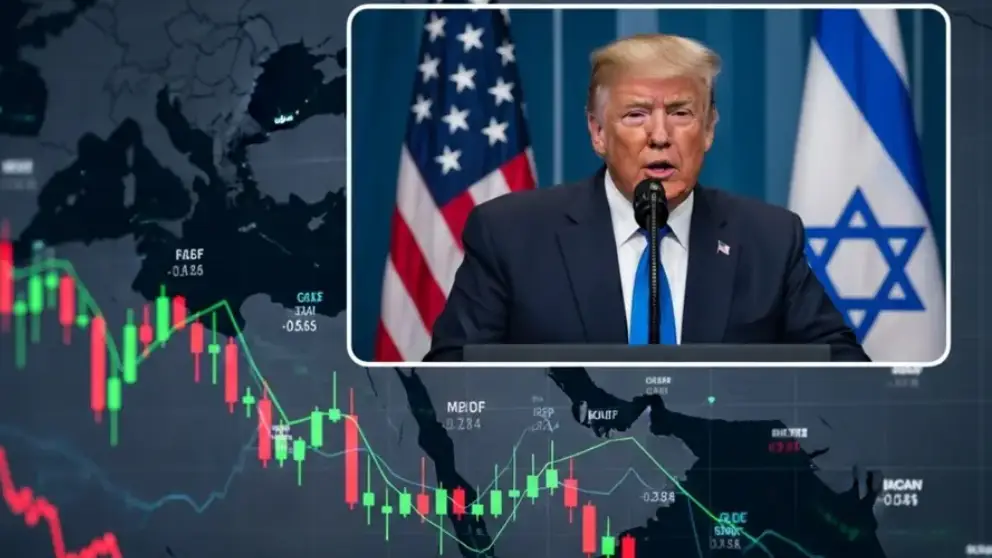
Financial regulators, market strategists, and geopolitical analysts are currently grappling with exactly that question. A series of perfectly timed oil and equity trades worth approximately $580 million were executed just minutes before US President Donald Trump claimed to have had productive talks with Iran.
The trades paid off massively, but the subsequent denial of these talks by Tehran has thrown fuel on a blazing fire of speculation. Are these trades a stroke of algorithmic genius, a lucky coincidence, or a glaring instance of insider trading? Here is a deep dive into the anomaly that has Wall Street and Washington on high alert.
The Timeline of a Highly Unusual Morning
To understand why the financial world is buzzing, we have to look at the incredibly narrow window in which these events occurred. According to financial reports, the anomaly took place during the notoriously quiet pre-market trading hours.
Between 4:19 AM and 4:32 AM (New York time), traders placed massive bets on crude oil futures. Roughly 6,200 contracts, valued at an astounding $580 million, were executed across Brent and West Texas Intermediate (WTI) crude.
These were not random bets. The traders were effectively wagering that global crude oil prices were about to take a sharp dive. Simultaneously, trading volumes surged across S&P 500 futures, with traders positioning themselves for a sudden rise in equities.
In the financial markets, betting that oil will drop while equities will rise is a classic risk-on position. It suggests that the trader believes a major geopolitical tension is about to de-escalate. But at 4:32 AM, there was no public macroeconomic data or scheduled news release to justify such a massive, coordinated move.
Fourteen minutes later, the catalyst arrived.
Trump’s Truth Social Post and the Immediate Market Reaction
At approximately 4:46 AM, Donald Trump took to his social media platform, Truth Social, and posted a market-moving update regarding US-Iran relations.
"I AM PLEASE TO REPORT THAT THE UNITED STATES OF AMERICA, AND THE COUNTRY OF IRAN, HAVE HAD, OVER THE LAST TWO DAYS, VERY GOOD AND PRODUCTIVE CONVERSATIONS," the post read.
He further added that planned military strikes on Iranian energy infrastructure would be postponed for five days. (Minutes later, a corrected version was posted fixing typographical errors, but the core message regarding productive conversations and a pause on military action remained intact).
The market reacted violently and instantly.
Because military strikes on energy infrastructure disrupt the global oil supply, the threat of such strikes keeps oil prices artificially high. The moment Trump signaled a de-escalation, the war premium vanished. Oil prices plummeted sharply, exactly as the anonymous traders had bet. Concurrently, US stock futures and European equities moved higher, relieved by the easing of geopolitical risks.
For the entities that placed the $580 million bets just 14 minutes prior, the profit margins would have been astronomical.
The Twist: Iran Denies the Talks
If the story ended there, it would simply be a case of suspicious market timing. However, the narrative took a sharp turn shortly after the markets reacted. Iranian authorities vehemently pushed back against Trump’s claims.
Iran’s Fars news agency reported that there had been absolutely no direct or indirect communication with the United States.
The denial went all the way to the top. In a post on X (formerly Twitter), Iranian Parliament Speaker Mohammad Bagher Ghalibaf dismissed Trump’s claims entirely. He stated, "No negotiations have been held with the US, and fake news is used to manipulate the financial and oil markets, and escape the quagmire in which the US and Israel are trapped."
There’s more to life than simply increasing its speed.
By Udaipur Freelancer
This contradiction is central to the growing controversy. If no talks were actually underway, what exactly were the markets reacting to? More importantly, what did the traders who placed the $580 million bets know ahead of time, and who told them?
Three Blazing Red Flags: Why the Timing is Under Scrutiny
Market participants and strategists are calling these trades highly unusual and really abnormal. The sequence of events has caught the attention of financial watchdogs for three specific reasons:
1. The Sheer Size of the Trade
Trading $580 million in futures is a massive move on any given day. But executing a trade of that magnitude during the illiquid, quiet pre-market window is practically screaming for attention. Large institutional players usually hide their massive trades over longer periods to avoid spooking the market. Dropping half a billion dollars in a 13-minute window is aggressive.
2. The Uncanny Timing
The trades stopped at 4:32 AM. Trump posted at 4:46 AM. A 14-minute buffer between a half-billion-dollar bet and a market-moving geopolitical announcement is too precise for many analysts to brush off as a coincidence. As one market strategist noted, "It's hard to prove causality, but you have to wonder who would have been aggressive at selling futures at that point, 14 minutes before Trump's post."
3. The Exact Positioning
The trades weren't just a generic bet on market volatility; they were perfectly aligned with the specific narrative of easing tensions. Selling oil and buying equities is the exact mathematical formula to profit off a de-escalation in the Middle East.
No Proof of Insider Trading (Yet), But Big Questions Remain
It is crucial to note that, as of now, there is no hard evidence of insider trading or illegal wrongdoing. In financial markets, large institutional players often take aggressive positions based on algorithmic models, probability matrices, or deep geopolitical forecasting. It is theoretically possible that a highly sophisticated quantitative fund anticipated a de-escalation statement based on alternative data.
However, if an investigation proves that these trades were executed based on material, non-public information such as advance knowledge that Trump was drafting that specific Truth Social post it would constitute a severe violation of US insider trading laws.
The primary issue currently plaguing regulators is a lack of clarity. Because futures markets can be highly opaque, it is not yet public knowledge who placed these trades. Was it a single massive hedge fund? A sovereign wealth fund? Or a coordinated effort by multiple players?
The Vulnerability of Global Markets
Beyond the potential legal implications of insider trading, this $580 million episode highlights a much broader, systemic issue, the extreme vulnerability of global financial markets to political signaling and mixed messaging.
In today's hyper-connected world, a single social media post from a prominent political figure can alter the valuation of global commodities by billions of dollars in seconds. When a gap emerges between a political narrative (Trump signaling talks) and geopolitical reality (Iran denying them), it creates a dangerous space where markets can be easily manipulated.
For now, the public is left without concrete answers, only a sequence of events that looks anything but ordinary. Until regulatory bodies like the SEC or the CFTC trace the origins of these massive bets, the $580 million question will remain, Was this the luckiest trade of the year, or a calculated, illegal exploitation of privileged information?
Frequently Asked Questions (FAQs)
What is insider trading? Insider trading is the buying or selling of a publicly-traded asset (like stocks or futures) by someone who has material, non-public information about that asset. If someone knew about Trump's post before it was published and traded based on that knowledge, it could be classified as insider trading.
Why did oil prices drop after Trump’s post? Trump's post suggested a pause in military strikes against Iranian energy infrastructure. Because the threat of strikes creates a risk premium that drives oil prices up, the news of a pause reduced fears of supply disruptions, causing prices to fall.
Who made the $580 million trades? As of now, the identity of the trader(s) is unknown to the public. The trades were executed through futures contracts, which can take time for financial regulators to trace back to specific individuals or institutions.
Is it illegal to trade based on political news? It is perfectly legal to trade based on public political news. However, trading based on advance, secret knowledge of what a political figure is going to do or announce can cross the line into illegal market manipulation or insider trading.
Udaipur Freelancer delivers high-quality web, marketing, and design solutions. We focus on building impactful digital experiences that help your brand succeed in today's market.
















Recommended for you
Must-See Art Exhibitions Around the World This Year
The Revival of Classical Art in a Digital Age
Breaking Down the Elements of a Masterpiece Painting
The Revival of Classical Art in a Digital Age