A heart-breaking incident has been reported from Maharashtra. Three young students lost their lives after being bitten by a poisonous snake inside their school campus. This terrible tragedy has shocked the local community and raised urgent questions about school safety, health emergency response, and infrastructure in rural India.
Schools are supposed to be safe places where children learn, play, and grow. However, for many students studying in village areas or residential schools, basic safety is still a big dream. In this article, we will look at what happened, why rural school infrastructure needs quick improvements, and how we can protect children from snakebites in the future.
What Happened in the Maharashtra School?
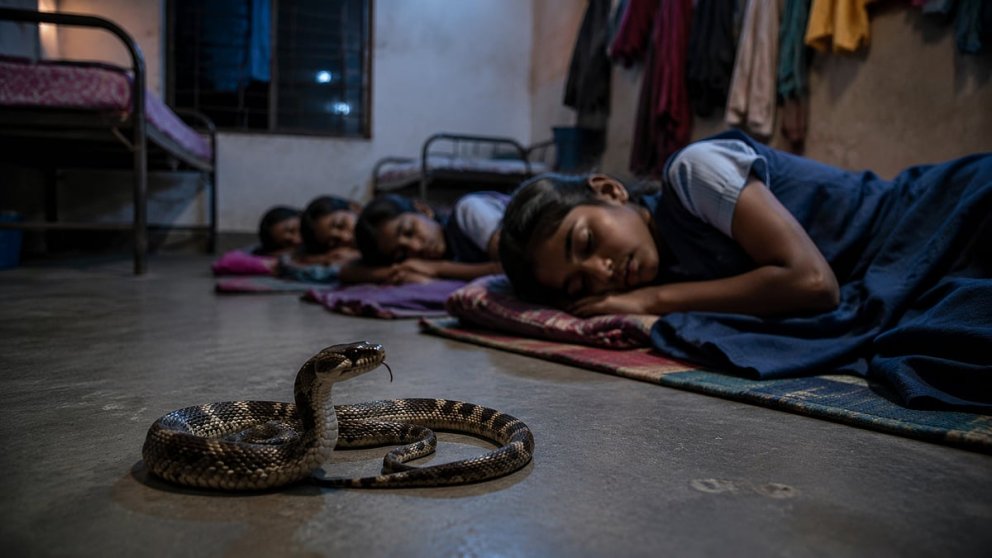
According to news reports, the incident took place at a residential school in Maharashtra. The children were staying on the campus when a venomous snake bit them. Unfortunately, before adequate medical help could save all of them, three students passed away due to the deadly snake venom.
In many rural parts of Maharashtra and other Indian states, residential schools (often called Ashram Shalas) are located near fields or forest areas. During the monsoon and post-monsoon months, snakes often seek warm, dry places to hide. When school buildings have cracks, unmaintained grounds, or open doors, snakes easily enter classrooms and sleeping halls.
Why School Infrastructure Must Change
This sad incident highlights a big problem in our education system. Building schools is not enough. Maintaining them properly is equally important. Many government and residential schools in remote villages do not have proper boundary walls, good light facilities, or sealed doors and windows.
Tall grass and bushy plants often grow around school yards. This creates a perfect hiding place for venomous snakes like cobras, vipers, and kraits. School authorities must make sure that campus lawns are regularly cut short and cleaned. Cracks in floors and walls must be repaired immediately so that wild creatures cannot enter rooms where children sleep or study.
Wildlife Concerns and Safety Rules
When human places expand near nature, animals and humans meet more often. Managing wildlife near human living areas is a sensitive topic across the country. Courts and environment groups frequently discuss how to balance human security with animal conservation. Similar discussions can be seen in legal rulings, like the recent delhi high court wildlife board concerns regarding safety and habitat protection.
When schools are built near wilderness, extra safety rules must be followed. Proper lighting, solid fencing, and safe garbage disposal are essential to keep snakes and other dangerous animals away from children.
The Challenge of Medical Response in Villages
One of the biggest reasons snakebites turn fatal in rural areas is the lack of fast medical care. When a snake bites someone, every minute counts. Anti-venom injection is the only real cure for a venomous snakebite.
Unfortunately, many Primary Health Centres (PHCs) in rural areas do not have anti-venom stocks. In other cases, doctors or trained healthcare staff are not present at night. Parents and teachers often lose precious time traveling long distances to city hospitals. This delay in treatment proves fatal for young children whose bodies cannot resist venom for long.
Addressing Rural Health Crises
Snakebite is often called a hidden emergency in rural India. Thousands of people die every year due to snakebites, mostly in villages. While media attention often shifts to other health topics, unexpected rural health threats remain a major challenge, similar to how unexpected public health issues form a silent epidemic in india affecting millions quietly.
There’s more to life than simply increasing its speed.
By Udaipur Freelancer
We need systemic health improvements in every district. Rural health centres must be equipped with anti-venom drugs, ventilators, and emergency ambulances so that victims get immediate care without losing time.
Simple Steps to Prevent Snakebite Deaths in Schools
Preventing snakebite accidents in schools does not require huge amounts of money. Simple actions can save lives:
1. Keep Campuses Clean: Cut long grass, clear piles of rubbish, and remove stored firewood near classrooms.
2. Use Raised Beds: In residential schools, students should sleep on cots or beds, not directly on the floor.
3. Provide Torches and Solar Lights: Ensure corridors, bathrooms, and outdoor paths are well lit at night.
4. Train Teachers and Staff: School staff should receive basic first-aid training for snakebites. They should know never to waste time on traditional healers and rush the victim straight to a hospital.
5. Stock Anti-Venom Locally: Local health clinics near residential schools must keep valid anti-venom doses available at all times.
Final Thoughts
The death of three innocent young students in Maharashtra is a terrible tragedy that should never have happened. No child should lose their life while seeking an education. It is time for government officials, school administrators, and local leaders to take school safety seriously. By improving campus maintenance and providing fast medical facilities in rural areas, we can make sure our children stay safe while learning.















Recommended for you
Must-See Art Exhibitions Around the World This Year
The Revival of Classical Art in a Digital Age
Breaking Down the Elements of a Masterpiece Painting
The Revival of Classical Art in a Digital Age