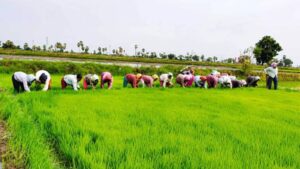
Water is life for farmers. Without enough water, crops cannot grow well, and farming families face heavy financial losses. Recently, government officials announced that every effort is being made to maximize the use of Godavari river water to help farmers. This positive news brings hope to thousands of rural communities who depend on seasonal rainfall and river canal flows for their daily livelihoods and agricultural fields.
Why the Godavari River Water is Crucial
The Godavari River is one of the largest and most vital rivers in the country. It supplies water to millions of acres of farmland across several states. Proper allocation and distribution of this river water help secure crops during dry seasons. When irrigation networks work efficiently, farmers can grow multiple crops each year, including paddy, sugarcane, cotton, and fresh vegetables.
In many agricultural regions, unpredictable weather patterns make farming difficult. Monsoon rains do not always arrive on time or bring enough water. Therefore, relying on reservoir management and proper canal systems along the Godavari basin is essential for maintaining constant crop production.
Strategic Planning and Management
To ensure that water reaches every single farm, canal management teams and irrigation engineers are working around the clock. They are repairing damaged canals, clearing silt from waterways, and opening spillway gates at the right time. By planning carefully, authorities can minimize water loss caused by evaporation or leakage.
Special focus is being given to tail-end areas. Tail-end farms are located at the very end of canal networks and often face severe water shortages. With better scheduling and monitoring, officials aim to guarantee that even the farthest farms receive their fair share of Godavari water.
Modern Farming Practices and Education
In addition to canal water distribution, farmers are being encouraged to adopt smart irrigation tools like drip and sprinkler systems. These modern systems deliver precise amounts of water directly to plant roots, saving precious resources. Learning modern farming methods allows agricultural communities to adapt to environmental changes faster.
Education plays a big role in spreading modern agricultural practices among young rural workers. Higher education systems are also adapting to offer faster learning pathways for students, as seen when UGC approves 1 year postgraduate degree online programs. Advanced study opportunities help experts research better ways to manage natural resources and support agricultural growth.
The Science of Water Resource Management
Water management is deeply connected to environmental science and Earth observation. Around the world, scientists are continuously exploring water ecosystems to understand how natural water sources behave. Unique research projects like the NASA Lake Untersee discovery highlight how scientific exploration reveals critical details about frozen water reserves and environmental changes.
There’s more to life than simply increasing its speed.
By Udaipur Freelancer
Applying scientific methods to river basin management allows authorities to track water levels in real time using satellite data. This technology helps predict water shortages in advance, enabling better planning during crop sowing seasons.
Boosting Rural Economy and Crop Yields
When farmers gain access to a reliable supply of irrigation water, the local economy benefits directly. Steady irrigation leads to higher crop yields per acre. Higher crop production means farmers have more food to sell in open markets, which boosts their income and security.
With financial stability, farming families can invest in high-quality seeds, organic fertilizers, and modern equipment like tractors. Furthermore, guaranteed water supply encourages farmers to diversify their crops. Instead of growing only basic grain crops, they can cultivate commercial crops that bring higher profits.
Overcoming Future Water Challenges
While the current initiative to maximize Godavari water is successful, long-term challenges like extreme climate events remain a threat. Floods during heavy monsoons can damage crops, while prolonged dry spells can quickly drain storage dams. To address these problems, the government plans to build farm ponds, small check dams, and rainwater harvesting structures alongside main river channels.
Community involvement is another key factor for long-term success. Village-level water user associations are being empowered to oversee local water sharing. When local farmers manage their own water distribution, conflicts decrease and water is used far more responsibly.
Conclusion
The effort to maximize Godavari river waters for farmers is a welcome step toward agricultural progress. With smart water distribution, improved infrastructure, scientific research, and active community participation, farmers can look forward to prosperous farming seasons. Protecting and utilizing river resources efficiently remains the key to food security and economic growth for rural communities.














Recommended for you
Must-See Art Exhibitions Around the World This Year
The Revival of Classical Art in a Digital Age
Breaking Down the Elements of a Masterpiece Painting
The Revival of Classical Art in a Digital Age