Recently, India made its stance very clear regarding its internal laws. The Indian government firmly dismissed concerns raised by foreign countries and international organizations about the Foreign Contribution Regulation Act (FCRA) Bill. India stated clearly that passing laws to control foreign funding is strictly an internal matter. The government believes that outside nations should respect India's national sovereignty and avoid interfering in its domestic legal decisions.
Understanding the FCRA Bill
The Foreign Contribution Regulation Act is a critical law in India that controls how foreign money enters the country. It regulates individuals, associations, and non-governmental organizations (NGOs) that accept donations from abroad. The main goal of this law is to ensure that foreign money is used for genuine social, educational, and cultural activities, rather than harming national security or public peace.
Under the new amendments to the FCRA Bill, the rules have become much stricter. Organizations that want to receive foreign funds must register with the central government. They must also open designated bank accounts at specified banks to make tracking money easier. In addition, the law restricts how much money can be spent on administrative costs, ensuring that most funds go directly to community development work.
Why Foreign Countries Raised Objections
Several international bodies and foreign governments expressed concern over these strict rules. They argued that the new conditions would create too much paperwork and difficulty for smaller non-profit groups. Some foreign critics claimed that these rules might restrict civil society organizations from doing important humanitarian work in rural and underserved areas.
They urged India to reconsider these provisions, suggesting that flexible rules would help international non-profits work more smoothly in the country. However, many in India saw these foreign statements as an attempt to influence domestic policy without understanding local needs and security challenges.
India's Firm Stand on Sovereignty
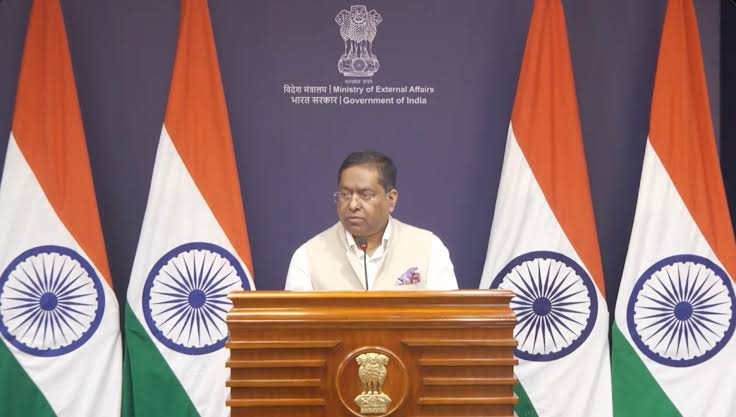
In response to foreign criticism, India delivered a direct message. The Ministry of External Affairs made it clear that every independent country has the absolute right to make laws for its own security and financial stability. The spokesperson stated that foreign opinions on India's legislative process are unnecessary and unwelcome.
India highlighted that foreign funding must always follow the law of the land. While the country engages in major international deals, such as the India UAE summit nuclear energy AI trade deals, economic and diplomatic partnerships do not give outside entities the right to question domestic regulatory frameworks.
There’s more to life than simply increasing its speed.
By Udaipur Freelancer
Financial Transparency and Security
The government explained that monitoring foreign money is essential to prevent illegal financial flows, money laundering, and unauthorized political influence. Just as financial analysts monitor economic shifts like the fcnr b scheme inflows slowdown analysis to ensure economic balance, keeping track of NGO money is essential to maintain complete financial transparency.
Without strong regulations, untracked money could be used for activities that disrupt peace and order within society. The government emphasized that genuine NGOs that follow all legal rules and maintain clean financial records have nothing to fear from the FCRA provisions.
What This Means for the Future
India’s strong reaction shows a clear message to the world: domestic policy will be made by the Indian Parliament and not by foreign commentary. For non-governmental organizations operating in India, meeting full compliance with the updated FCRA guidelines is now mandatory. While compliance may take more effort, it provides complete clarity and trust for everyone involved.
In conclusion, India’s decision to dismiss external concerns over the FCRA Bill highlights its dedication to protecting its national interest. By setting clear boundaries, India has shown that foreign assistance is welcome, but it must strictly follow the rules set by the nation's democratic system.
Udaipur Freelancer delivers high-quality web, marketing, and design solutions. We focus on building impactful digital experiences that help your brand succeed in today's market.
















Recommended for you
Must-See Art Exhibitions Around the World This Year
The Revival of Classical Art in a Digital Age
Breaking Down the Elements of a Masterpiece Painting
The Revival of Classical Art in a Digital Age