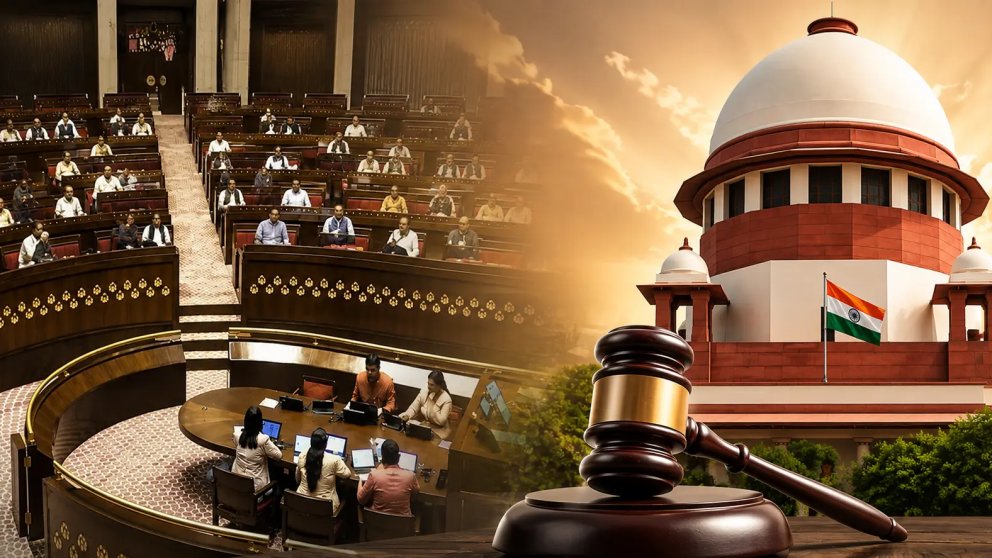
The Rajya Sabha has officially passed a bill that aims to increase the number of judges in the Supreme Court of India. This decision comes as a major step toward addressing the long-standing problem of pending cases in the country's highest court. For years, legal experts, citizens, and lawmakers have discussed the urgent need for more judges to handle the growing workload. Now, with the clearance from the upper house of Parliament, the legal system is set to get much-needed support.
Why Do We Need More Supreme Court Judges?
India is a large country with over one billion people. Every day, thousands of people reach out to the court system to seek justice. When the Supreme Court does not have enough judges, cases can take many years to be heard and decided. By adding more judges to the bench, the government hopes to speed up the judicial process. This means that people waiting for final judgments might finally get closure much sooner than expected.
The Role of Parliament and Public Order
Passing a bill like this requires careful debate and approval in Parliament. When major laws or reforms are discussed, security around public institutions and political centers is often tightened. Staying updated on key national events and safety measures, such as reading about delhi high alert parliament march security news, shows how important peaceful governance is when policy decisions are being made. The decision in the Rajya Sabha reflects a shared understanding among lawmakers that strengthening the judiciary is essential for the nation's growth and stability.
Understanding the Workload of Supreme Court Judges
Supreme Court judges in India handle a wide range of important issues. They hear constitutional matters, appeals from High Courts, public interest litigation, and urgent civil and criminal cases. Because the Supreme Court is the final court of appeal, every major decision sets an example for the entire country. Having more judges allows the court to form specialized benches. These specialized benches can focus on complex subjects like civil rights, public policy, and corporate disputes without delaying other urgent legal matters.
Impact on Everyday Citizens
For ordinary citizens, justice delayed is often justice denied. When court cases drag on for decades, families suffer both emotionally and financially. Small businesses also struggle when commercial disputes remain unresolved for too long. With more judges joining the Supreme Court, courts across the nation may experience a positive ripple effect. Lower courts often look to the Supreme Court for guidance, and faster decisions at the top can clear up confusion across lower legal bodies.
There’s more to life than simply increasing its speed.
By Udaipur Freelancer
Connecting Law and National Development
A strong legal system goes hand in hand with economic growth and financial planning. Just as taxpayers and investors look forward to financial developments like budget 2026 expectations debt fund indexation dlss updates to plan their financial future, a reliable judiciary gives people confidence to invest, trade, and live peacefully. When people know that the legal system works efficiently, trust in public institutions grows significantly.
What Happens Next?
Now that the Rajya Sabha has approved the bill, the next steps involve official administrative processes to select and appoint the new judges. The selection process follows established constitutional guidelines to ensure that highly qualified and experienced legal experts are chosen. Once appointed, these judges will take their positions on the bench and help clear the massive backlog of cases.
Conclusion
The clearance of the bill to increase Supreme Court judges by the Rajya Sabha is a welcome move toward judicial reform in India. It highlights a commitment to improving access to justice for millions of people. While adding judges is just one part of solving legal delays, it is a very important step in the right direction. As these changes take effect, citizens can hope for a faster, more accessible, and more effective legal system in the near future.














Recommended for you
Must-See Art Exhibitions Around the World This Year
The Revival of Classical Art in a Digital Age
Breaking Down the Elements of a Masterpiece Painting
The Revival of Classical Art in a Digital Age