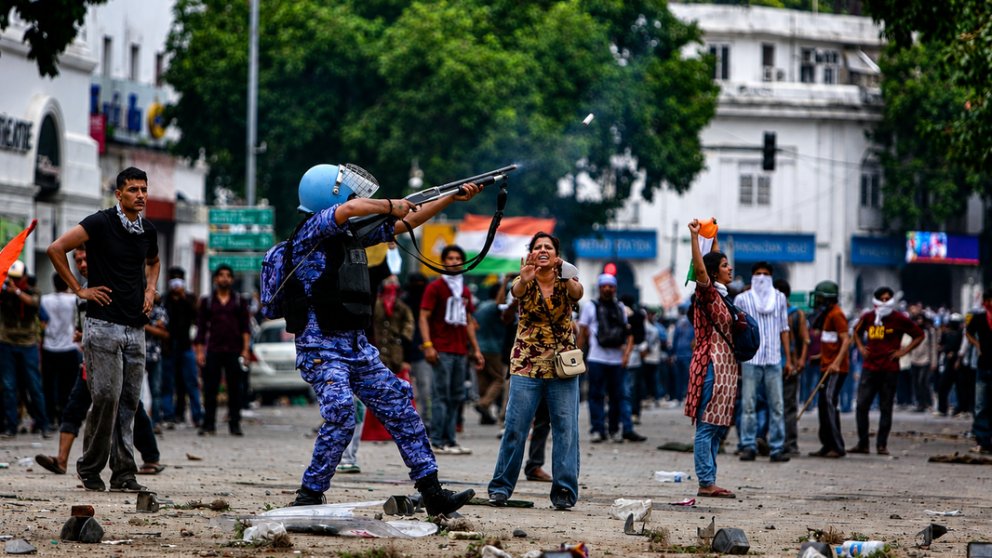
Crowd control is a very important and sensitive topic in India. Whenever large protests or violent mobs gather, police officers have to manage the situation. Over the years, security forces in India have used various tools to disperse angry crowds. One tool that creates a lot of debate is the pellet gun. Many people wonder: Are pellet guns legal for crowd control in India? How do police use them, and what does the law say?
In this article, we will explain everything about pellet guns in simple language. We will look at what pellet guns are, why they are used, their legal status in India, and the guidelines police officers must follow.
What Are Pellet Guns?
A pellet gun is a type of firearm that fires small lead balls called pellets. Unlike normal rifles that fire a single bullet, a pellet gun cartridge releases hundreds of small lead pellets at once when fired. These pellets scatter over a wide area like a spray.
Pellet guns were introduced in India around 2010 as a 'less-lethal' weapon. This means they were designed to stop violent crowds without killing people. Security forces started using them in places like Jammu and Kashmir during heavy stone-pelting incidents to protect themselves and maintain law and order.
Are Pellet Guns Legal in India?
The short answer is yes, pellet guns are legal in India. Police and paramilitary forces, like the Central Reserve Police Force (CRPF), are legally allowed to use them under specific laws and regulations.
Under Section 129 of the Code of Criminal Procedure (CrPC), executive magistrates and senior police officers have the authority to use force to disperse an unlawful assembly. If a crowd turns violent and refuses to leave after warnings, the police can use force to protect public property and human lives. Pellet guns are classified as one of the permissible tools for controlling extreme riots under this power.
Rules for Using Force in Crowd Control
Even though pellet guns are legal, police cannot just use them whenever they want. The Indian law and police manuals clearly state that force must be used in a step-by-step manner. This is called the graded response mechanism. Police are expected to follow these steps:
1. Give clear verbal warnings over loudspeakers asking the crowd to go home.
2. Use water cannons or tear gas shells to push the crowd back.
3. Conduct a lathi charge (using wooden sticks) if the crowd gets closer.
4. Use rubber bullets or pellet guns if the mob continues to throw dangerous objects or acts extremely violently.
5. Use live ammunition only as a last resort when lives are in immediate danger.
Furthermore, officers are strictly instructed to aim below the waist. The goal is to cause temporary pain or injury to stop a violent person, not to cause permanent harm or death.
Why Are Pellet Guns Controversial?
If pellet guns are legal, why do so many human rights groups oppose them? The main reason is that pellet guns are very hard to control. Because the small lead pellets spread out widely when fired, they often hit bystanders who are not part of the violence.
There’s more to life than simply increasing its speed.
By Udaipur Freelancer
If a pellet hits a person's eye, it can cause total blindness. Over the past decade, thousands of young people and children have suffered severe eye injuries due to pellet guns. Critics argue that even if a weapon is legal, it should not cause permanent disabilities to citizens.
Maintaining safety and strictly following safety protocols is critical in all public service areas. For example, just as public health systems must monitor safety standard failures like when blood banks in Bengal came under scanner for illegal sales, police departments must also strictly monitor how force is used on the streets.
What Do Courts and Committees Say?
The Supreme Court of India and various High Courts have discussed the issue of pellet guns several times. The courts have stated that maintaining public order is necessary, but the government must protect human life and dignity.
In response to public concern, the Indian Ministry of Home Affairs set up an expert committee in 2016 to look for safer alternatives to pellet guns. The committee suggested using alternatives like PAVA shells (which contain chili extract) and synthetic pepper sprays. These alternatives cause severe burning sensations and tears without causing permanent physical damage or blindness.
However, security forces have stated that in extreme situations, where violent mobs are very close and throwing heavy stones or petrol bombs, pellet guns remain a necessary tool to prevent major disasters.
Seeking Justice and Moving Forward
People who suffer injuries from police action often face long medical and legal struggles to get compensation and care. Overcoming severe physical injury requires immense courage and determination, similar to how individuals overcome major obstacles in stories like the R Sabarinathan victory story.
Today, security forces in India are working on getting better training and modern technology. Deflector attachments are now added to pellet guns to ensure pellets go downward towards the legs instead of flying up toward people's faces and eyes.
Conclusion
In conclusion, pellet guns are legal in India for crowd control when used by authorized law enforcement agencies under the CrPC. They are considered a less-lethal option to control dangerous riots. However, because they can cause severe injuries and blindness, their use remains a topic of heavy debate. The Indian government continues to explore safer alternatives like chili shells and water cannons to balance public safety with human rights.















Recommended for you
Must-See Art Exhibitions Around the World This Year
The Revival of Classical Art in a Digital Age
Breaking Down the Elements of a Masterpiece Painting
The Revival of Classical Art in a Digital Age