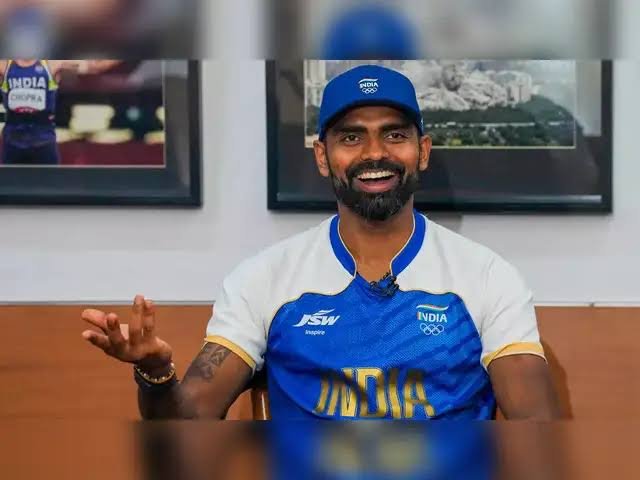
Imagine this: A true legend of Indian hockey, a man who guarded our goal with fierce determination through two Olympic bronze medal victories, takes on a new role. He decides to share his vast knowledge and experience with the next generation, coaching the junior men’s hockey team. In just 1.5 years, under his guidance, the team plays 5 tournaments and clinches 5 podium finishes, including a brilliant Junior World Cup bronze medal. Sounds like a dream run, right? Well, for PR Sreejesh, this dream run has seemingly hit a sudden stop.
Sreejesh, whose name is etched in the annals of Indian hockey after serving the national team for almost two decades and playing 336 games, recently made a surprising announcement on X. He stated that his coaching stint was ending, not because of poor performance – quite the opposite – but to “make way for a foreign coach.” This news has sent shockwaves through the Indian sports community and sparked a crucial debate about the direction of our national sports policies.
A Stellar Record Cut Short
Let’s be clear: Sreejesh’s time as the junior team’s coach was nothing short of exceptional. After retiring as a goalkeeper for India, he immediately transitioned into coaching in 2024. In a short span, his team secured a bronze medal at the FIH Junior World Cup last year in Tamil Nadu, defeating Argentina 4-2. This consistent success – a podium finish in every tournament he coached – would typically lead to more opportunities, not an abrupt dismissal. “I have heard about coaches getting fired after bad performances,” Sreejesh posted, “But this is the first time I am experiencing being removed to make way for a foreign coach.” This sentiment captures the frustration and bewilderment many feel.
The 'Foreign Coach' Preference: A Double-Edged Sword?
The reason given by the Hockey India President is that the chief coach of the senior men’s team prefers a foreign head coach for the junior team. The belief is that this approach will help develop Indian hockey from the junior level right up to the senior level. This isn't a new conversation in Indian sports. For years, there has been a significant reliance on foreign coaches across various disciplines, often justified by the need for international exposure, advanced techniques, and a different perspective.
However, Sreejesh’s question echoes loudly: “Can’t Indian coaches develop Indian hockey?” It's a fundamental query that challenges the underlying assumption that foreign expertise is always superior or necessary, even when homegrown talent proves itself effective and successful. While bringing in global best practices can be beneficial, does it mean we should sideline our own experienced and successful veterans?
A Conflict of Vision?
Adding another layer of complexity is the conversation Sreejesh had with Hon’ble Sports Minister Shri Mansukh Mandaviya. Just a few months before this news, in March 2026, the Minister reportedly told Sreejesh, “Sreejesh, we need coaches like you to step up and lead our country as we prepare for 2036.” This statement from a top government official highlights a seemingly contradictory vision. On one hand, there's an encouragement for Indian legends to take up coaching roles and nurture future talent for big events like the 2036 Olympics. On the other hand, a national sports body chooses to replace a successful Indian coach with a foreign one. This disconnect raises serious questions about policy alignment and trust in our own people.
It’s about more than just one coach; it’s about a philosophy. Are we truly investing in creating a robust ecosystem for Indian coaches, or are we constantly looking outside? Just as India is making strides in adopting cutting-edge technologies and opening up the 6GHz spectrum for Wi-Fi 6E, suggesting a forward-thinking approach in other sectors, shouldn't our sports administration also look to empower its own proven talents and integrate them into a long-term vision?
There’s more to life than simply increasing its speed.
By Udaipur Freelancer
The Undeniable Value of Homegrown Expertise
Coaches like Sreejesh bring invaluable qualities that foreign coaches, despite their technical prowess, might lack. They understand the cultural nuances, the psyche of Indian players, and the unique challenges and opportunities within our sporting system. They have walked the same path as the young players they coach, living the dream and facing the realities of Indian hockey. This deep-rooted understanding fosters a different kind of connection and mentorship.
Building strong foundational structures, whether it's in sports coaching or critical infrastructure, requires a deep understanding of the local landscape. Much like the efforts to establish the Northeast’s first emergency landing facility in Assam, which caters to specific regional needs, developing coaching talent within India demands a tailored approach that leverages our unique strengths and experiences. When we sideline proven Indian coaches, we miss an opportunity to build a sustainable coaching pipeline rooted in our own sporting culture.
Looking Ahead: A Call for Balance
This isn't to say foreign coaches have no role to play. Their expertise can be vital in certain areas. However, the consistent preference for foreign over highly successful Indian coaches, especially one of Sreejesh’s calibre, demands serious introspection. Indian sports bodies need to find a better balance, one that values and nurtures homegrown talent while intelligently integrating international expertise. If we truly want to become a sporting powerhouse, we must trust and empower our own legends to lead the way.
Sreejesh’s story is a wake-up call. It's a reminder that while we celebrate our athletes' achievements on the field, we must also ensure our policies off the field are fostering, not hindering, the growth of Indian sports. Let's hope this incident leads to a meaningful dialogue and a more balanced approach for the future of Indian hockey and sports at large.
Udaipur Freelancer delivers high-quality web, marketing, and design solutions. We focus on building impactful digital experiences that help your brand succeed in today's market.












Recommended for you
Must-See Art Exhibitions Around the World This Year
The Revival of Classical Art in a Digital Age
Breaking Down the Elements of a Masterpiece Painting
The Revival of Classical Art in a Digital Age