The latest conflict in the Middle East isn't exactly going according to the neat PowerPoint presentations in Washington and Tel Aviv. The classic American strategy chopping off the head of the leadership and waiting for the whole system to collapse just isn’t delivering the results they wanted.
Instead, the idea that the regime in Tehran is going to magically collapse is looking like a total fantasy. Every time a commander is taken out, a new one steps right up. And these new guys aren't exactly looking to back down.
Every bomb that lands on Iranian soil is being answered with Iranian missiles lighting up the skies over Israeli cities. Let's be honest, the scorecard for the opening of this conflict is not looking great for the US and Israel.
Enter Donald Trump. The ultimate dealmaker is looking at a situation he never wanted to be a part of. He's seeing a massive mismatch, Iran has a tiny GDP of $400 billion, while America boasts a massive $28 trillion economy. Yet, Tehran has enough missiles, angry proxies, and deep-rooted motivation to make those numbers look meaningless. Add in the fact that oil prices are hovering near $100 a barrel right before mid-term elections, and you have a recipe for political disaster. Historically, energy crises have a nasty habit of toppling governments worldwide.
So, how does this global headache land straight in Pakistan’s lap?
Pakistan: The World’s Most Enthusiastic Postman
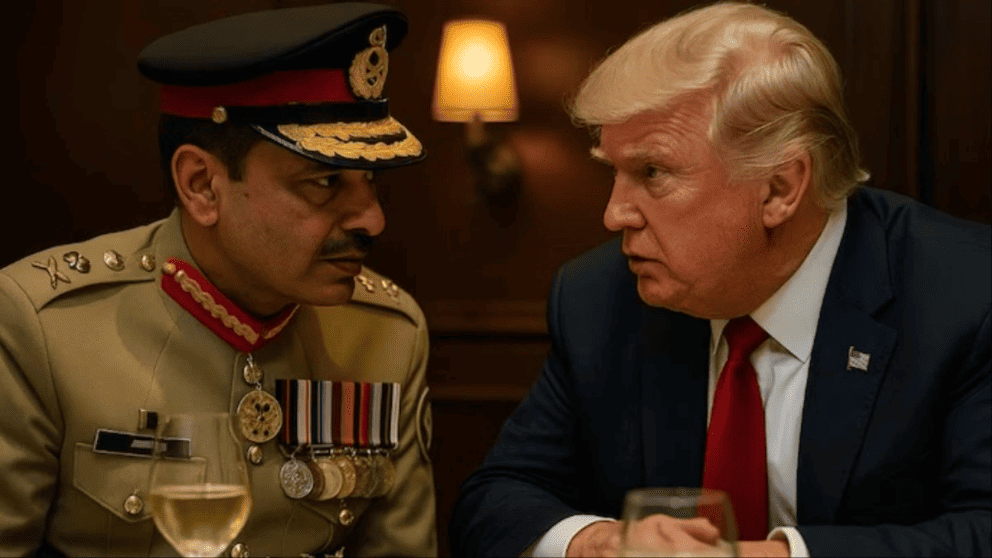
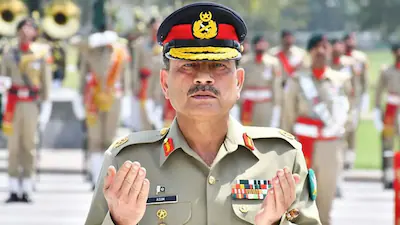
Pakistan, unofficially managed by Army Chief General Asim Munir, finds itself in a very weird, yet familiar, position, completely stuck.
Because the US and Iran haven't had embassies in each other's countries since 1979, Pakistan has stepped up as the enthusiastic postman carrying awkward letters between Washington and Tehran. It’s a job Pakistan has been doing for decades, but this time, it brings a special sense of pride. Brokering peace makes Islamabad feel incredibly important again.
Meanwhile, ironically, Pakistan is busy fighting its own little war on its western front against the Taliban the exact same group they helped train in their own warfare academies, and the same group America spent two decades and $2 trillion trying to defeat, only to hand them the keys on the way out.
The Map Problem: The Road to Iran
Since Afghanistan faded into the background for the US, Pakistan had lost some of its geographic importance. But now, with Iran at the very top of America's hit list, Pakistan has its mojo back.
Here is the reality: If the US decides that boots on the ground in Iran are unavoidable, those boots need a path to get there. Taking the beaches of Iran isn't like D-Day; it's a geographic nightmare of cliffs and rocks.
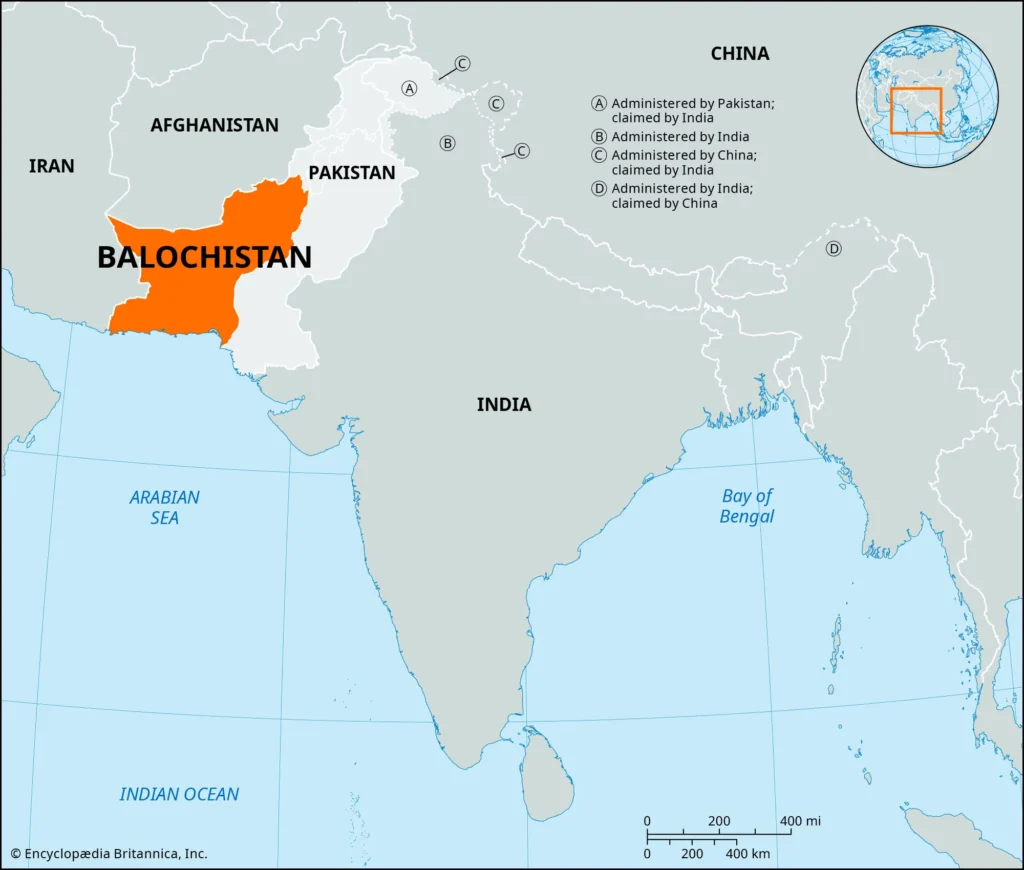
The most practical land route is a scenic drive right through Pakistan. Specifically, the route goes from Taftan in Pakistan's Balochistan province straight to Zahedan in Iran's Balochistan province. There’s also a sea option from Gwadar (Pakistan) to Chabahar (Iran).
An Offer Islamabad Cannot Refuse
When Washington needs to use this road, they will ask Islamabad politely because politely is all it should take.
There’s more to life than simply increasing its speed.
By Udaipur Freelancer
Between the US and Saudi Arabia, billions of dollars have been poured into Pakistan over the years. The US basically controls the IMF loans that keep Pakistan’s economy breathing. So, in any practical sense, General Asim Munir simply cannot say no.
But saying yes comes with terrifying consequences. Opening its borders turns Pakistan into a legitimate target for Iran. Tehran has already proven it has the ballistic missiles to reach across the region. Saying yes drags Pakistan into another American forever war and this time, it’s happening in a province Pakistan has never fully controlled.
The Golden Triangle and Balochistan's Mess
Balochistan is Pakistan’s largest province. It is massive (about the size of France), packed with incredible resources like gold and copper, but treated terribly by the central government. It’s essentially a giant open-pit mine filled with locals who are sick of being ignored.
The Baloch people want out. Armed groups like the Baloch Liberation Army are already at a 10-year high with terror attacks, and they are actively cheering on every strike against Iranian security forces.
Things in Balochistan are so unstable that the Chinese have basically packed up and paused their massive, multi-billion-dollar infrastructure projects (CPEC). Ironically, if push comes to shove, the Americans would likely end up using those exact same Chinese-built roads to move their troops.
High Rent and Redrawn Maps
Allowing American forces to march through Balochistan won’t be a popular decision with the Pakistani public. You can bet the Pakistani military establishment will charge the US extremely high rent for the privilege.
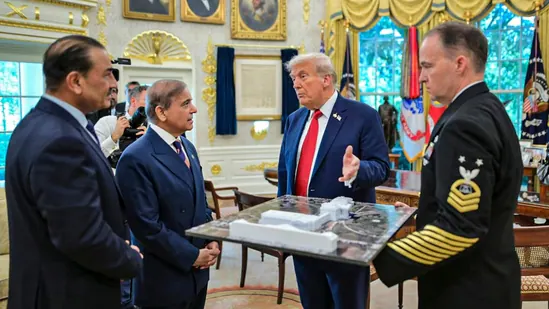
But what if Pakistan dares to say no? Washington has never been shy about redrawing maps when old borders become inconvenient. Balochistan sits right at the throat of the Strait of Hormuz, where a massive chunk of the world's oil flows. General Munir has even boasted to Donald Trump about the rare earth minerals buried there. It is a dream scenario for a businessman-politician like Trump.
Between a Rock and a Hard Place
Ultimately, global geopolitics is shrinking down to this single, dusty strip of land. Everybody suddenly realizes how critical the Strait of Hormuz and the surrounding area really is.
Islamabad cannot say no to America. But when they say yes, they will wake up to find American boots on their soil. And history tells us that American boots have a famous habit of overstaying their welcome. If Islamabad ever gets tired of them and asks them to leave, Washington might just suddenly decide to fund the local Baloch freedom movements to break the region free entirely.
In the end, Pakistan is trapped. Geography is the rock. The consequences are the hard place. And right now, General Asim Munir's best strategy is simply praying for Donald Trump to win quickly and magically make the problem disappear.
Udaipur Freelancer delivers high-quality web, marketing, and design solutions. We focus on building impactful digital experiences that help your brand succeed in today's market.












Recommended for you
Must-See Art Exhibitions Around the World This Year
The Revival of Classical Art in a Digital Age
Breaking Down the Elements of a Masterpiece Painting
The Revival of Classical Art in a Digital Age