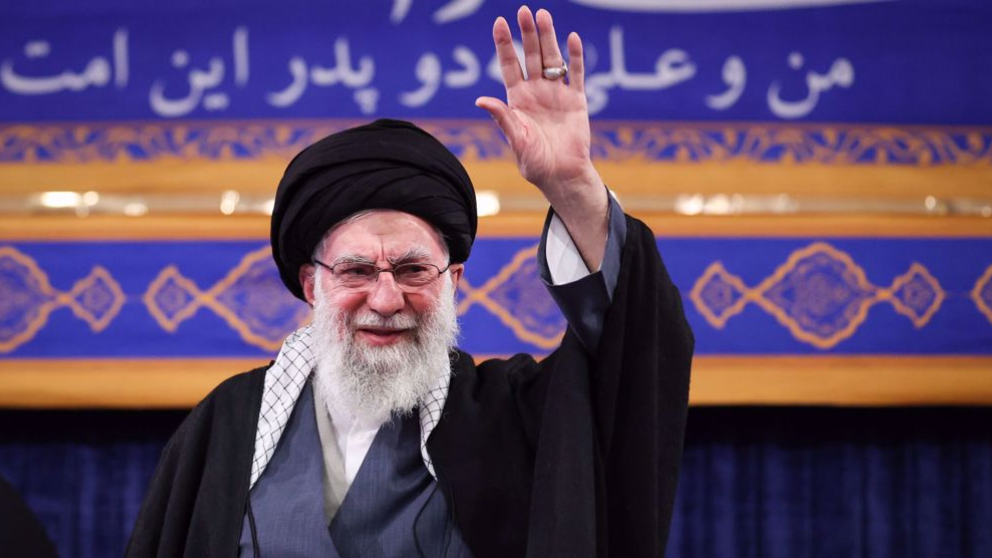
In a statement that offers a profound glimpse into a different worldview, a representative for Iran's Supreme Leader has described the late Ayatollah Ali Khamenei's death during the holy month of Ramadan as the 'best gift from Allah.' This perspective on martyrdom provides a unique lens through which to understand the values and beliefs held by some within the Iranian leadership.
A Long-Held Wish
Speaking at the India Today Conclave 2026, Abdul Majid Hakeem Ilahi, the representative of Iran's Supreme Leader in India, shared details about Ayatollah Khamenei's final days. Amidst airstrikes from a combined force of the United States and Israel, associates pleaded with Khamenei to move to the safety of a bunker. However, the Supreme Leader refused, stating he would not leave his Tehran residence until the safety of all 90 million Iranians was secured.
According to Ilahi, this was not a spur-of-the-moment decision but the fulfillment of a long-held desire. He recounted Khamenei expressing a preference for martyrdom over a natural death. "I remember that a few months ago he repeatedly said, 'I have become an old man now, I am 86, and I am afraid that I might die in a hospital, or due to an accident or fever. That would not be good for me. I would prefer to be martyred'," Ilahi shared. This reveals a deeply personal conviction that dying as a martyr was the ultimate honor.
The Concept of a 'Divine Gift'
The idea of martyrdom as a gift is a powerful concept within Iranian religious and political discourse. Ayatollah Khamenei himself had spoken on this topic long before his death, framing it as a special honor bestowed by God. In a 2017 statement, he described martyrdom as a divine gift to the chosen ones. This belief posits that such a death is not a tragedy in the conventional sense but a sublime reward for a life of faith and struggle.
This perspective recasts death from an ending into a transition to a higher state of being. The Leader of the Islamic Revolution has also referred to martyrdom as the reward for struggle in the path of Allah, suggesting it is an earned honor for those who dedicate their lives to a divine cause. This was reiterated following the death of an Iranian nuclear scientist in 2020, whose death was described with the words, "the lofty status of martyrdom is his divine reward." From this viewpoint, Khamenei's death during Ramadan, a month of immense spiritual significance for Muslims, is seen as the perfect culmination of his life's work.
More Valuable in Death?
Ilahi made another striking point, suggesting that Khamenei's death held more value than his continued existence. "The martyrdom of Ayatollah Khamenei and the shedding of his blood are more valuable than his continued existence in life," he explained. The reasoning behind this is the belief that his death would serve a higher purpose.
There’s more to life than simply increasing its speed.
By Udaipur Freelancer
The aide claimed that the martyrdom first and foremost brought about "unity among Muslims, both Shia and Sunni." In times of crisis and external pressure, the symbolic power of a leader's ultimate sacrifice is seen as a potent rallying point, capable of transcending internal divisions and strengthening collective resolve.
A Somber Backdrop
These events unfolded during a period of intense conflict in the Middle East, with reports of a US-Israel-Iran war. This tense atmosphere provides the context for the airstrikes that led to the Ayatollah's death. His refusal to seek shelter was a deliberate act, transforming a moment of danger into what he and his followers would see as a pre-destined and honorable end. Following his death, condolences were offered from various groups, including a delegation from the Ajmer Sharif Dargah in India, highlighting the spiritual and cultural ties that connect the nations.
Ultimately, the description of martyrdom as a divine gift offers a window into a powerful ideology where faith, sacrifice, and national identity are deeply intertwined. It challenges us to understand that for some, the way one dies can be as meaningful, if not more so, than the life one lived. It is a reminder that different cultures and belief systems hold vastly different perspectives on life, death, and what it means to receive the ultimate gift from a higher power.










Recommended for you
Must-See Art Exhibitions Around the World This Year
The Revival of Classical Art in a Digital Age
Breaking Down the Elements of a Masterpiece Painting
The Revival of Classical Art in a Digital Age